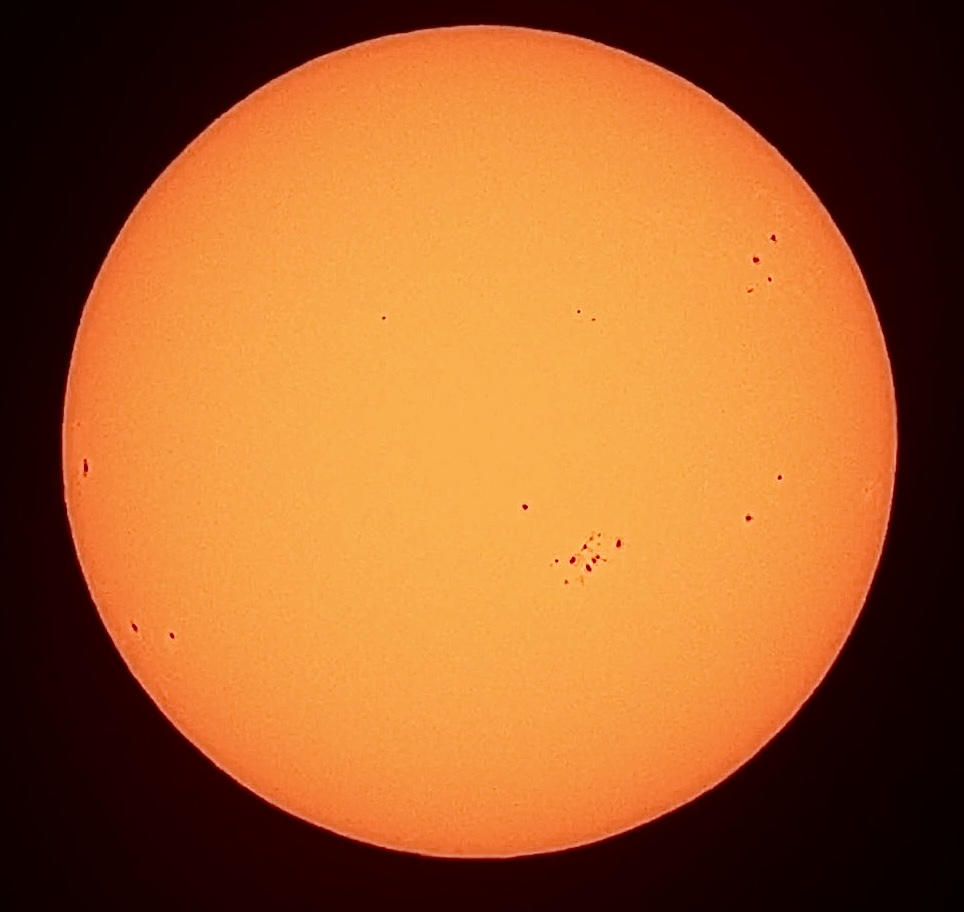
The first known observation of dark spots on the sun was made in China in 800 BC. Early in the 17th century, telescopes were used in astronomy for the first time. Thomas Harriet observed the moon in November 1609 and Galileo di Vincenzo Bonaiuti Galilei observed Jupiter on January 7, 1610. In 1843, the German astronomer Samuel H. Schwabe discovered that sunspots change in number in a cycle that lasts approximately 10 years. Schwabe shared his findings after 17 years of almost daily observations.
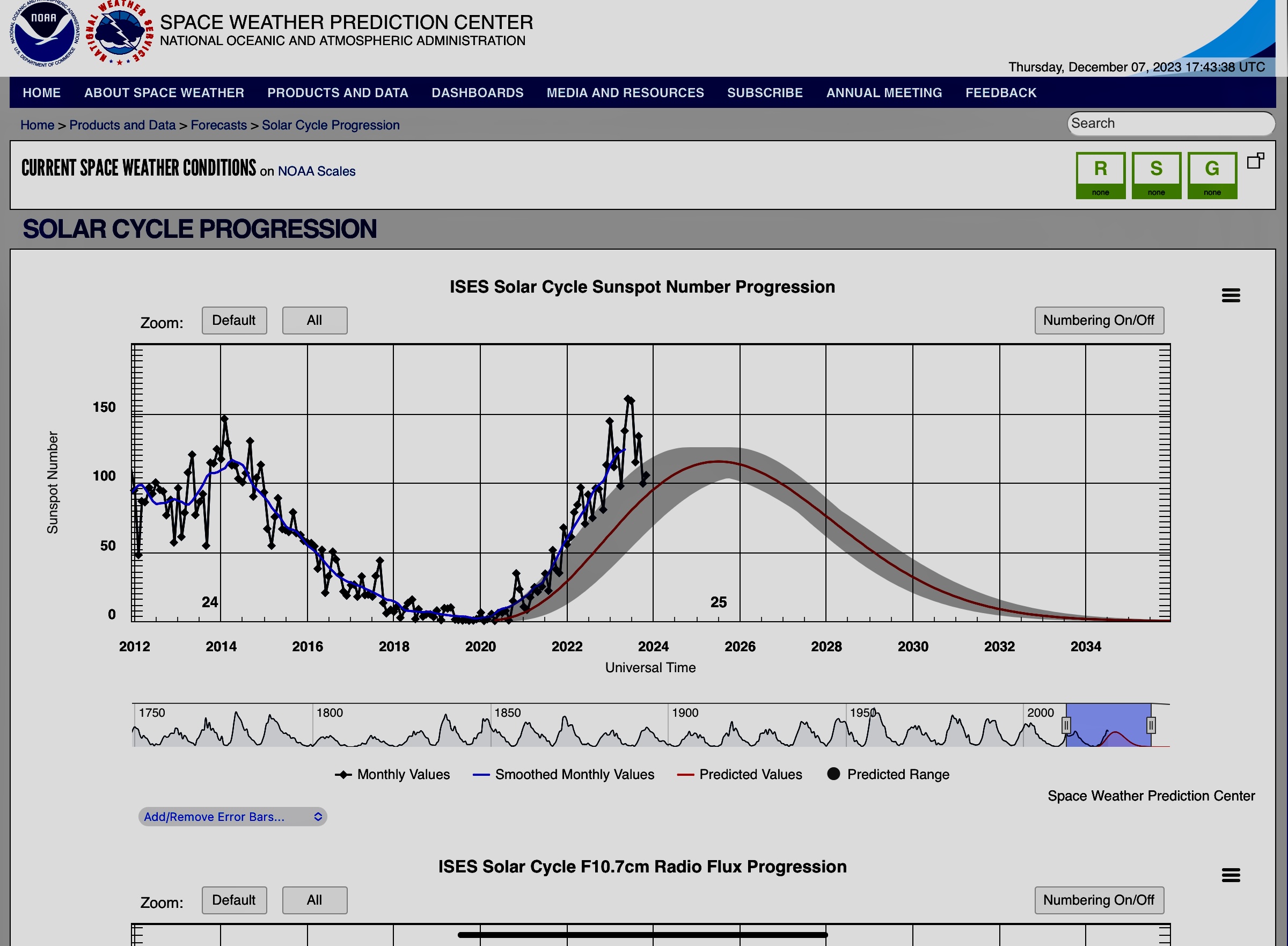
In each sunspot cycle, which lasts an average of 10.7 years, there are periods without any sunspots. Cycle 25 began in December 2019, after 279 days without any spots. The peak of Cycle 25 is expected to occur in July 2025. If Earth is hit by solar plasma waves, it will increase the chances of seeing auroras in the lower 48 for the next few years.
WHAT ARE SUNSPOTS
Solar plasma forms deep within the solar caldron and takes thousands of years to reach the surface. Sunspots are cooler areas on the sun’s surface caused by magnetic flux. They block the flow of hot plasma to the surface. The temperature of the sun’s surface is about 10,000 degrees Fahrenheit, while sunspots are cooler at 6,500 degrees Fahrenheit. These cooler spots appear dark compared to the surrounding area.
MAGNETIC BEASTS
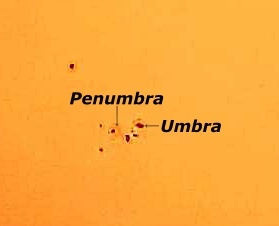
Sunspots are dark spots on the surface of the sun. They can be as small as 10 miles or as wide as 100,000 miles. Sunspots have a cooler core called the umbra, surrounded by a warmer area called the penumbra. Sunspots are magnetic and are often accompanied by other solar activities like coronal loops and prominences. Solar flares and coronal mass ejections (CMEs) often come from sunspots.
I’ve included a chart at the end of this post, highlighting where we are in Cycle 25. The graphic was created by the National Oceanic and Atmospheric Administration. In addition, there are two photos of the sun, showing a close-up of a group of sunspots with the umbra and penumbra, as well as a full-sphere image taken late last month.
I use two free apps for tracking solar activity, including sunspots. The apps are called “Aurora” and “Space Weather,” the latter is published by the website spaceweather.com.
Feel free to share and comment on the post. Stay tuned for future posts on Rogerdier.com.
 Cosmic