AS WITH ANY new piece of technology, the more one uses it the better one understands how it works, or doesn’t work. So it is with the SeeStar S50, the two-inch, triple-lens device that I hope serves as a celestial bridge for millions of new amateur astronomers.
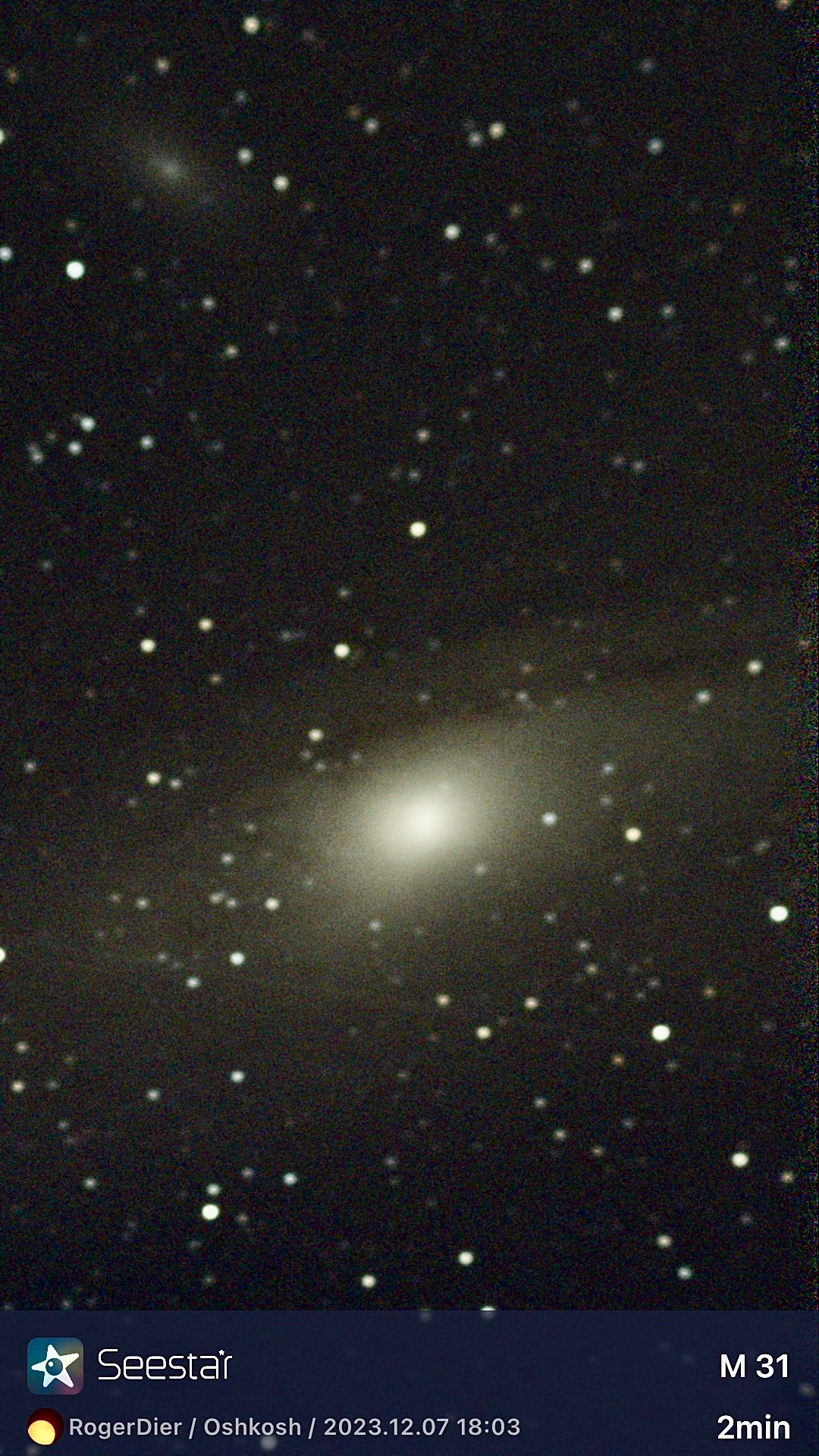
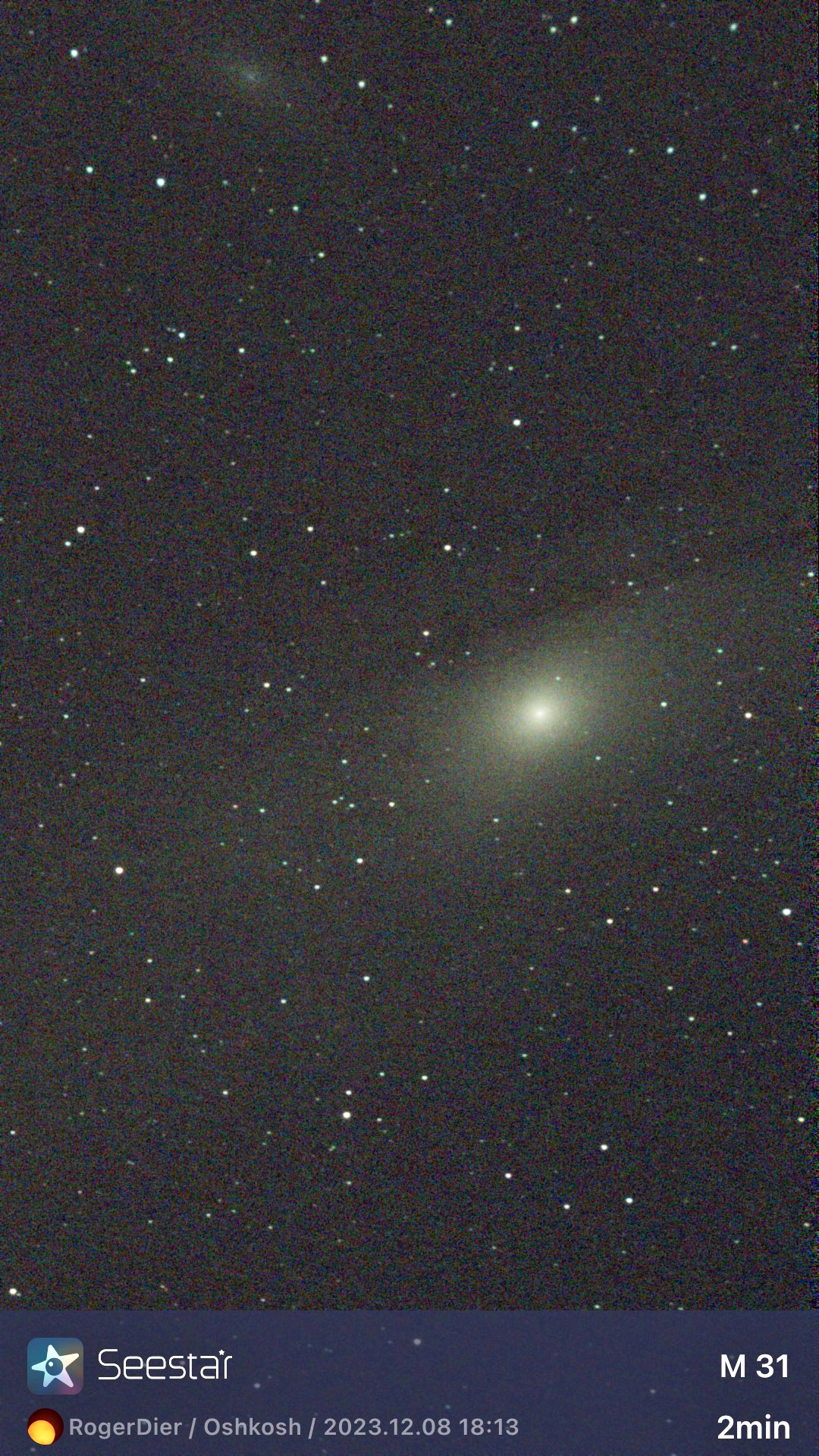
Two nights ago, under fairly clear skies in my Bortle 5 sky, I sent the SeeStar toward M31, the famous Andromeda Galaxy, a barred spiral galaxy that is nearest our own, and one of which resembles the shape of the Milky Way. It is 2.2 million light years from Earth, and as such, is the farthest object humans can see without optical aid. When looking at the images of the Andromeda Galaxy that I share here, the light that fell on the SeeStar S50 two nights ago and last night began its journey 2.2 million years ago. All that time traveling at 186,000 miles per second. The Andromeda Galaxy may no longer exist; it could have blown up a million years ago and all that it was scattered to fate, or, the gravity of a black hole at the center of that galaxy could have sucked all light and star matter down a cosmic rabbit hole, never to return. Had the Andromeda Galaxy suddenly disappeared a million years ago, we won’t know about it for another 1.2 million years, when the light of that cataclysm first reaches Earth. The cosmos is a big place.
Preparing to Track M31
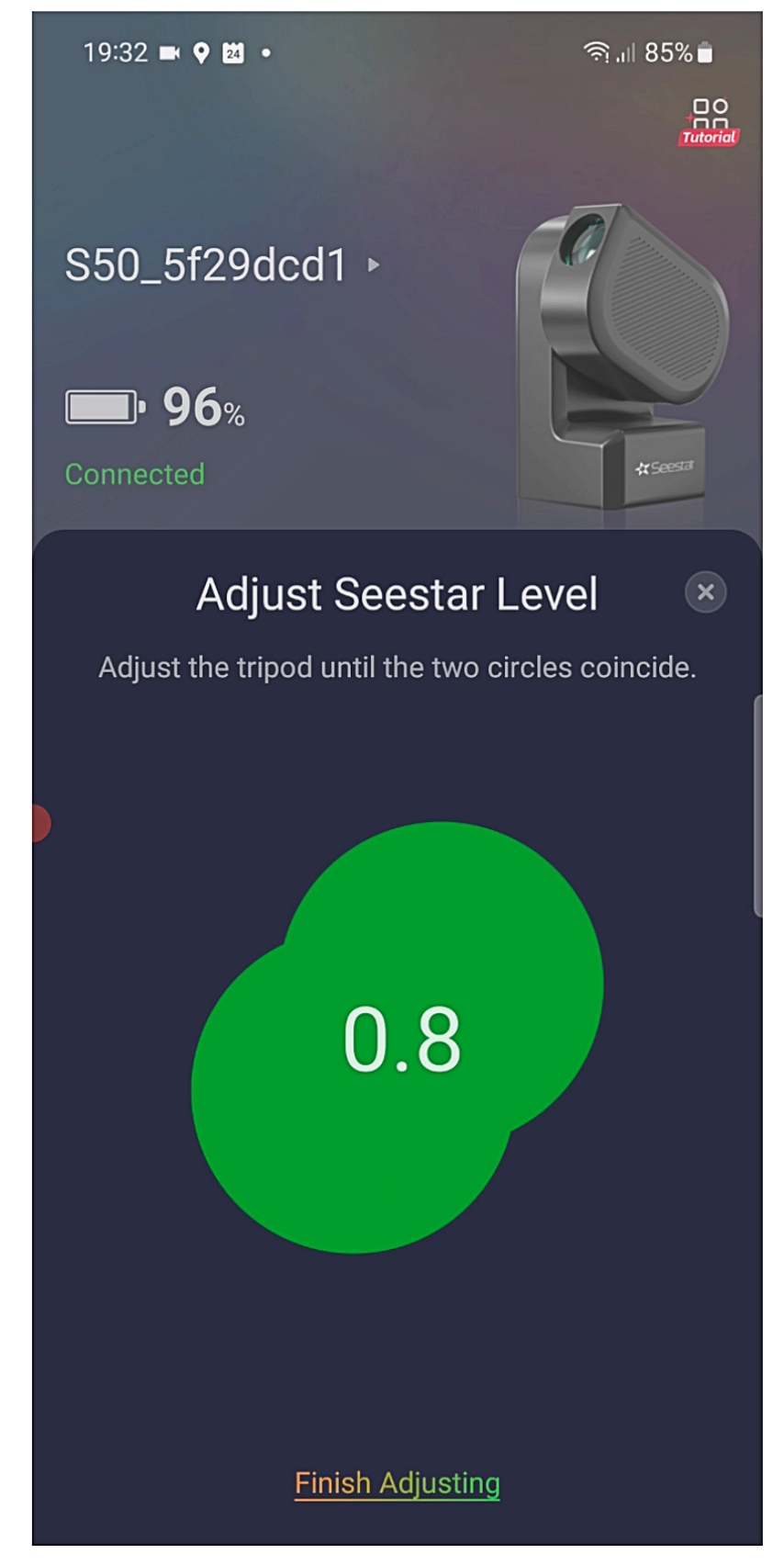
The SeeStar tracks stars and planets automatically. To best do that, the user has to calibrate the mounted telescope to Earth’s magnetic north by turning it around 360 degrees. Easy peasy. Once done, the SeeStar needs to be level and it has a function that needs tapping to reveal two circles. To get the best tracking results, the reading should be 0 to 2. A screenshot of the SeeStar leveling screen is at the end of this post.
The image of M31 to the left was taken with level .06 and expanding your screen, you can see that it didn’t track well. The stars are slightly elongated and were a tad unfocused. The image to the right, taken last night under less clear skies, was taken at level .02. In the time between these photos, I learned how to better level the scope and better focus on distant stars. You can see that stars taken on Dec. 8 (right) are better focused that the photo take on Dec. 7. We live, we learn.
Measuring Sky Brightness
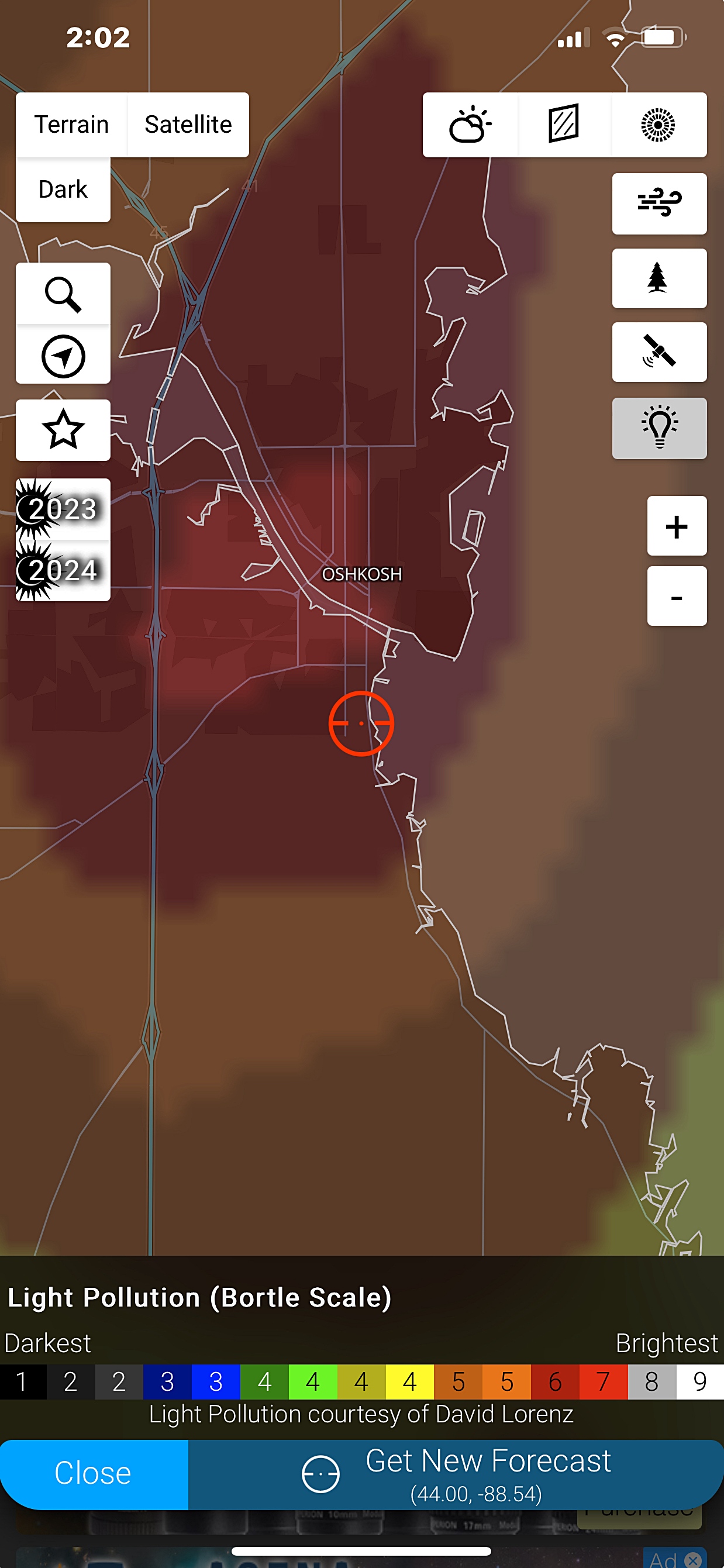
Weather being what it is, my next opportunity to photograph cosmic wonders occurs on Dec. 12-13, if forecasts are correct. It would be helpful if I lived in an area without so much light pollution. I’m in a Bortle Scale 5, and truth be known, I’m a couple of hundred feet away from a Bortle 6.
We first learned of the Bortle Scale in a 2001 issue of Sky & Telescope. John E. Bortle created characteristics of light pollution, gave numbers to those characteristics which ranged from 1 to 9. The lower the number, the darker the sky. If you want to type in the address of where you live or hope to observe, the website clearoutside.com will do that for you. A free App by the same name can be downloaded for phone or pad.
 Cosmic