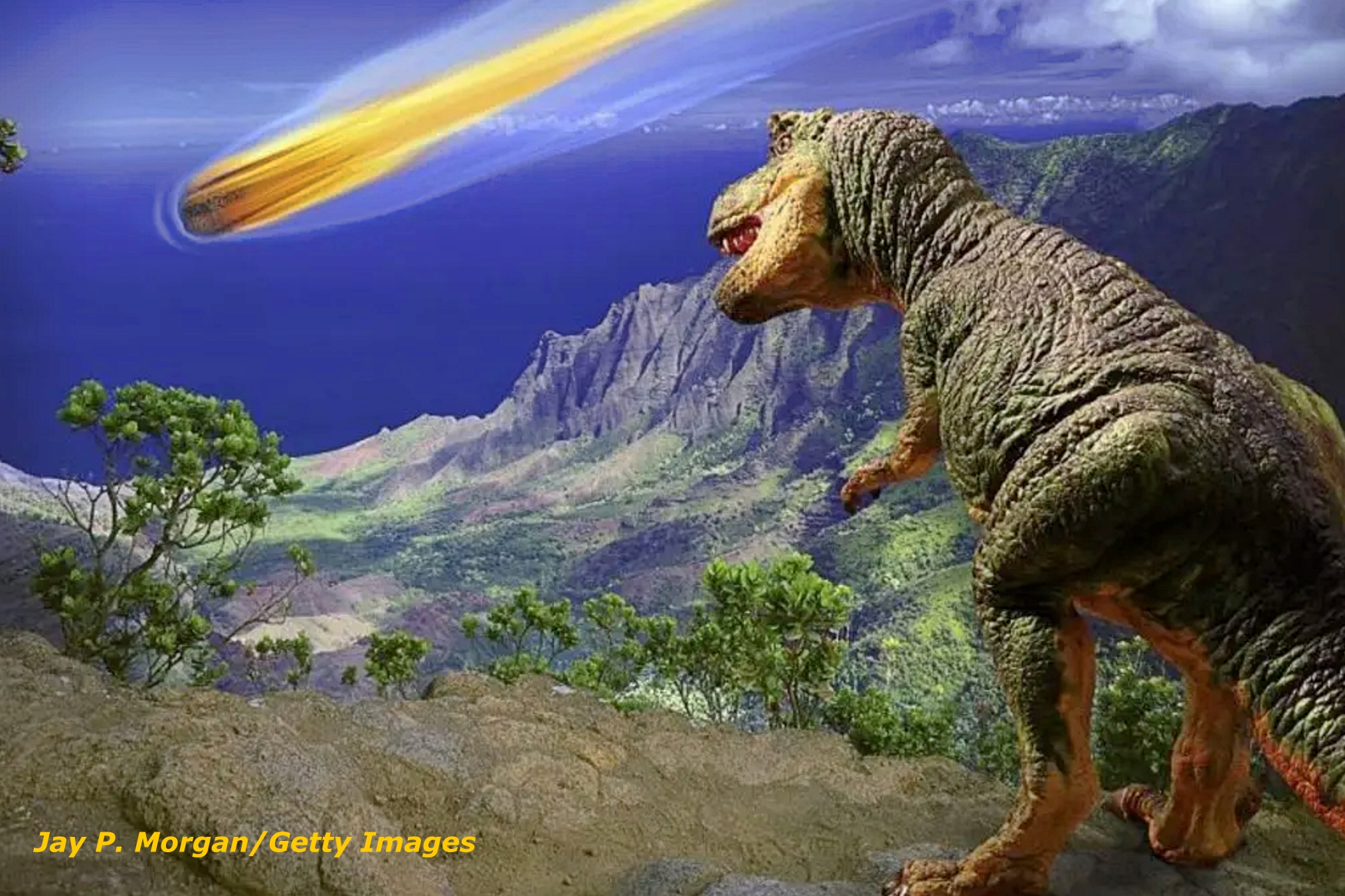
IT’S IMPOSSIBLE TO know what phase the moon was in 109 million years ago when a six-mile-wide asteroid slammed into the moon’s southern highlands. From Earth, dinosaurs thriving in the Cretaceous Era would have noticed the conflagration a quarter of a million miles away. For days and nights that followed, major impact debris flying high over the moon would have reflected sunlight, giving the moon a halo effect as that matter scattered or fell back to the moon.
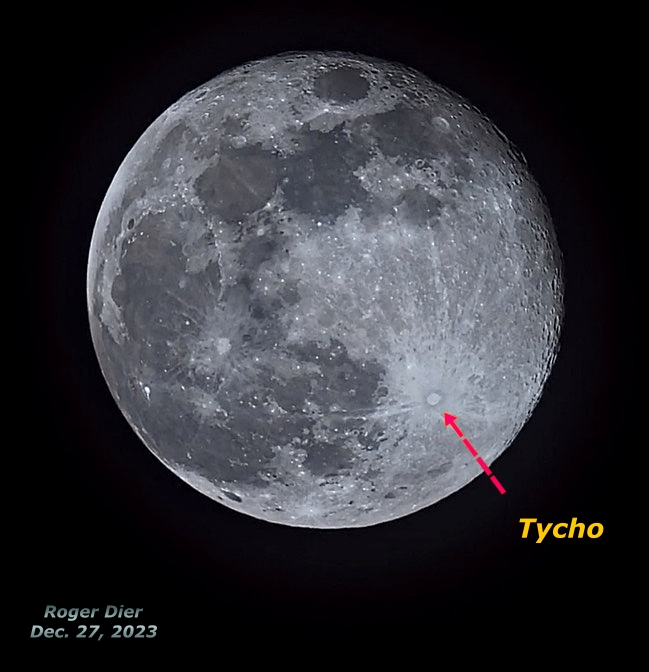
During evenings on either side of a full moon, the crater Tycho dominates the southern face of the moon. The crater is large enough (53 miles wide) to be visible from earth without optical aid. Helping us to see it are the bright impact rays that stretch north, south and east from the impact sight, drawing our eyes to the center of the Tycho bullseye. The energy that created Tycho melted rock and threw debris, hot and cold, for a thousand miles across the lunar surface. During full moons, we can easily see those rays today because they are brighter than the older terrain of the moon. Micrometeorites and solar storms have not had time to erode and shade the debris from the violent Tycho impact and turn the excavated matter to dull gray, like the rest of the 3.9 billion-year-old moon.
It’s conceivable that debris from the astroid strike, which produced the equivalent of 30 trillion tons of TNT, left lunar orbit and made its way to earth, where it was vaporized in spectacular meteor showers that lasted for months and years. For the dinosaurs, it was an omen of what was to come 43 million years into the future when a similar-sized asteroid created the Chicxulub (Chicks-sue-lube) crater under the waters off the Yucatan peninsula. That Chicxulub collision set the world first on fire and then to a deep freeze under decades of total darkness, eliminating 80% of all living things. Bad news for the dinosaurs. Good news for the mammals.
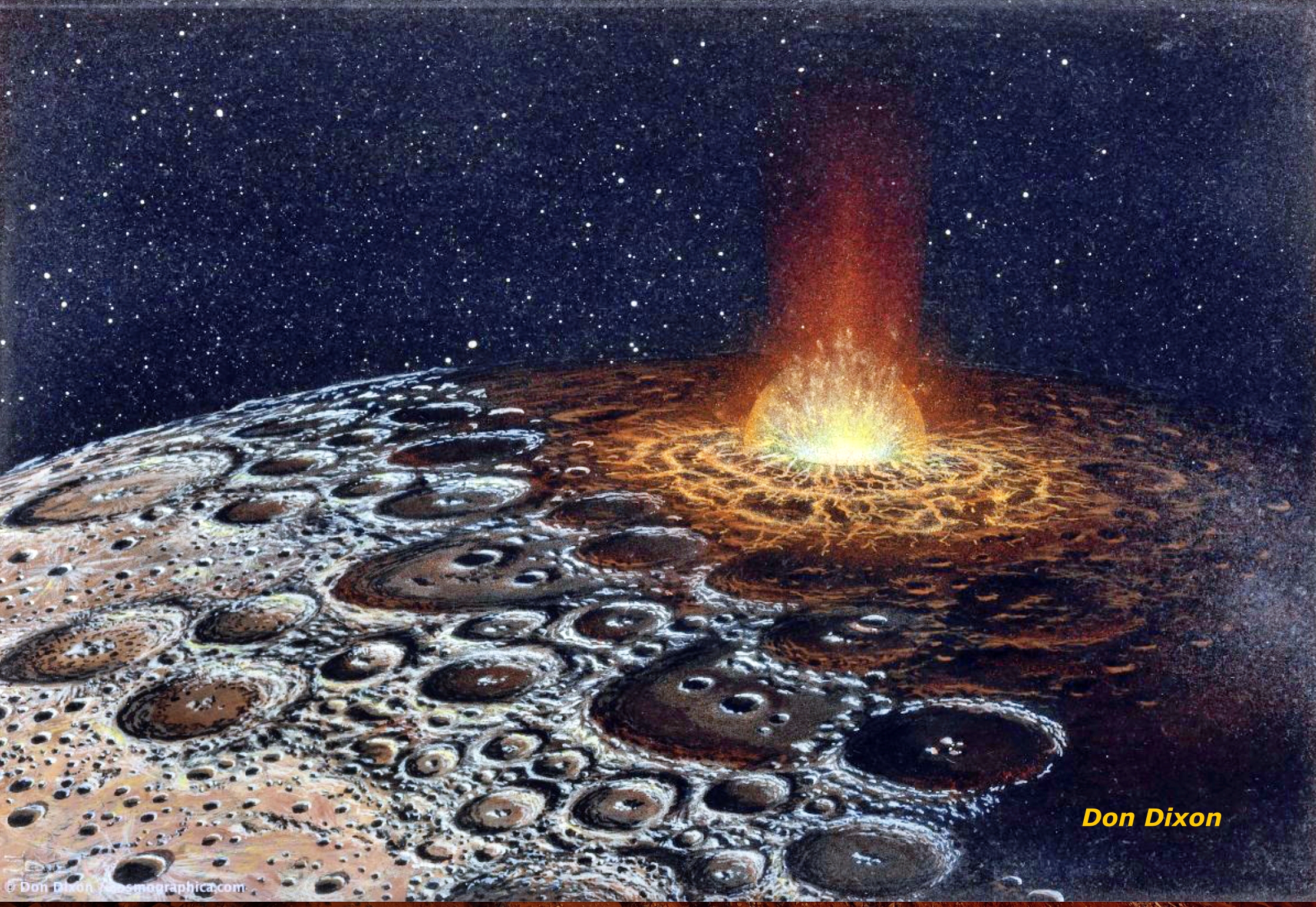
Don Dixon, who married space to art, shows Tycho being struck from an angle near 90 degrees. Not so. The asteroid that created Tycho came in from the west and struck the moon at a low angle, melting everything at the impact site and surrounding lunarscape, mainly to the east and north. Molten matter from hills and mountains were flung across the moon for hundreds of miles. It must have been a celestial show.
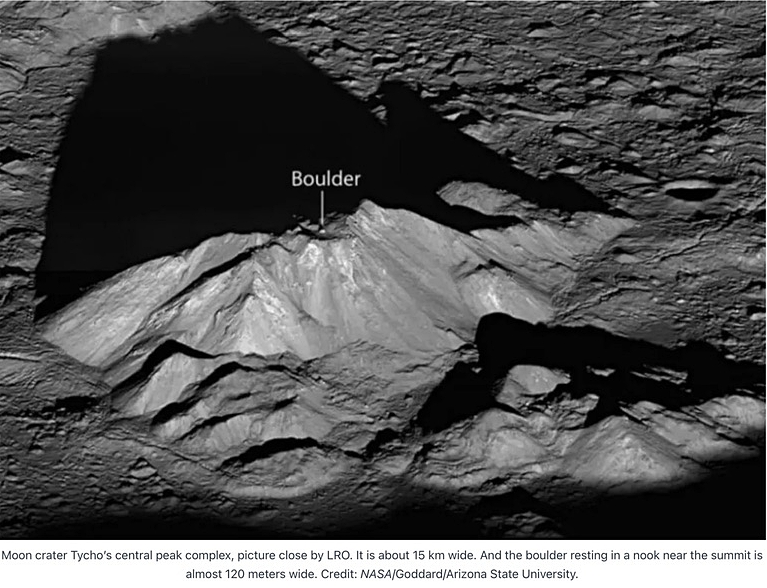
At its deepest, Tycho crater is almost five miles deep from the rim to the floor. Rising 1.4 miles from bottom of Tycho is a central peak, created when the suddenly molten surface rebounded and eventually cooled after the impact. There’s a big boulder at the top of the central peak. Who is to be the first human being to stand on that huge boulder and absorb that unique perspective for the rest of us?
TYCHO BRAHE
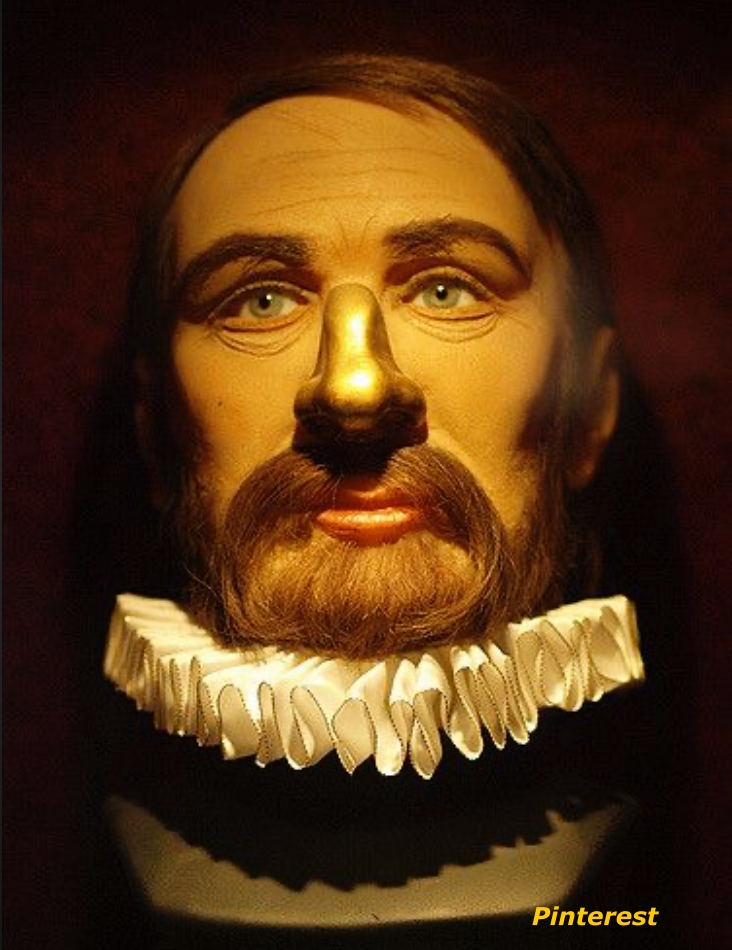
Tycho Brahe, a Dane, was an excellent astronomer who lived for 55 years, mainly in the 16th century. He took careful astronomical notes of everything he saw, night after night. During the 20th year of his life, he lost the tip of his nose in a drunken sword fight with a cousin. Both claimed to be better at math than the other. We know who was the better dude with a sword. Tycho wore a prosthetic nose made of gold for the rest of his life, held in place by an adhesive of the era.
 Cosmic