It has been a calendar month since the sky over Oshkosh, Wisconsin has been clear of clouds and free of turbulence. I have been as patient as a statue waiting to explore the wondrous winter constellations, but as the nights and weeks ticked by, I began to wonder whether the weather would ever cooperate again.
On Saturday, Feb. 3, the sun broke through about noon and by nightfall, the diamond that is Sirius barely twinkled above the southeast horizon. Up, up and away to the west of Sirius rose the master of the winter night, Orion the Hunter.
I calibrated my SeeStar S50, leveled it and sent it to M42, the dazzling goop of dust and gas that probably is the most viewed and photographed object in the northern hemisphere. Within moments, M42 appeared on the screen of my iPhone 15, and as this was the first time I photographed it using the two-inch SeeStar, I took a couple of one-minute exposures without a light pollution filter and with one of my filters, which almost cost as much as the SeeStar itself.
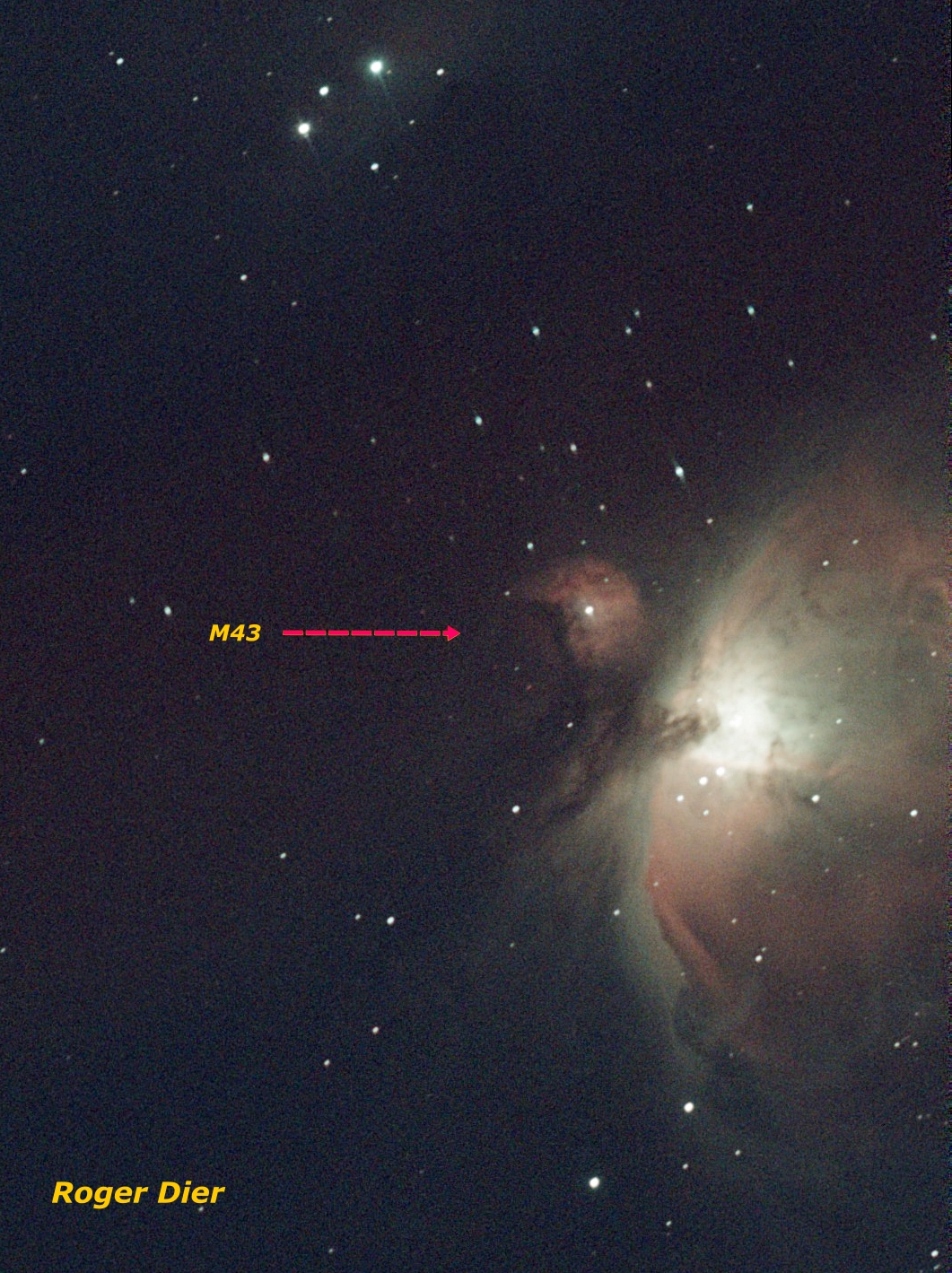
The Orion Molecular Cloud Complex is in the northern Milky Way. It contains about 3,000 stars and spreads out over hundreds of light years. When interstellar gas and dust come together in a gravity party, stars are often born. I’ve highlighted the location of M43, the little brother of M42, which dominates the scene. A river of dust separates the objects. Some observers liken M42 to a crab, or a lagoon. Whatever the nickname, this reflection nebula is spectacular, the brightest (4th magnitude) nebula in the night sky.
A LONG JOURNEY

M42 has been around for about 100,000 years. The images you see here left that part of the cosmos around 600 AD, about the time fleas learned to suck the blood of diseased rats and then hopped onto humans to share that sickness. People carrying your DNA lived through that first plague, which began in Egypt before migrating to Europe. As light left M42/M43 more than 1,500 years ago, your DNA made its own long journey, surviving repeated pestilence, starvation, hardship and heartbreak to bring the light of life to you. Both it and us are cosmic wonders.
Back to reality. When expanding the picture to the left with your fingers, you can see the four stars in brightest part of the image. These four stars are known as the trapezium. The quartet of new furnaces are one and a half light years apart, incredibly close in space measuring. The energy of these newborn stars in this stellar nursery supplies the energy to light up the surrounding gasses. Without filtering, the red from hydrogen, the seminal substance of the cosmos, is dominate.
LETS ADD A NARROW ULTRA-HIGH CONTRAST FILER
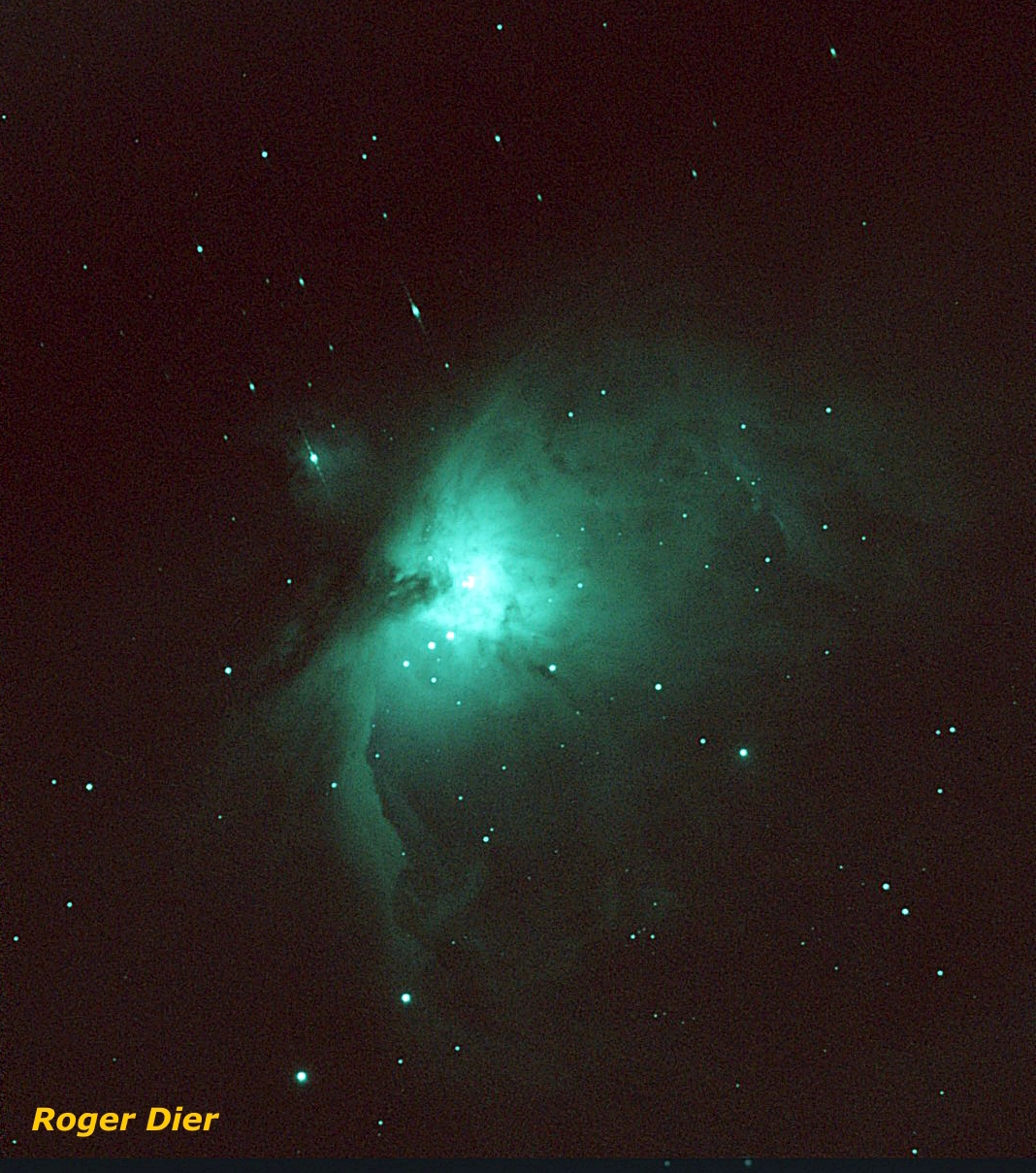
The Tele-Vue Bandmate Nebustar Type 2 UHC filter blocks most of the light pollution in my Bortle 5 sky. At the same time, it allows certain kinds of light emissions to pass through the filter, mostly doubly ionized oxygen, which gives the image on the right, a one-minute exposure, the greenish hue.
The image centered below is a five-minute exposure using the same kind of oxygen-enabling filter.
Thank you for reading. At the bottom of this page, you can subscribe to Rogerdier.com so you’ll get these Cosmic posts as soon as they’re published. It’s free. Always will be.
In my next post coming this week, we’ll explore the Horsehead Nebula and also M41, an open cluster in Canis Major.
With every good wish to you and the people you care about.
–Roger Dier
Feb, 4, 2024
 Cosmic