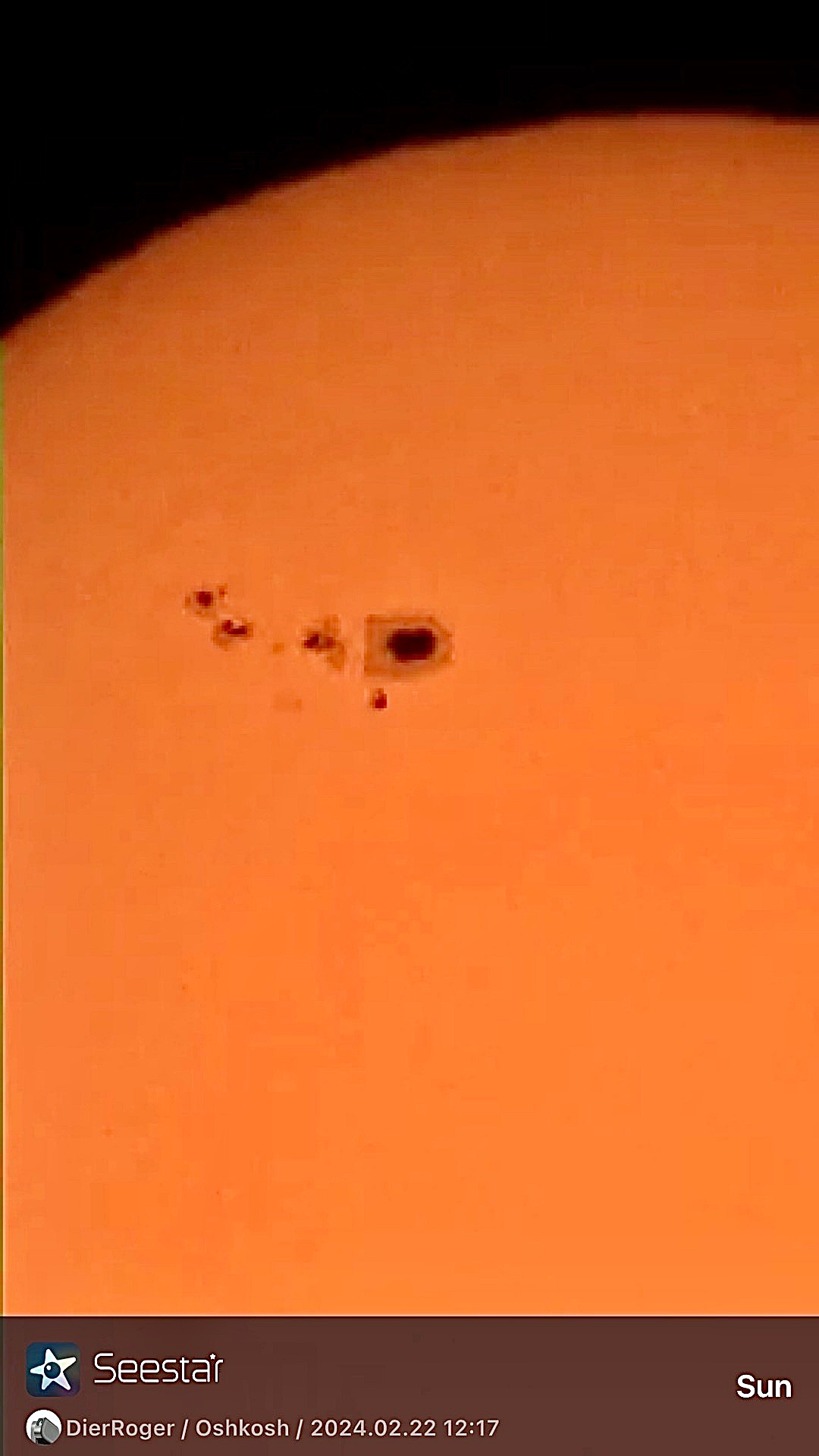
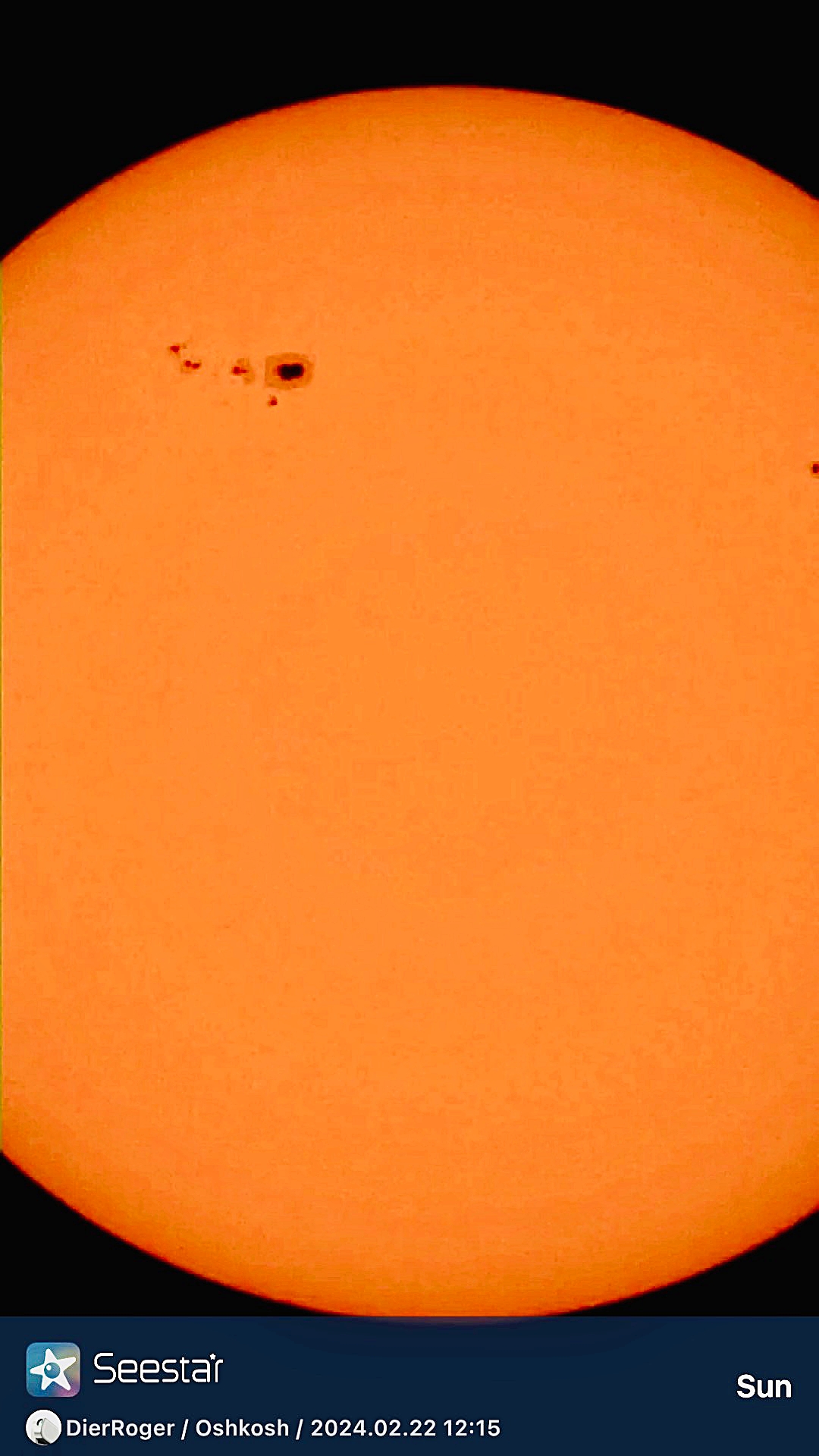
A particularly interesting sunspot group is currently making its thirteen-day trip across the face of the sun. When I first spotted it a few days ago, both the umbra and penumbra were rectangular shaped, especially the penumbra, which had a state of Iowa feel to it. The two photos at the top were taken on Feb. 22, 2024.
Sunspots are in the sun’s photosphere—the outer “atmosphere” of the sun—and because there is wild magnetic intercourse within sunspots, that magnetic turbulence acts as a dam to the energy (heat) beneath it. Sunspots are cooler parts of the sun’s photosphere and because they are, sunspots appear darker in contrast to the surrounding areas of the sun where energy radiates unimpeded.
Two Days Later
Two days later I visited the sun’s surface again to see how the massive grouping appeared. It had moved—it would have been news if it had not—and it had changed shape. The grouping morphed from Iowa into the Hawaiian chain. I did not expect that the rectangular shape to last—if you watch closely, you can see the shapes of sunspots change before your eyes—and this grouping changed considerably. All of these photos were taken with a SeeStar S50 (it comes with a solar filter) and as you can see, the dark umbra and lighter penumbra on both days were crisp as iceberg lettuce right out of the fridge.
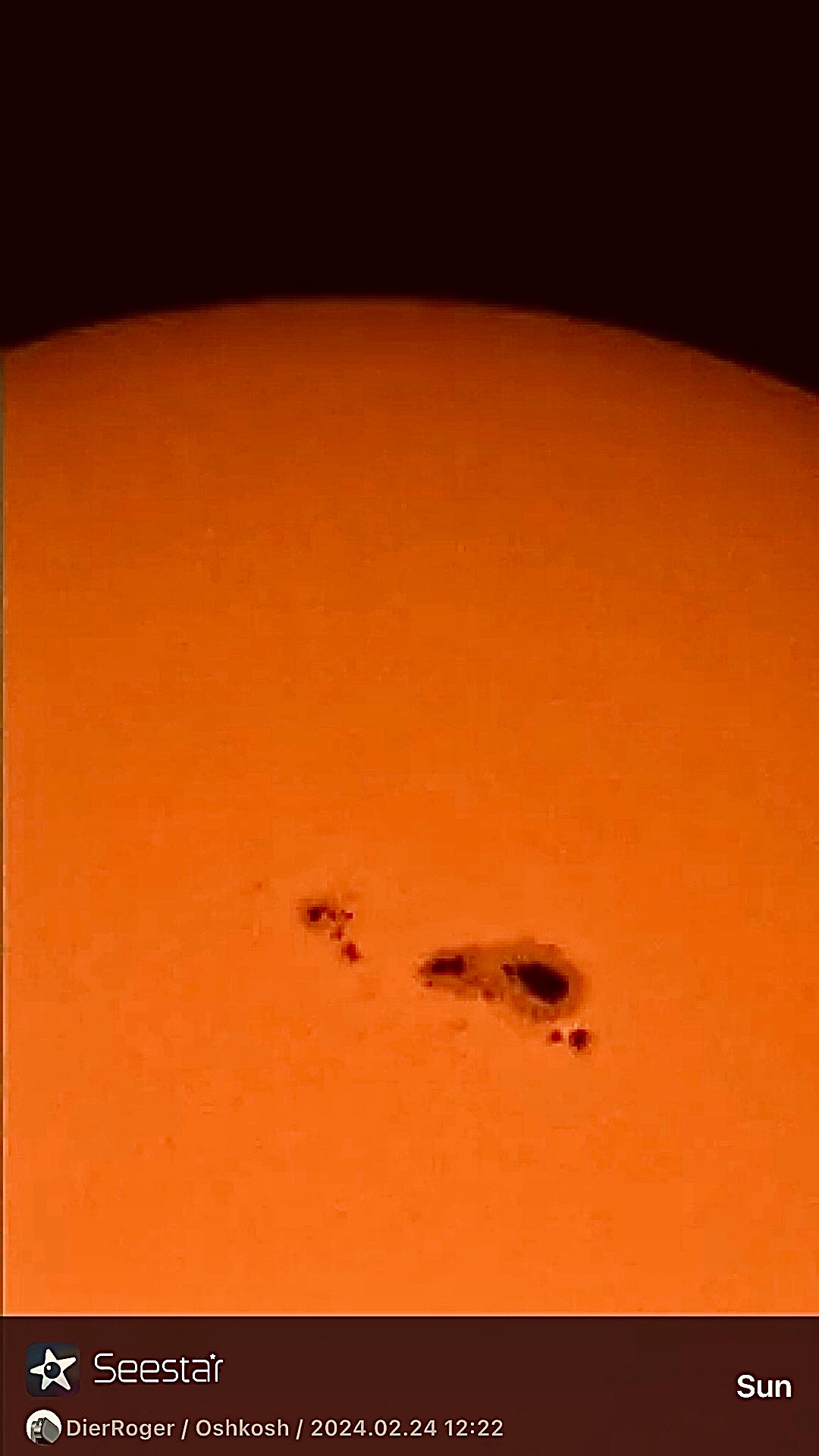
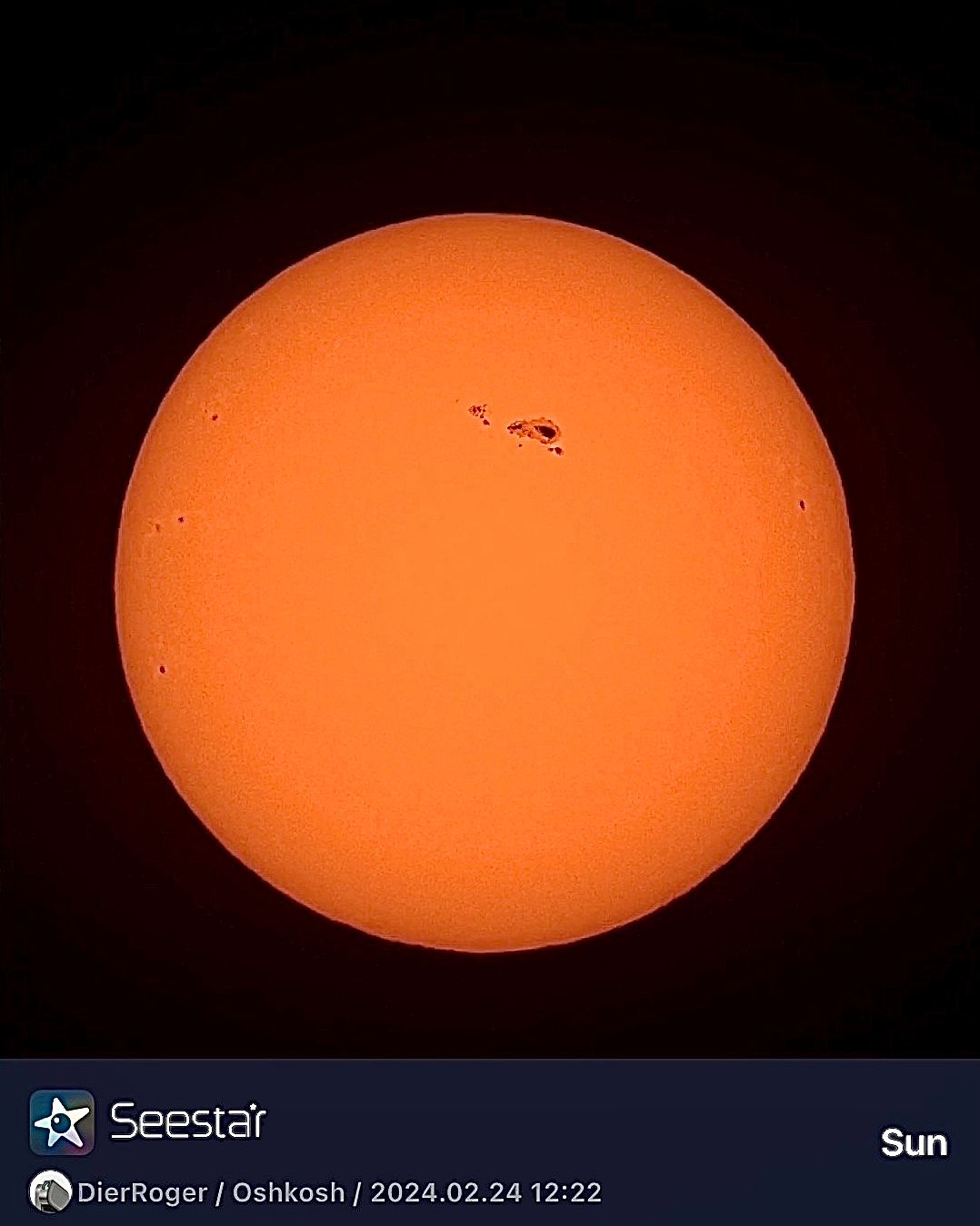
As far as size goes, this magnetic storm on the sun is massive. It’s been theorized that we could tuck 1.3 million Earths into the sun. If that is so, my guess is that a string of thousands of Earths could form a necklace from one edge of this massive sunspot grouping to the other.
During a recent SeeStar S50 software update, the manufacturers added variable magnifying power to the objective lens, a two-inch triplet. On the sun and moon, SeeStar users are able to see both at twice the power and four times the power. Nice additions. The photos shown were taken at different magnifications the SeeStar provides.
During solar sunspot maximum’s, which we are nearing, there are hundreds if not thousands of sunspots in a given month. Given that kind of volume, I’m quite sure sunspots sometimes resemble shapes familiar to humans: circles, ovals, squares etc. Though I’m not a ritual observer of the sun’s surface, seeing a sunspot that appeared almost perfectly rectangular was a first for me.
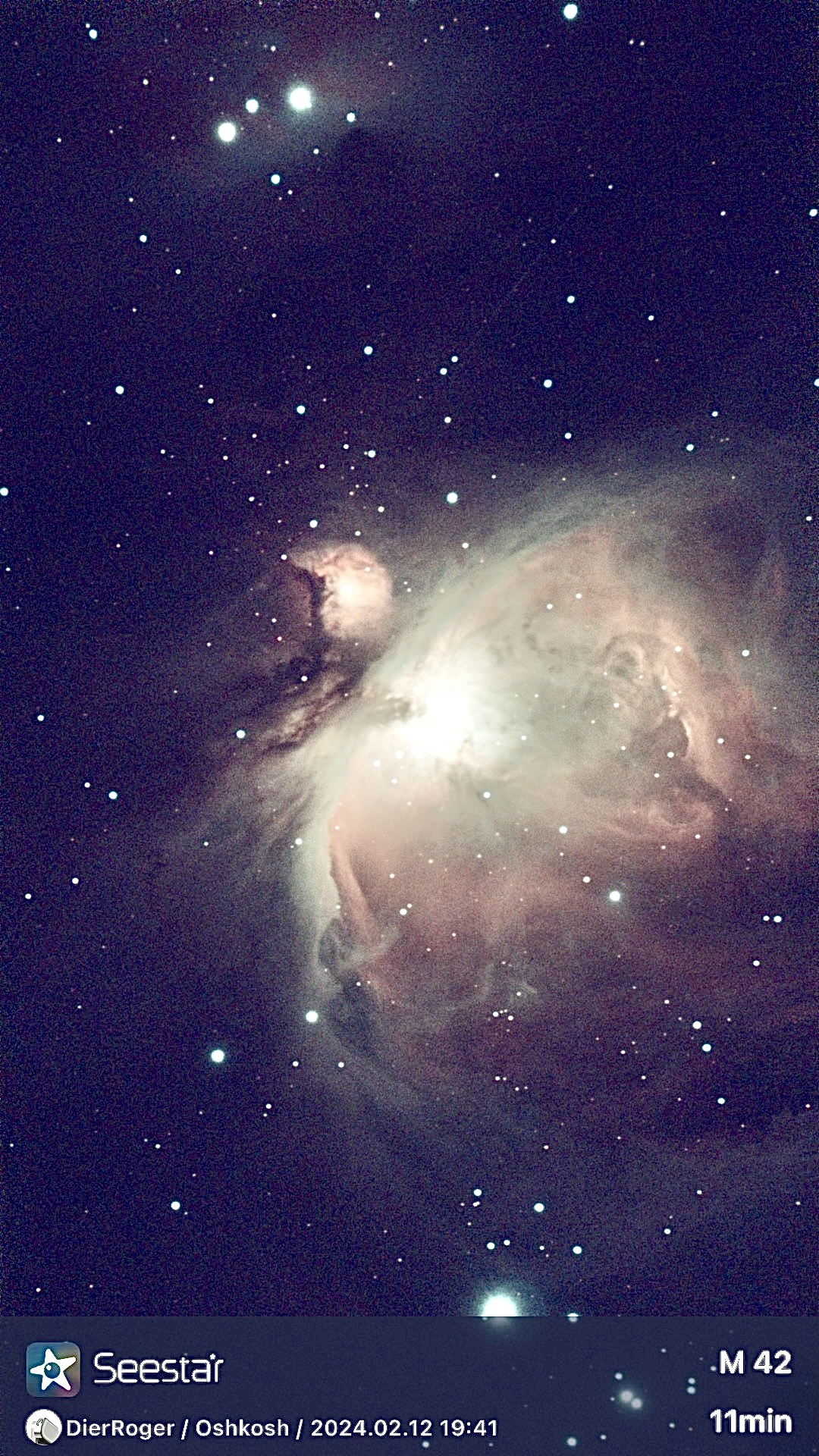
Earlier this month, I snapped a photo of M42, which appears below. The exposure lasted for 11 minutes and the stacked images give this spectacular nebula a 3D effect. There is so much detail and color to soak in. I’d like to fly around it to see M42 from the other side.
Let your mind float. Somewhere in a future that we wouldn’t recognize, someone or something is going to want to make a little coin off the sights of the cosmos. Stellar Tourism will be a thing. If our descendants are able to climb aboard a sightseeing craft that could zoom around our galaxy at speeds not yet known, M42 will be a must-see stop on all those tourist ships zipping around to see the sights.
I’d sign up for one of those trips. Coach. Center seat.
Thank you for visiting Rogerdier.com. You can subscribe for free below the picture of M42.
 Cosmic