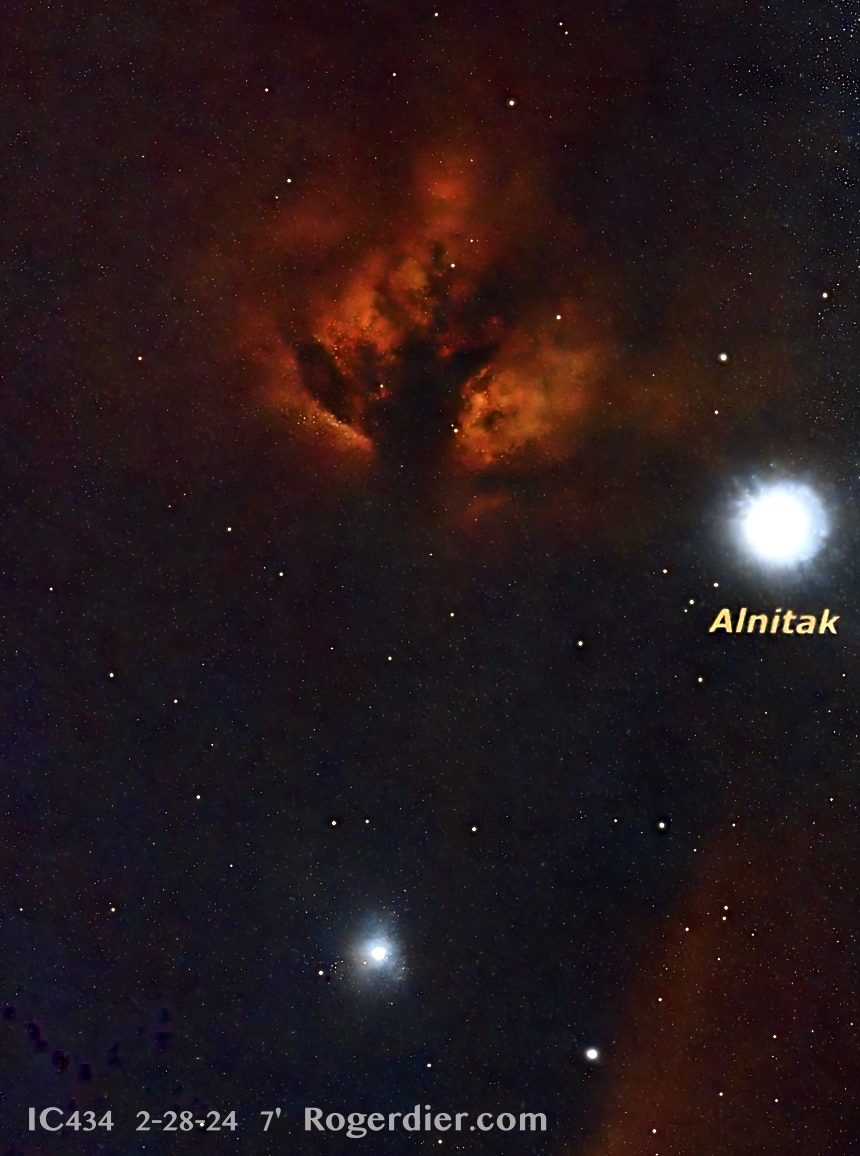
In 2024, while photographing the Horsehead Nebula, I discovered NGC 2024, also known as the Flame Nebula. It looks like an earthen flame, but a case could be made to call it the Tree of Life nebula. Either way, it’s a spectacular object with dark clouds of gas and dust that create shadowy lanes that snake through the hydrogen clouds.
CHILDHOOD LITERACY
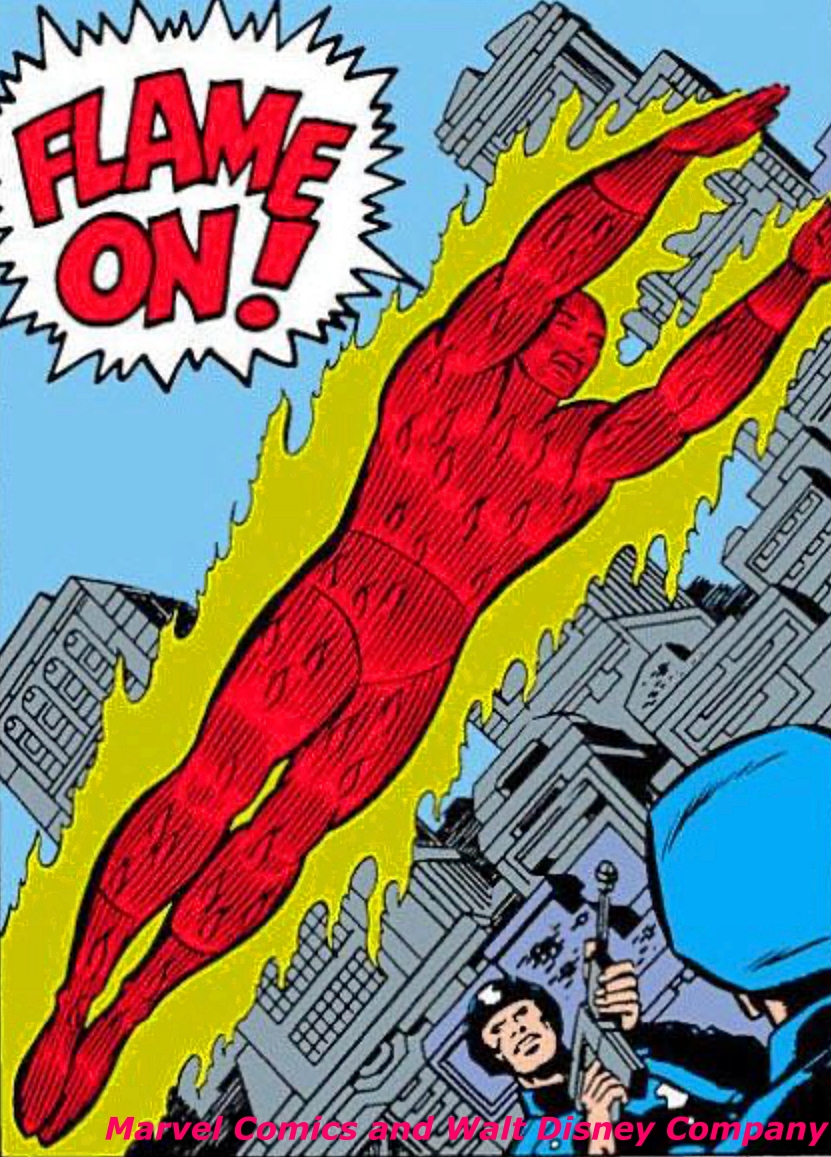
When I first viewed the gathering pixels of the Flame Nebula on my iPhone, my mind returned to the 1960s. My boyhood friends, brothers Joe and Greg Lemerond, had a huge metal bin in their garage full of comic books of all kinds. We’d pass summer days on lawn chairs, reading (and re-reading) imaginative tales of writers and artists who had mad skills. There had to be more than a thousand comic books in that 4 x 6 foot bin: Superman, Batman, Creepy, MAD Magazine and Spiderman who took on villains like Dr. Octopus, the Green Goblin, Vulture, Sandman and the Scorpion, among others. There was also a Marvel Comics group called the Fantastic Four. One of the Four, Johnny Storm, was known as The Flame. Whenever Johnny needed to do superhero stuff, Johnny would yell “Flame On!” Once Johnny uttered those words, he combusted. Poof! Johnny Storm became The Flame and he was able to fly and throw flame balls at bad guys. A good friend to have.
WHAT LIGHTS THE LIGHT?
The Flame Nebula, also known as IC434, is near the easternmost star in the belt of Orion named Alnitak, which is the main star of a three-star system. Alnitak, the fifth brightest star in Orion, is an incredibly hot blue supergiant. It is 33 times larger than the sun, but it is 250,000 times as bright as our star. Mundane small stars like our sun are known as yellow dwarfs. Yellow dwarfs are little, unassuming furnaces that last for billions of years. Not so with Alnitak, whose spectral classification is type O, and the motto of Type O stars might be: Live fast. Die young. Leave a spectacular corpse. Though only 6.4 million years old, Alnitak already nears the end stage of its life. It is burning hydrogen so fast that it soon will explode into a supernova. How soon is soon? Maybe in a million years, give or take.
Alnitak is the furnace that illuminates the hydrogen of the Flame Nebula. The energized ultraviolet light of Alnitak zaps the cloud of hydrogen which forms the body of the Flame Nebula. Alnitak’s energy drives off the electrons from hydrogen in that cloud. When those orphaned electrons recombine with hydrogen, the hydrogen becomes an ionized glow. Flame On!
THE STARFISH CLUSTER
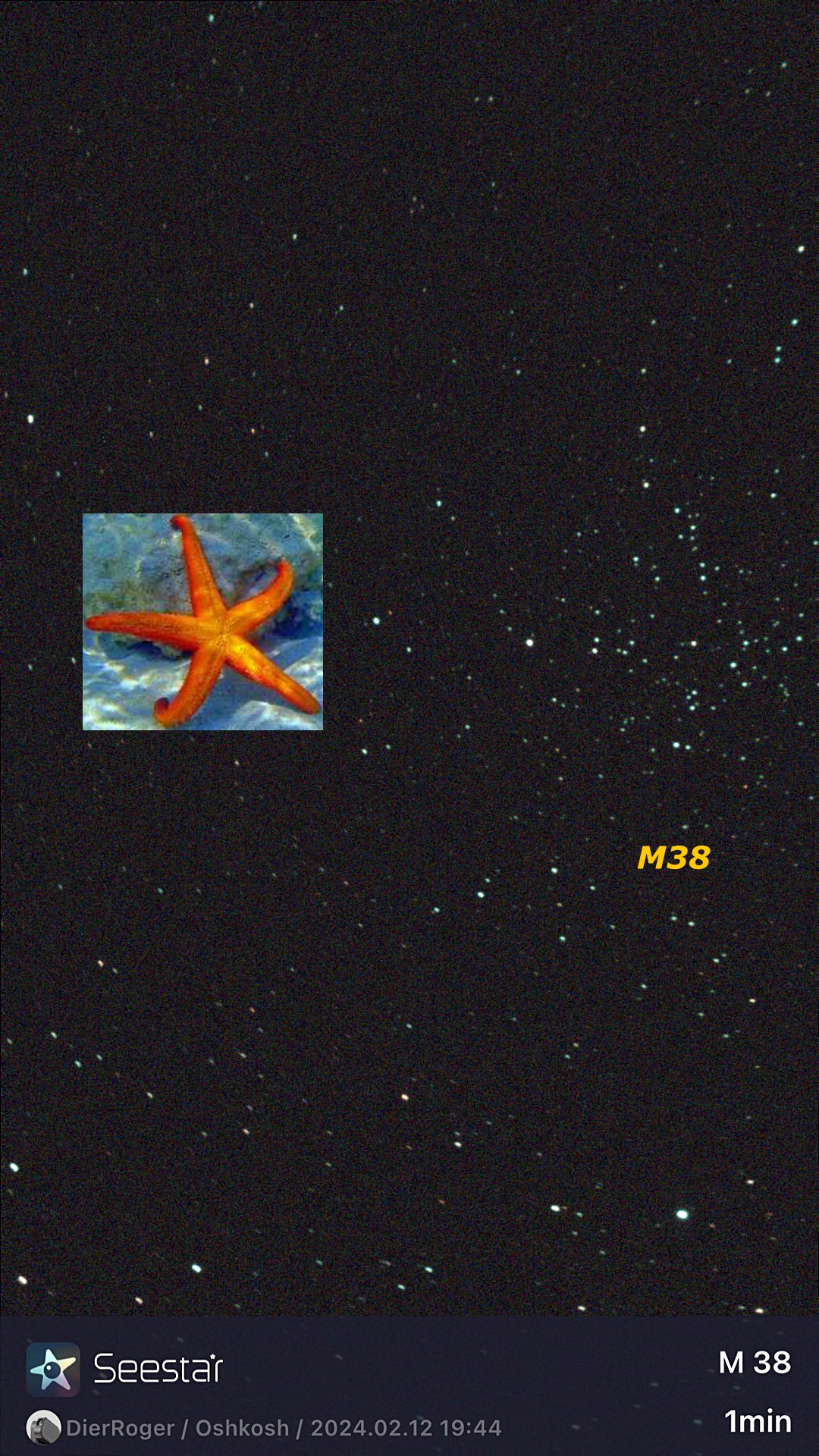
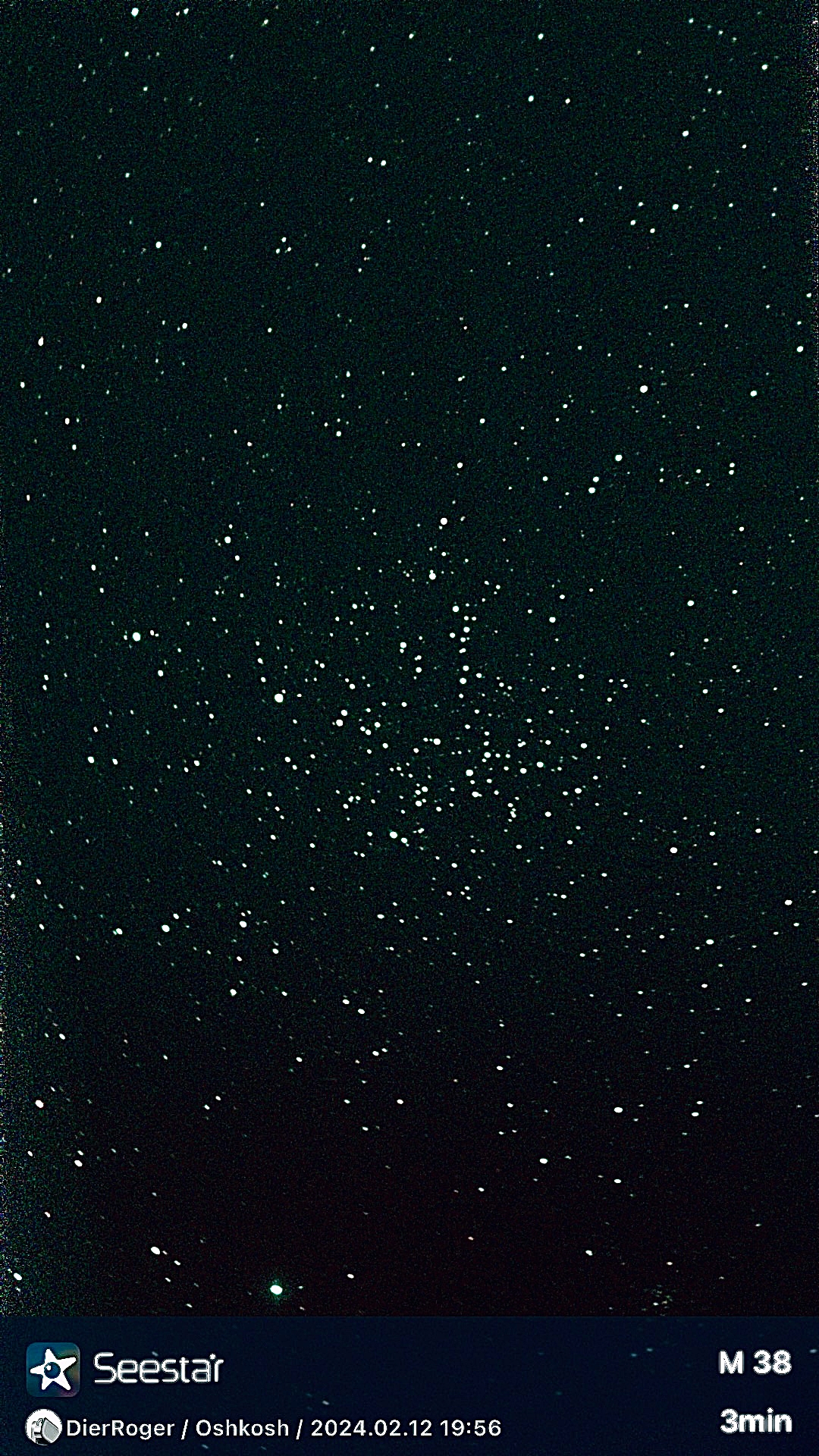
The Starfish Cluster, known as M38 and NGC 1912, is an open cluster in the constellation Auriga. At magnitude 7.4, it is much too dim to be seen without optical aid. Binoculars reveal the cluster’s brighter members.
The cluster is 4,200 light years distant and 220 million years old. Unlike the Flame Nebula, the stars of the Starfish Cluster are Average Joe’s (and Josephine’s) that don’t burn hydrogen as quickly or brightly but live far longer than the larger blue-white giants.
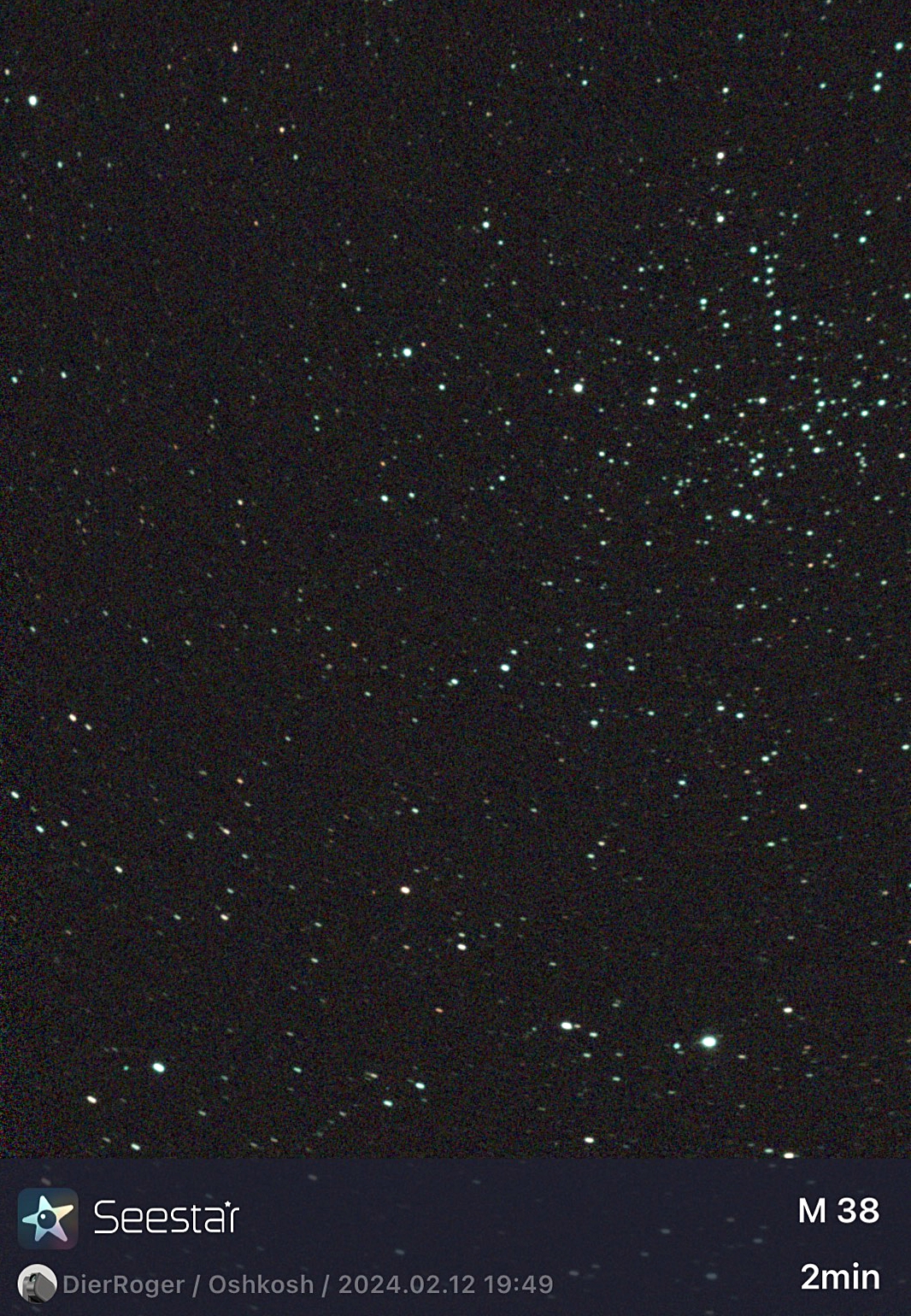
Amateur astronomers tagged this group the Starfish Cluster. It’s interesting that the fewer stars one sees in this cluster, the better it is for our imaginations to paint the picture and see the similarities with starfish. In the two- and three-minute exposures, we find more stars but our imaginations suffer.
If there’s a lesson here, I can’t imagine what it is.
Please sign up for a free subscription at the bottom of the page.
 Cosmic