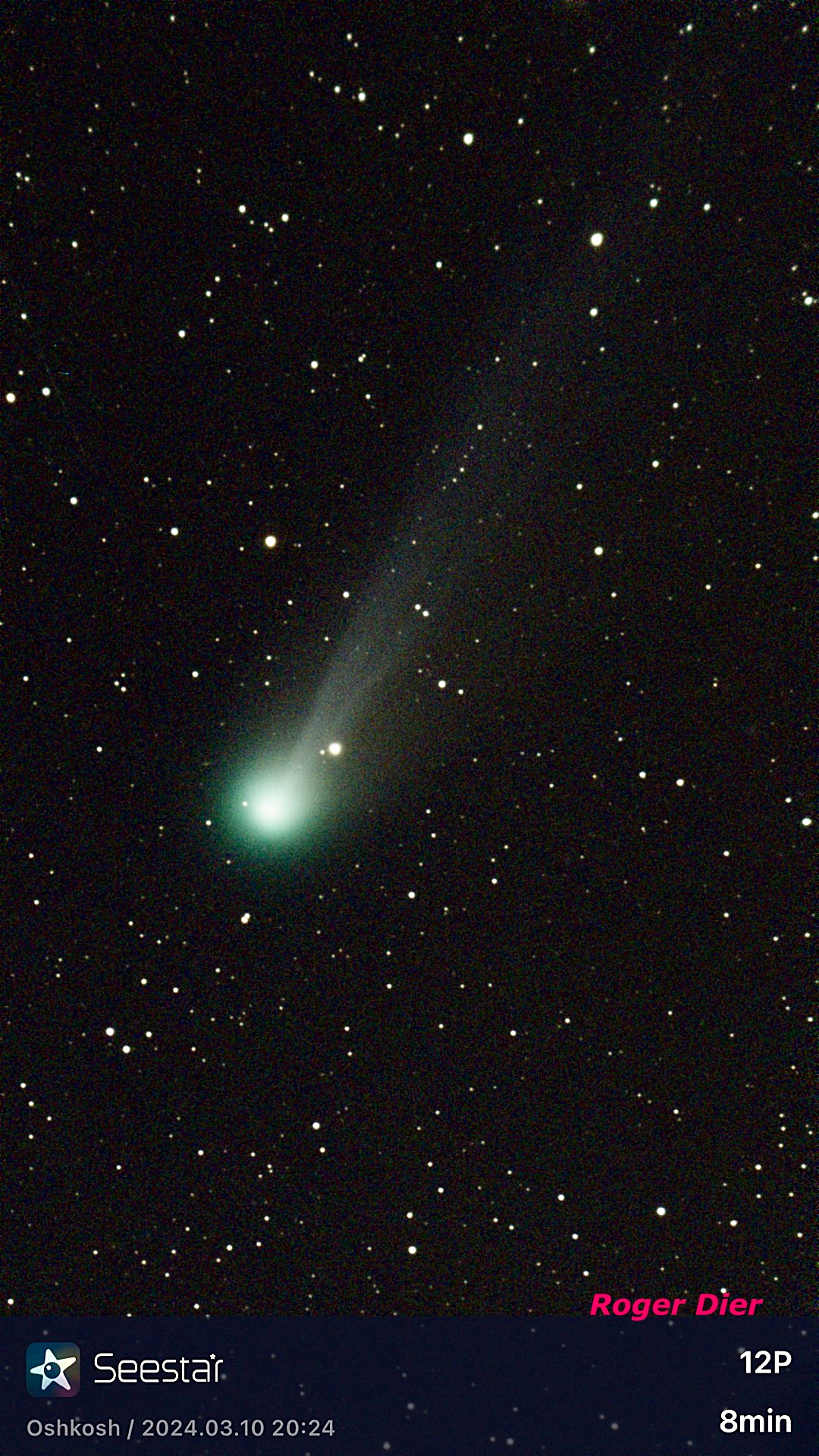
I have spent several evenings and way-too-early mornings chasing comets. Some of the brighter ones in my astronomical lifetime-Comets Halley (1986), Hale-Bopp (1997) and NEOWISE (2000)-were fantastic adventures involving binoculars, cameras or small, wide-field telescopes. I have photographed other comets that were unremarkable in appearance and too dim to make the popular press.
Too much of the time during my past comet-seeking adventures has been spent on the seeking. At times, it was frigid or mosquito-swatting work. Mostly, it was exercise in frustration. Using a film camera, it was point, shoot and hope. Before digital photography, I didn’t know if I captured a comet until the film was developed by Tom Groebner at New Ulm Drug & Camera. At least in the digital age, I could take a quick look at the exposure to see if I snagged the smudge.
The word Comet means “hairy star” in Greek. To the pre-Galileo ancients, that’s how comets looked. Once our technology developed, we were able to understand that comets are, in the memorable description of Fred Whipple, little more than “dirty snowballs.”
Pons-Brooks
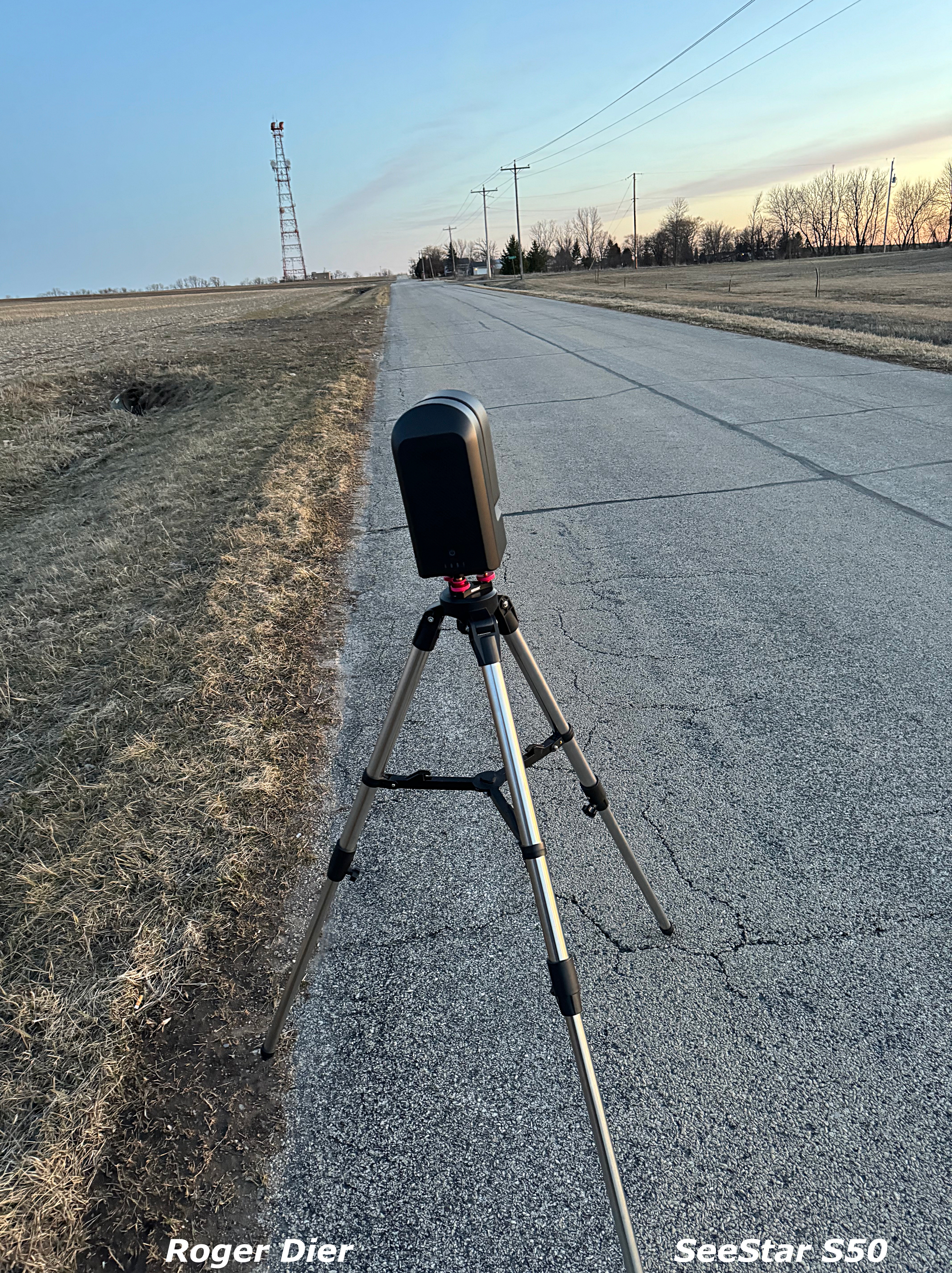
I heard that a periodic comet known as 12P/Pons-Brooks was visible in the evening sky, hanging out in the constellation of Andromeda. So I packed my SeeStar S50, kissed my wife and drove west on Highway 44 to get a little darker sky and a better view of the western horizon. The sun set around 7 p.m., so I swung left off Hwy. 44 onto James Road and found a spot that looked like it would work. I turned on the SeeStar, did what I had to do to help it find Earth’s magnetic north and get it level. By the time I finished those tasks, Sirius and Jupiter were visible, so I took some warm up shots. When it was sufficiently dark, I went to the appropriate screen on my iPhone and tapped out Pons-Brooks and the telescope swung low to about 30 degrees above the darkening northwest horizon.
Before I asked the SeeStar to start stacking photographs, I could see a diffuse light with the hint of a tail on my phone screen. It looked to be about magnitude 5.8, as advertised. Then the two-inch triple lens got busy. One of the more pleasurable sensations of using this technology occurs when you watch the image appear and develop as the SeeStar goes to work. Moments after that little 10-second wheel goes around, the SeeStar enhances the stacked images and adds them to the images on the SeeStar pile. With every turn of the wheel, the master image brightens and deepens in texture. I’ve learned to pay attention to the stars in the background. If they stay sharp as images stack, I know all my pre-shot preparations worked.
Eight minutes into the shot, I decided it was enough. The camper was happy.
And the Academy Award Goes To …
The comet is named after the greatest visual comet-seeker who ever lived, Jean-Louis Pons. The Frenchman developed lenses of his own design that created a large aperture and short focal-length telescope. On July 12, 1812, Pons described a new discovery as being “a shapeless object with no visible tail.” Orbital calculations suggested it was periodic, making trips to the inner solar system an average of once every 71 years. Pons’ discovery on that July night in 1812 was one of 37 comets he discovered; the most in history. Seventy-one years later in 1883, a British-born American comet seeker named William R. Brooks spotted one of 27 comets he discovered, the second most in history. Orbital calculations of Brooks’ discovery revealed that it was the same comet that Pons found 71 years earlier. There was plenty of discovery credit available, so the Galactic Rulers awarded the finder’s fee to both gents.
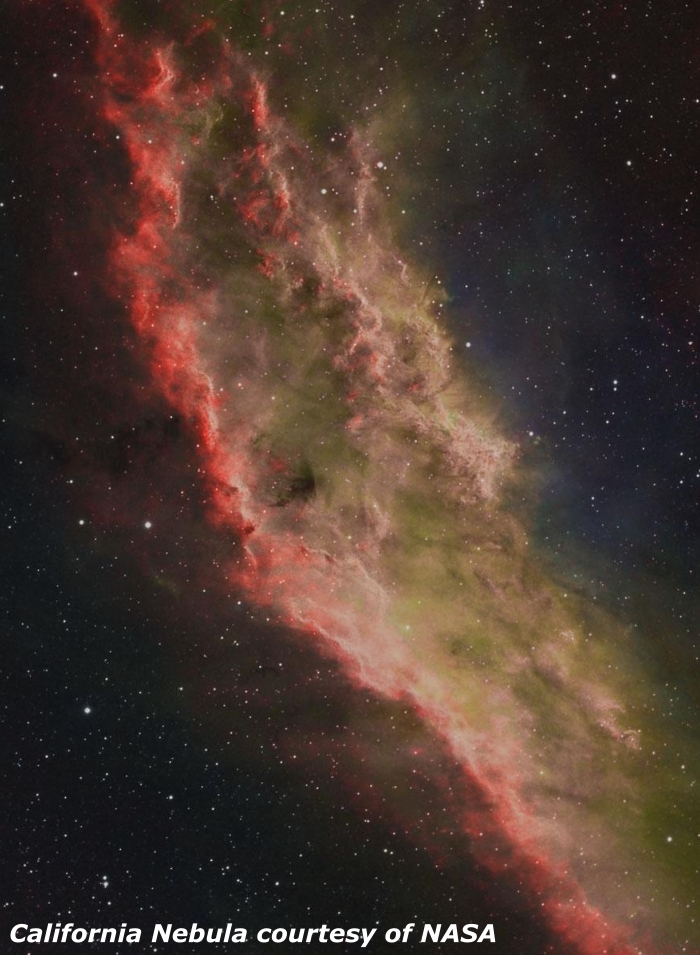
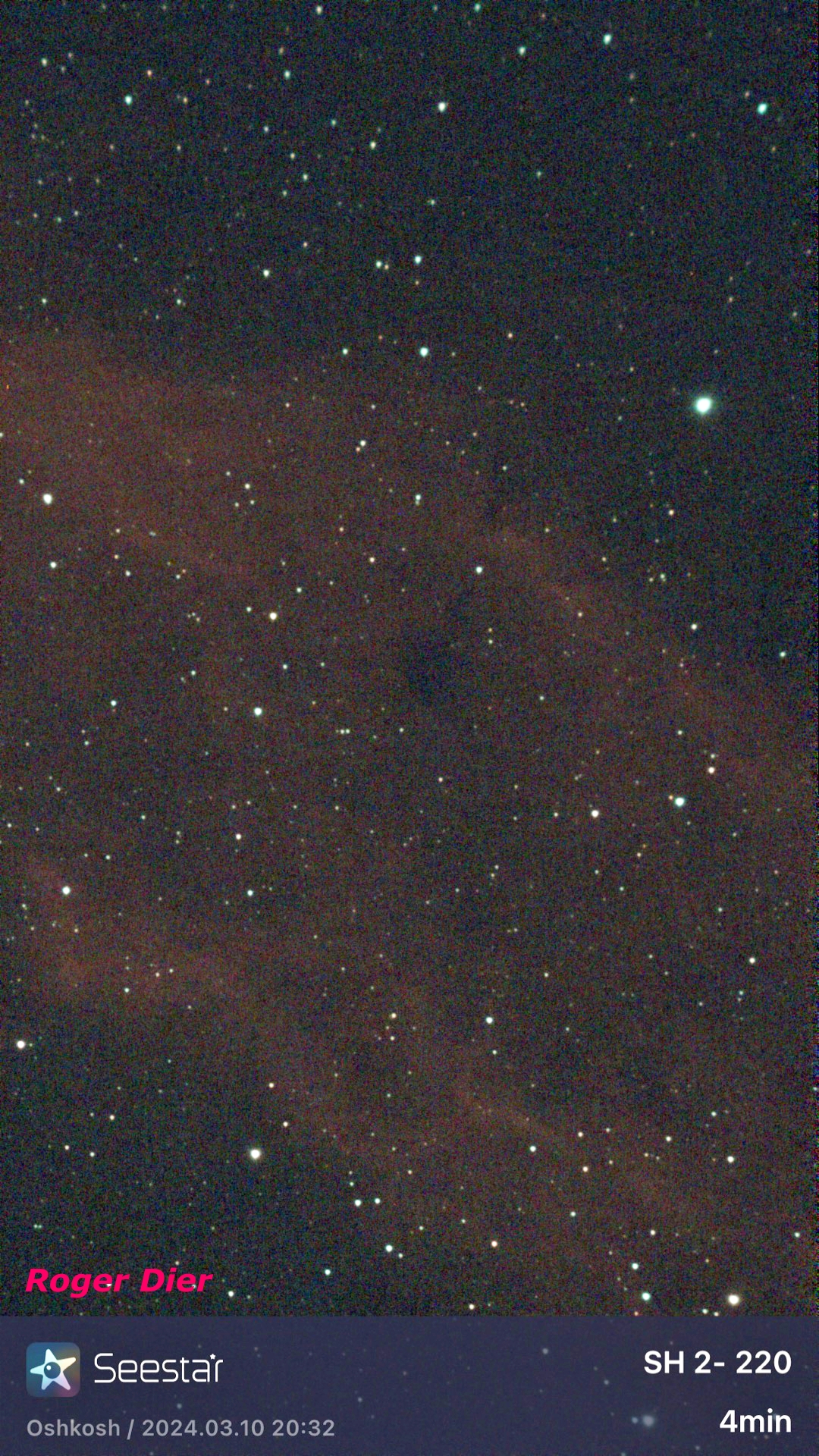
Before I left, I took a picture of the California Nebula, an emission nebula in the constellation Perseus that resembles its namesake in appearance. The nebula is so vast that I was only able to capture a section of it. The area I imaged contains the darkest region of light-blocking dust. The cloud of hydrogen is huge, almost 2.5 degrees long and because it is very dim, it’s difficult to see in the darkest skies. How dim? It took a crude camera/telescope operated by E.E. Barnard in 1884 to confirm it was actually there. Known officially as NGC 1499, the California nebula lies 1,000 light years from earth. Bring a book to read. Maybe two.
The staff of Rogerdier.com thanks you for reading. To subscribe for free, please fill out the short form at the bottom of this page.

 Cosmic