I have a confession.
Here it is: The people who “discover” cosmic objects or originate theories or tools to better understand the night sky are almost as interesting as the object or idea linked to their lives.

Up until last week, I never knew there was a Third Earl of Rosse, or even what a Third Earl did. But a 19th-century bloke named William Parsons was born into Earldom, presumably sired by the Second Earl. Compared to a lot or Royals—especially the current crew living on the dole—the Parsons fellow made good use of his titled tenure.
The Third Earl of Rosse was a curious dude; most always a commendable trait. He loved nature, both the kinds of nature he could see and sometimes touch on his home planet, and the kind he could only see and never touch in the night sky. He built the largest telescopes of his time, Newtonian Reflectors with expanding diameters of 15 inches (38cm), 24 inches (61cm), 36 inches (91cm) and 72 inches (180cm).
With his 72-inch, only the Third Earl could see the cosmic wonders of the night sky. Everyone else with smaller scopes? Well, they could go pound sand.
SKETCHY DUDE
Rosse was also sketchy, in a good way.
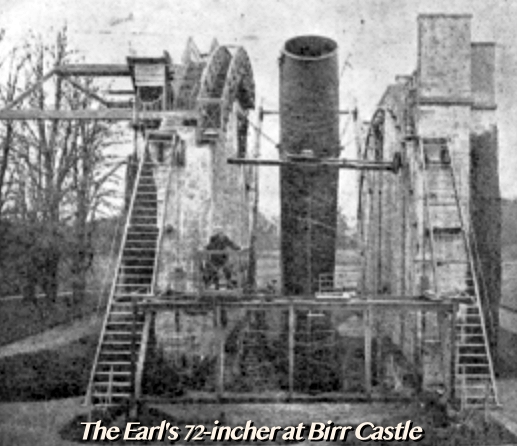
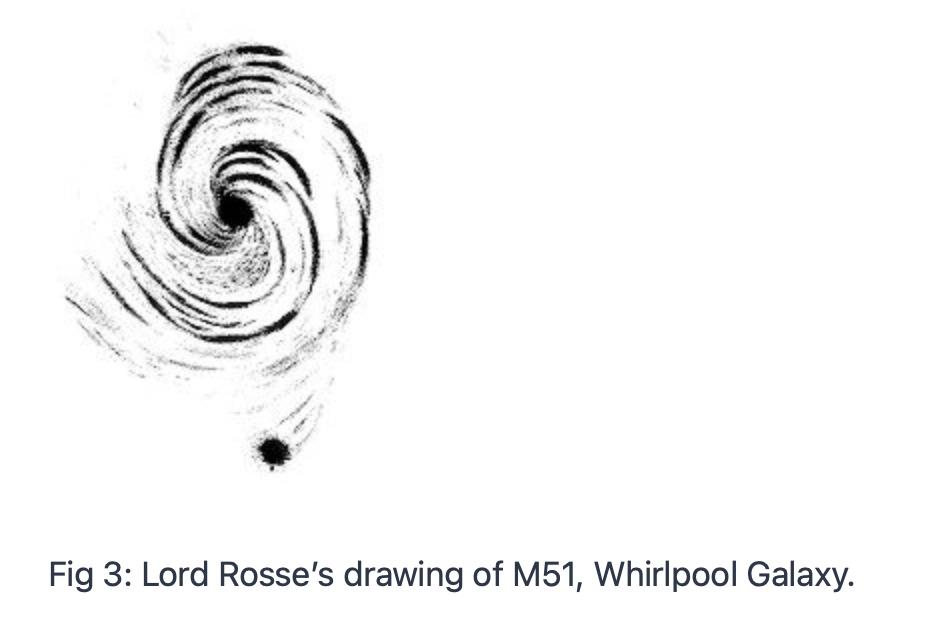
In April 1845, soon after his 72-inch was completed at Birr Castle in Ireland, Rosse looked at M51 and reported that this nebula seemed to be a collection of stars that were rotating around a center. What? That’s outrageous! The Earl has gone mad!

The Third Earl drew what he saw, which supported his new theory.
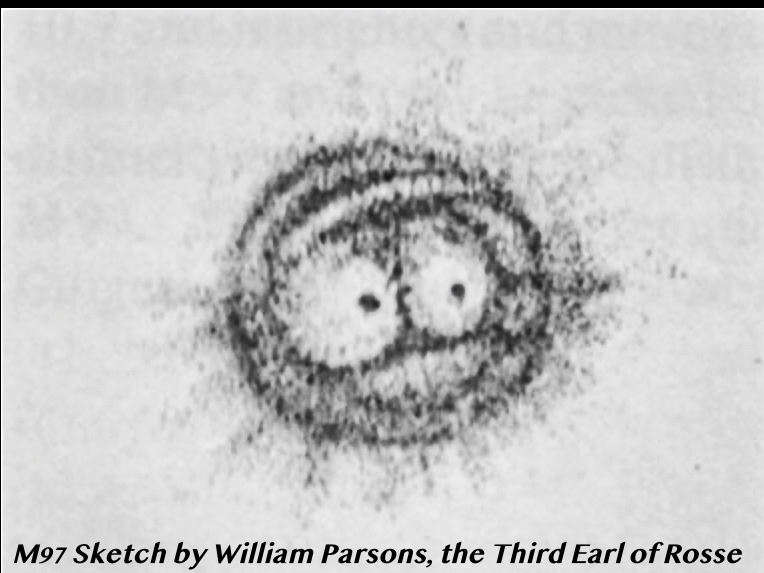
On an 1848 evening at Birr Castle, the Earl explored Ursa Major and peered at M97. Seen using smaller scopes, M97 is a faint object, but it looked pretty bright in the Earl’s 72-inch.
He put lead to paper and drew what he saw, writing in his notes: “Two stars considerably apart in the centre region, dark penumbra round each spiral arrangement with stars at apparent centres of attraction.”
When the Earl of Rosse published his sketch, the locals thought the Earl was into his stash of gummies again. Not true. He saw what he saw; it looked owlish. It’s been known as the Owl Nebula ever since.
LOCAL MAN SHOOTS OWL
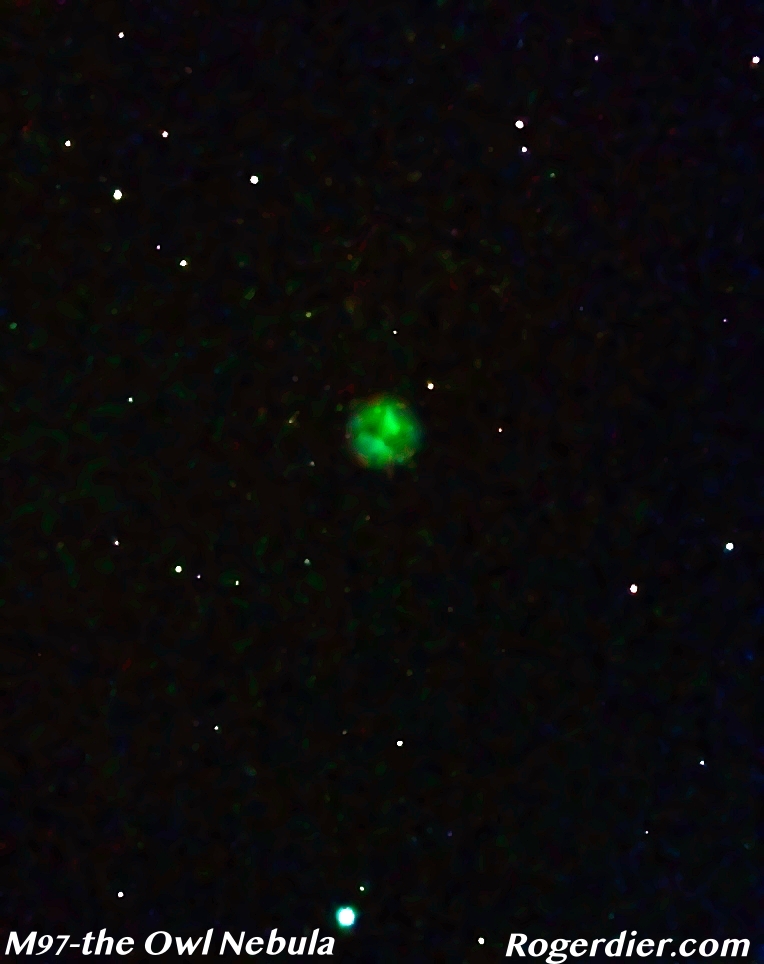
Though I’m not the Earl of Oshkosh, I photographed the Owl this spring. Not satisfied with what I saw, a ghostly oval, I turned the SeeStar back on it a month or so later. In the meantime, I also purchased PixInsight software, and discovered the challenging scholarship—joyful scholarship really—of astronomical image processing. I also discovered how to stack raw frames on an App called SkyStacker.
Happily, the raw images of both Owl nebula photography sessions in the SeeStar lined up—The little SeeStar S50 tracks like a pelican watching breakfast swim closer—and it produced this image. I could not resolve a triangle of stars near the center of the nebula, but the features that the Earl saw that night, one of three sort of concentrically shaped circles in the nebula, show up as the owl’s “eyes.”
SURFBOARD GALAXY?
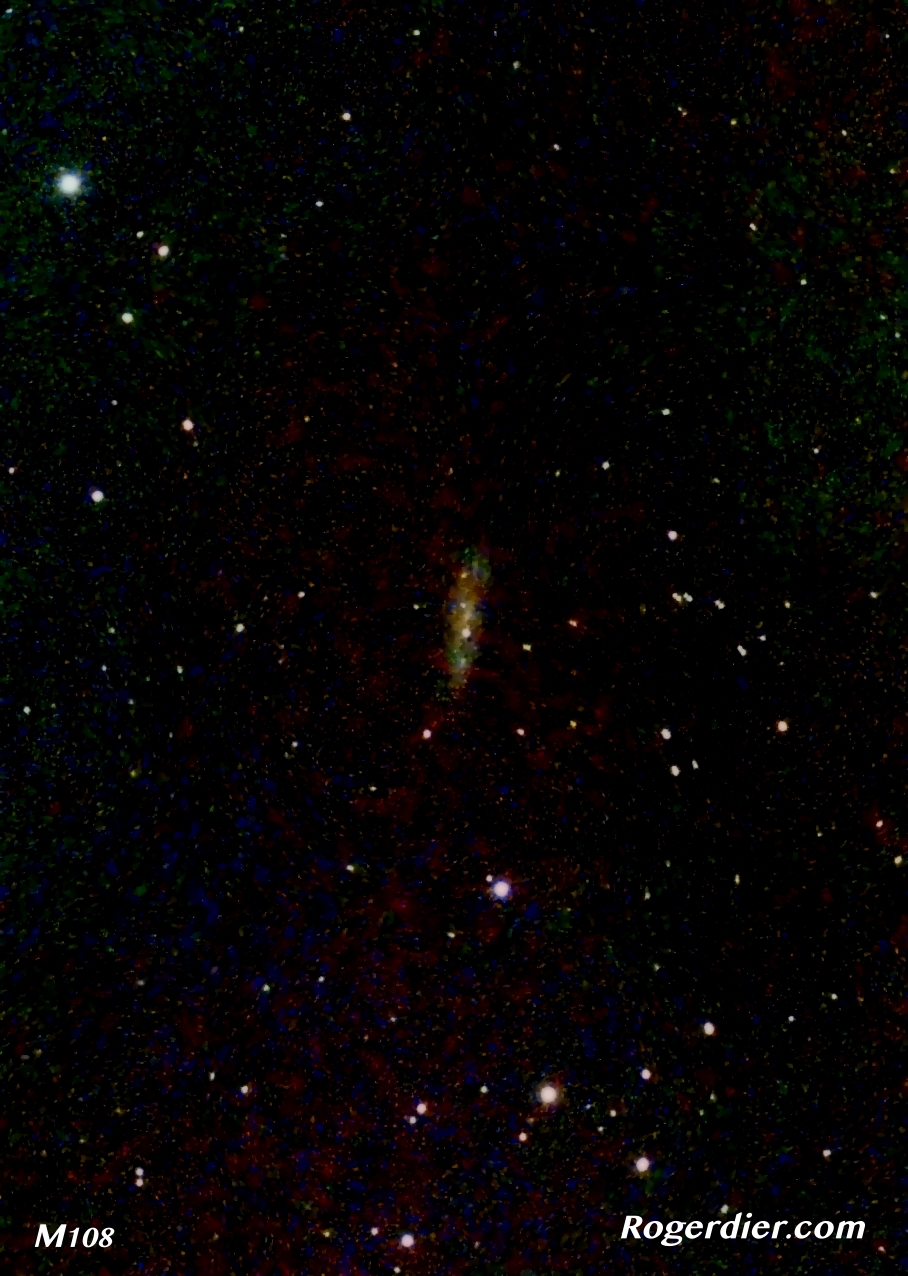
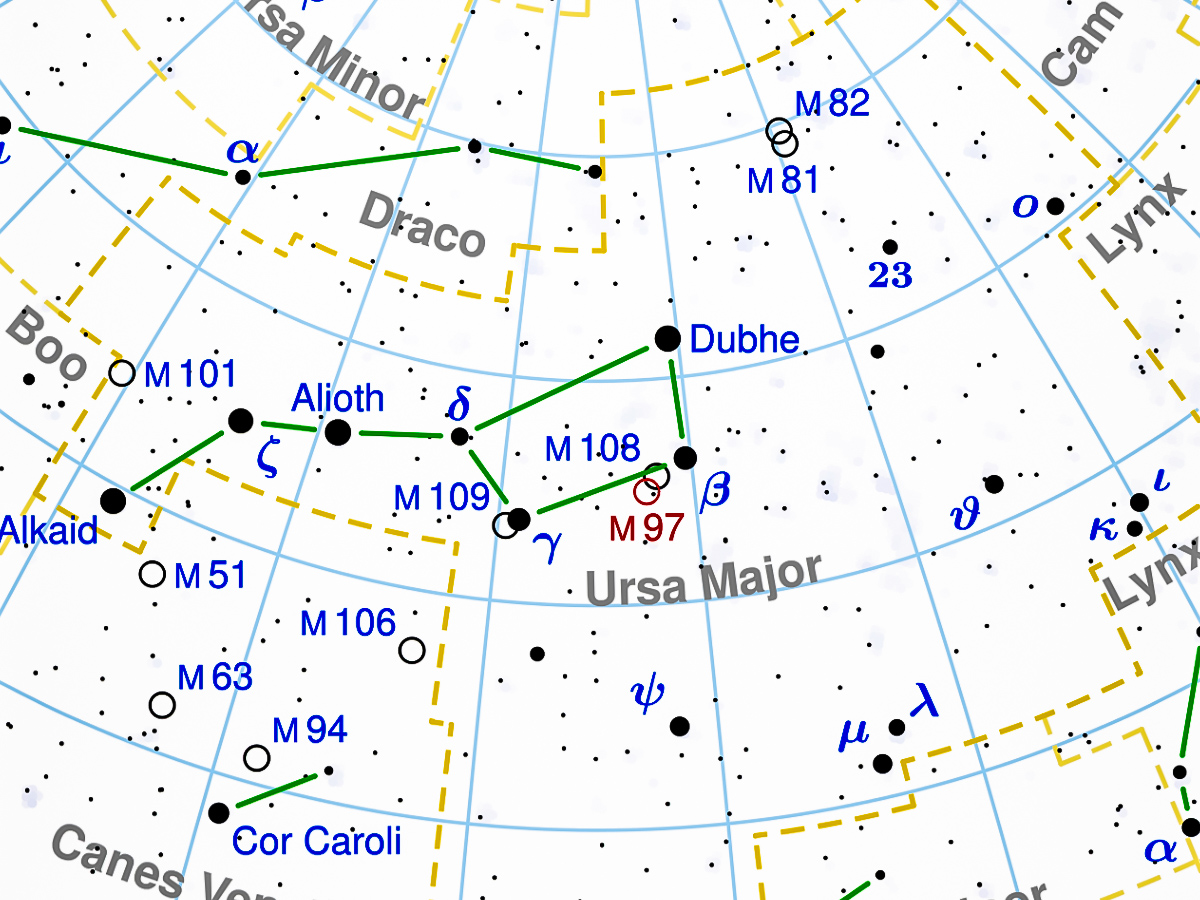
Near M97 is M108, a galaxy almost a magnitude fainter than the 10th magnitude Owl.
Both the French astronomer Pierre Messier Méchain—a contemporary and friend of Charles Messier—and German-British astronomer William Herschel share credit for M108’s discovery; Herschel first catalogued it on April 17, 1789. Herschel noted: “Very bright. Much extended [elongated]. Resolvable [mottled, not resolved]. 10′ long, 2′ broad. There is an unconnected pretty bright star in the middle.”
Herschel said nothing about it resembling a surf board.
M108 is a barred spiral galaxy, with gobs of X-ray activity emanating from many areas of the 110,000 light year-wide star city. If you view or photograph M108, the light you’re seeing left the galaxy 43 million years ago. Contemporaries of mine have nicknamed M108 the “surfboard galaxy.” Unlike the Owl nebula, the surfboard nickname is a real stretch. But I don’t wish to criticize human imaginations. On the whole, they have served us well.
CREDIT TO …
A special thank you to Will Kalif—a self-described telescope nerd—for his story on William Parsons (Third Earl of Rosse), which he last updated on March 6, 2024. Some information in this story was gleaned from Mr. Kalif’s story, found here: https://www.telescopenerd.com/astronomers/lord-rosse.htm#:~:text=Yes, William Parsons, the Third Earl of Rosse,,in 1842 and first used it in 1845.
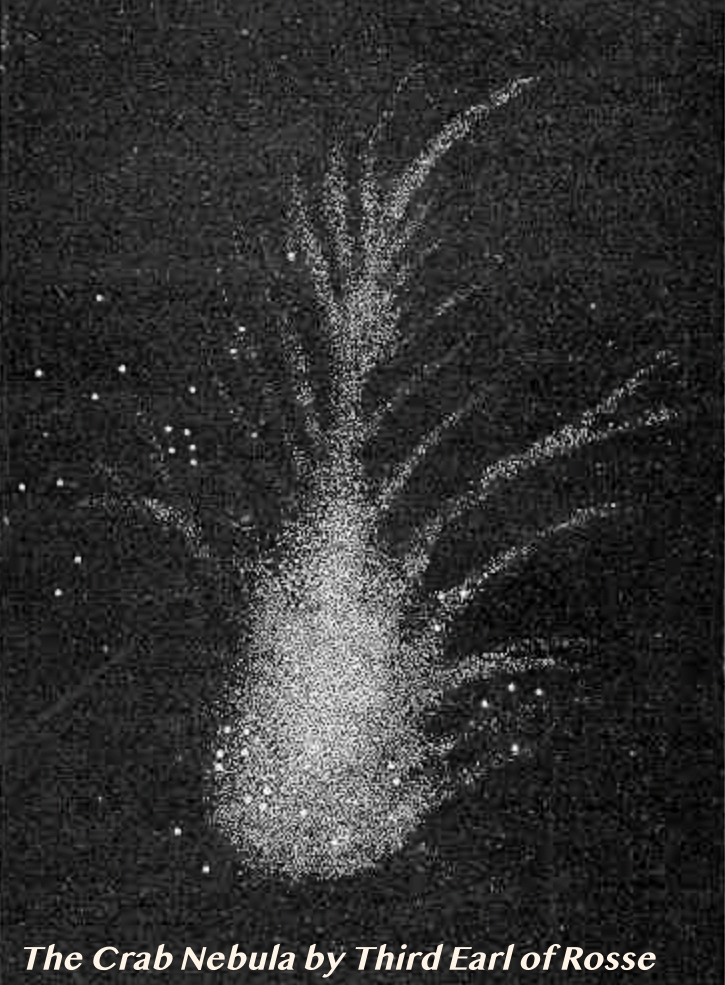
The Third Earl of Rosse lived a full life of accomplishment. Member of Parliament, Recognizer of the true nature of galaxies, Mathematician, President of the Royal Society, Discoverer of the Crab Nebula, Chancellor of the University of Dublin. It’s all in this link:
https://en.m.wikipedia.org/wiki/William_Parsons,_3rd_Earl_of_Rosse
Staffers at rogerdier.com thank you for reading. Subscribe for free at the bottom of this page. And, as always, we toast your good health and wish for you clear night skies.
 Cosmic