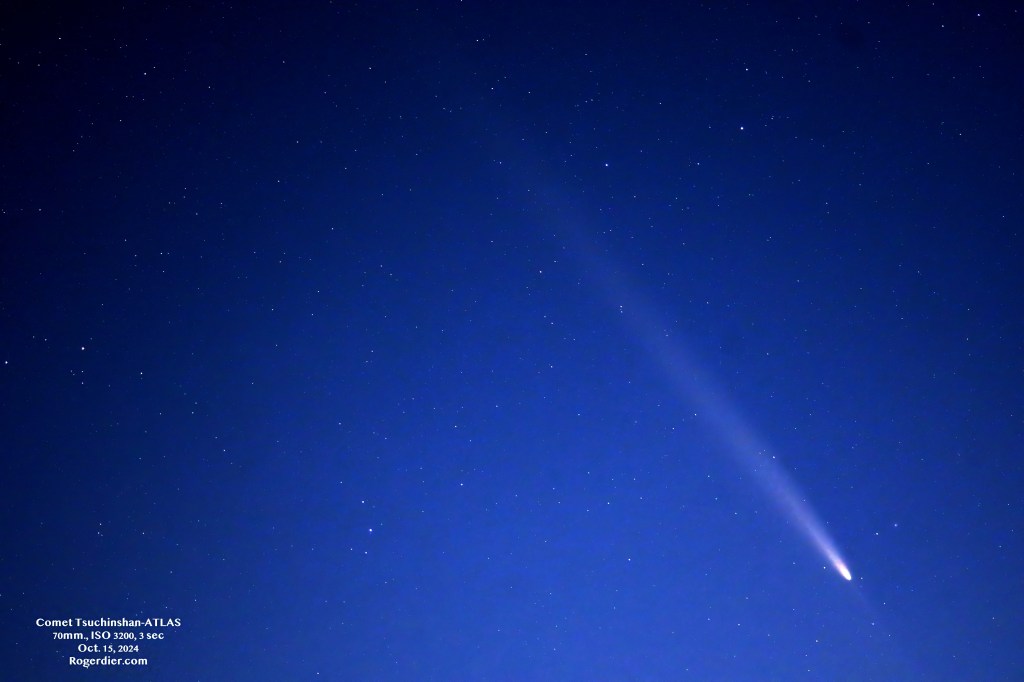
The new comet, at last.
Two weeks ago, when it was a pre-dawn mystery, I spent a few mornings looking for Comet /2023 A3 (Tsuchinshan-ATLAS). I never saw the ordained “Comet of the Century.”
As comets are want to do, Comet Tsuchinshan-ATLAS whipped around the sun and emerged into the evening sky. As most always seems to happen, when there is an overpowering urge to see something astronomical, cloud cover increases exponentially. Thus, I was clouded out until Tuesday, Oct. 15. That evening, Michelina and I motored out to my favorite western horizon viewing area to escape our Bortle 6 light dome; we arrived about 20 minutes before sunset, which occurred at 6:09 p.m.
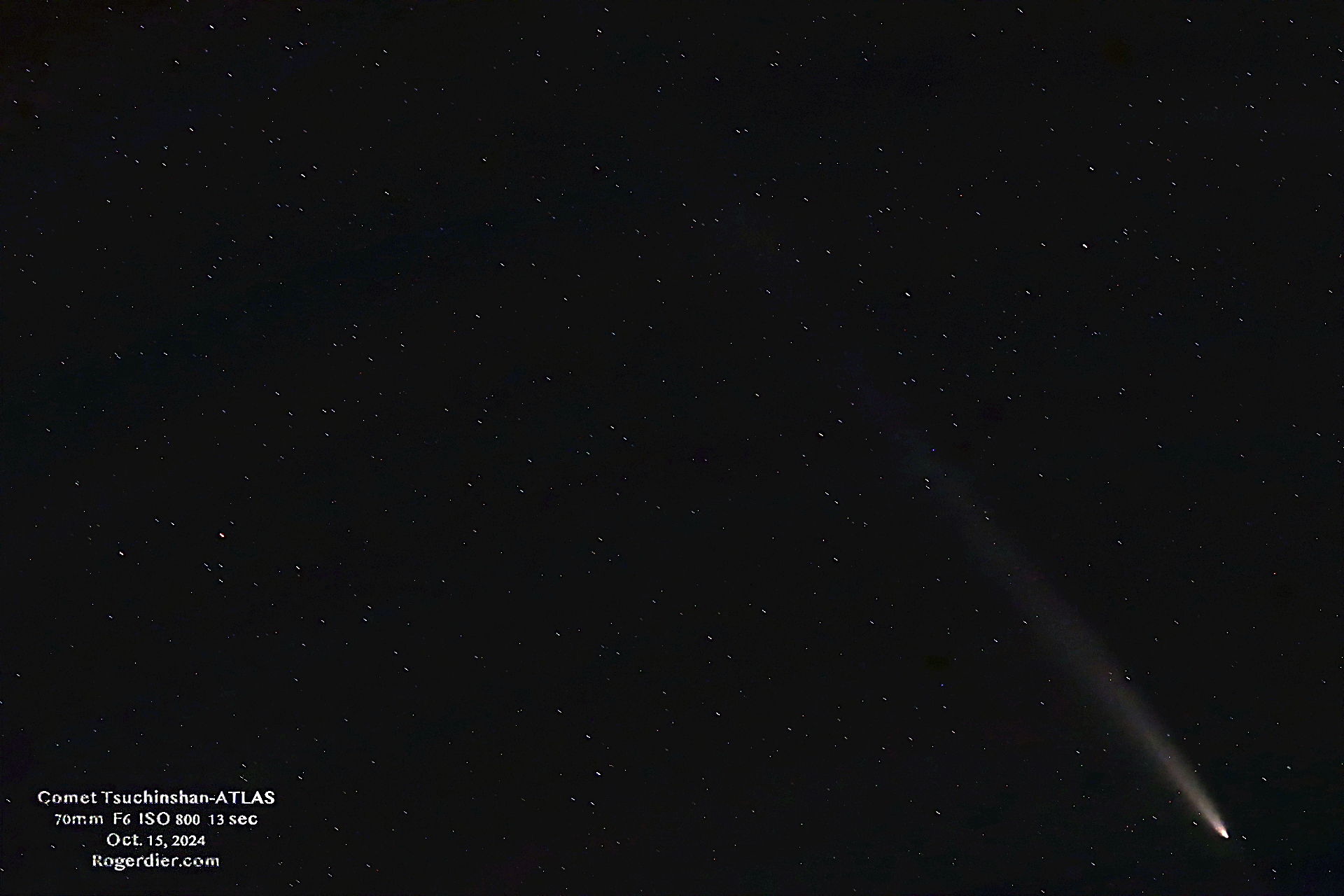
It was nippy already, with temps in the low 40s, heading for an overnight low of 32 degrees Fahrenheit, which is 0 degrees celsius for my international readers. I took a few shots of the glaring moon above the eastern horizon with the SeeStar S50. In time, Venus appeared. I asked the SeeStar to find the comet. Eventually, it did. An anti-tail had developed.
THE TALE OF TAILS
Comets are dirty snowballs and have tails made of gassy dust. Those particles are blown back behind the comet’s coma, or head, by the sun’s solar energy. If we didn’t see the dust being blown back, we pious humans wouldn’t consider them comets.
Some comets also have blueish ion tails. The sun’s ultraviolet light ionizes the neutral gas cleaving off the coma, and the solar wind does the rest, pushing the ionized gas behind the coma, though not always in the same plane as the dust tail.
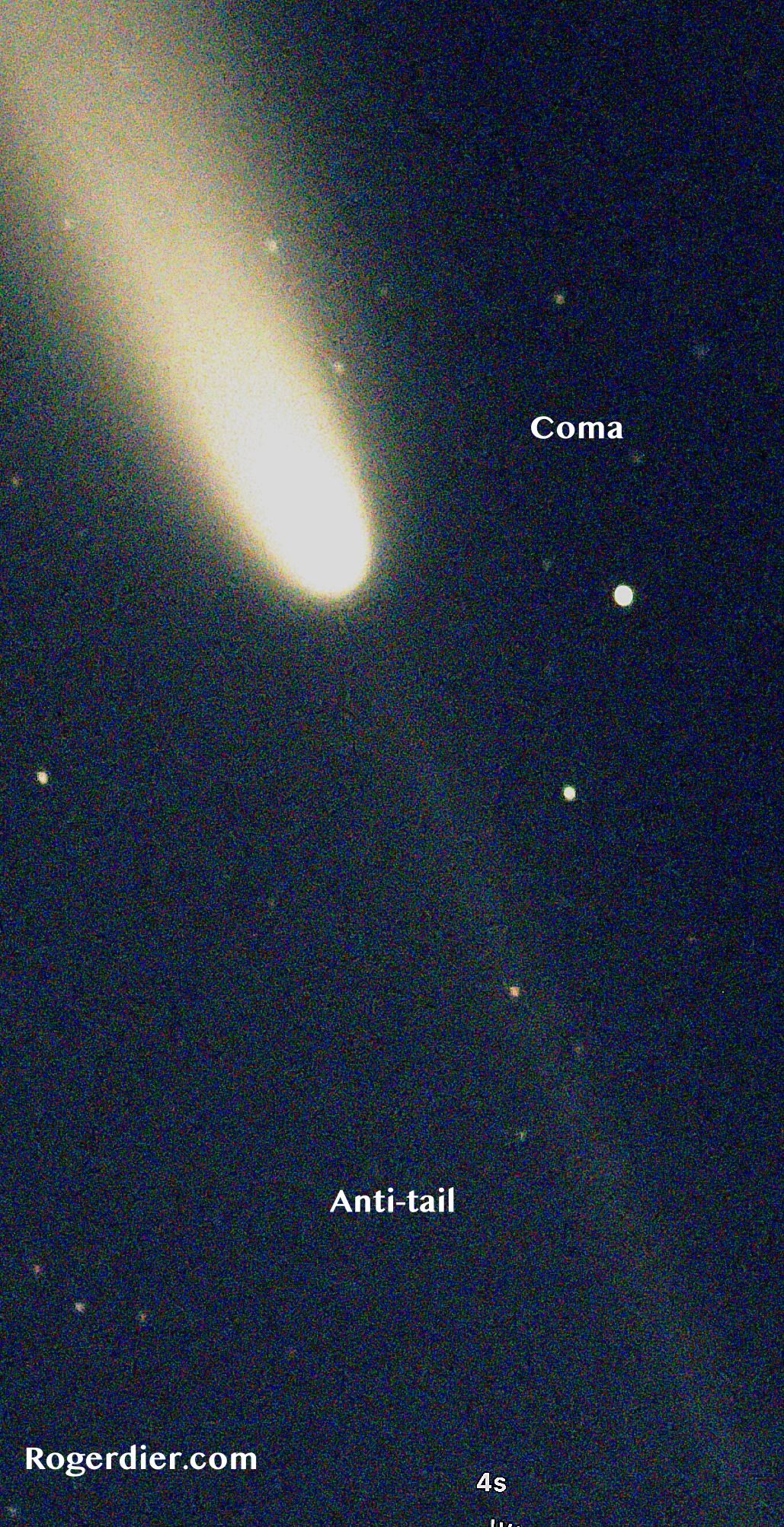
And some comet’s have a third tail, called an anti-tail, which seems to point at the sun, a kind of celestial unicorn. Comet Tsuchinshan-ATLAS is clipping along at 180,610 miles per hour (290,664 kph). The boiling, animated-by-solar-energy coma leaves a trail of heavier dusty particles in its wake; the direction from which it came. To date, Comet Tsuchinshan-ATLAS has the traditional dust tail and an anti-tail. We’ll have to see if an ion tail shows up for the trifecta of tails.
Is this really the comet of the century? Who really knows what kind of comets will pass this way between now and 2101, the beginning of the 22nd century? I’m not ready to label Comet Tsuchinshan-ATLAS as the 21st century’s finest comet moment, but it’s providing a fine show, with a dust tail reaching 10 degrees long or more. While the light from Comet Tsuchinshan-ATLAS fades as it returns to the darkest reaches of its orbit—40,000 years or so in the future—we’ll keep our eyes on it.
STAIRWAY TO HEAVEN
A lyricist in the group Led Zeppelin, itself a bright comet that emerged in 1968 from London, England, wrote an intriguing question in the song “Stairway to Heaven.” In considering the differences of society, Zeppelin’s Jimmy Page and Robert Plant wrote “It makes me wonder” if humanity will ever be able to get along on a global scale. It remains an open question.
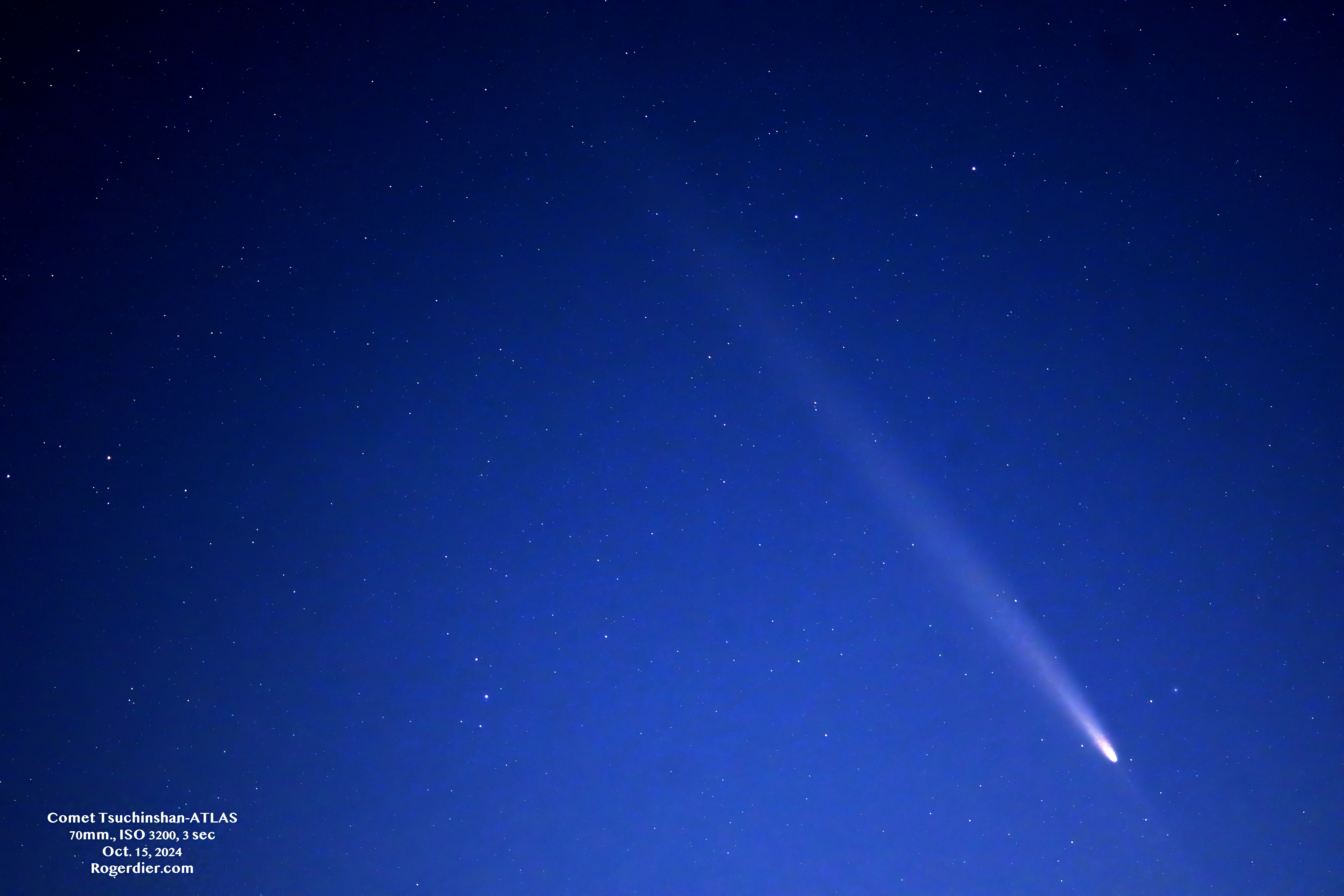
The orbital period of Comet Tsuchinshan-ATLAS is roughly 80,000 years. Homo sapiens roamed the planet in small numbers 80,000 years ago. If they saw Comet Tsuchinshan-ATLAS, we’ll never know about that visit or the visits 160,000 or 240,000 years ago. Safe to say Comet Tsuchinshan-ATLAS wasn’t a top-of-mind subject in those societies. Who knows whether the Earth will be a hospitable place in the year 82,024? We are the only civilized society that will ever witness Comet Tsuchinshan-ATLAS. Comets are mysteries. We are more mysterious. Will humans evolve or devolve on our path up the stairway? It makes me wonder.
JOEL SCHENK, COMET HUNTER
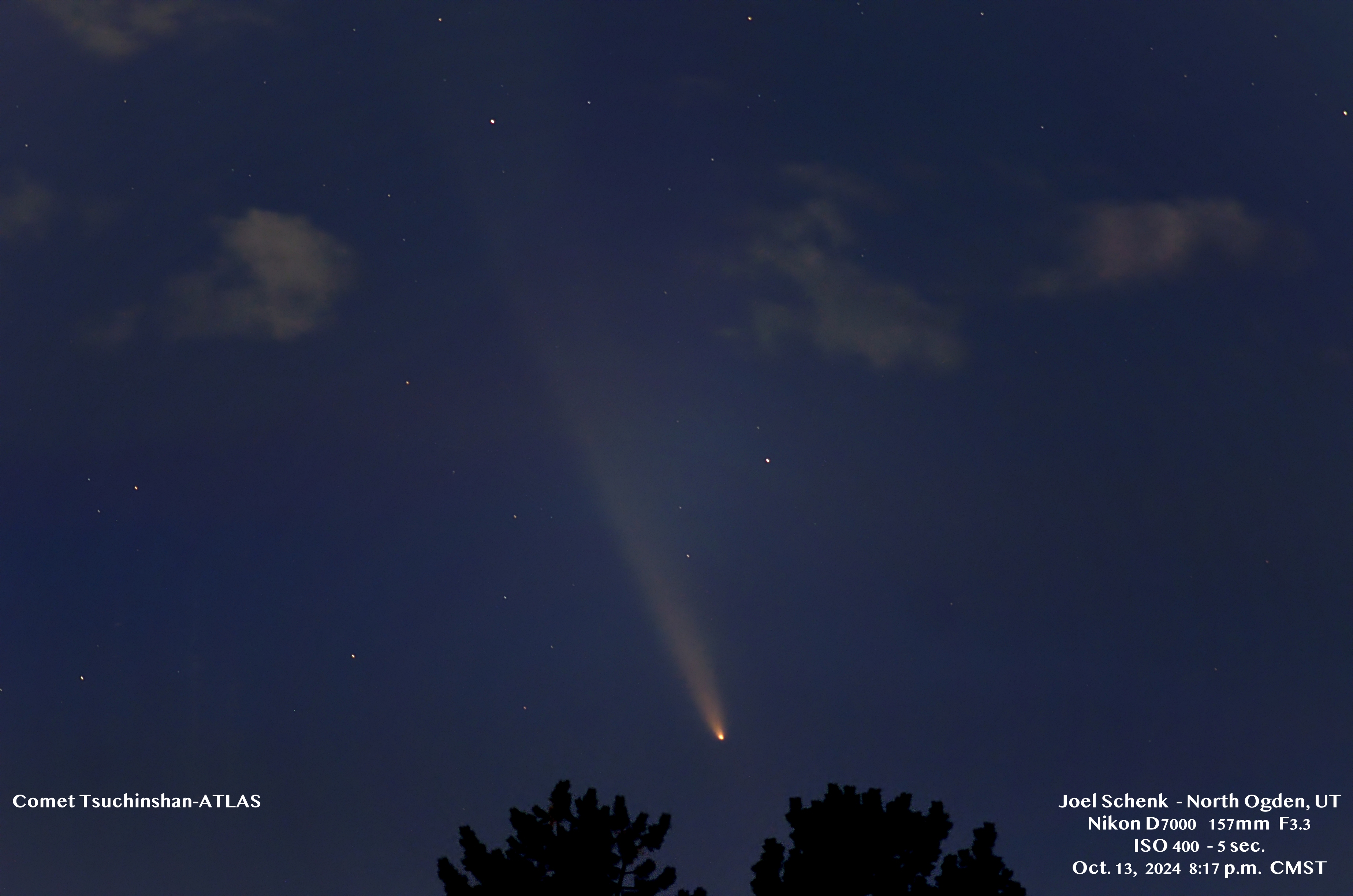
About a week ago, I alerted two friends in North Ogden, Utah that a new comet was coming out behind the curtain and into the night sky. One of them, Joel Schenk, climbed on his roof on Oct. 13 and took this picture of the comet. He excitedly texted me and Kevin Mikkelsen, a professional photographer, that he found Comet Tsuchinshan-ATLAS using binoculars. He ran into his home and went up a ladder, placed one of his smaller tripods atop a moisture removal apparatus on his roof and his Nikkon camera began clicking away. What is shown here is the result of Joel’s hustle. It’s a beautifully framed shot, framing which Joel said was “purely accidental.” Well done, either way.
OTHER COSMIC NEIGHBORS
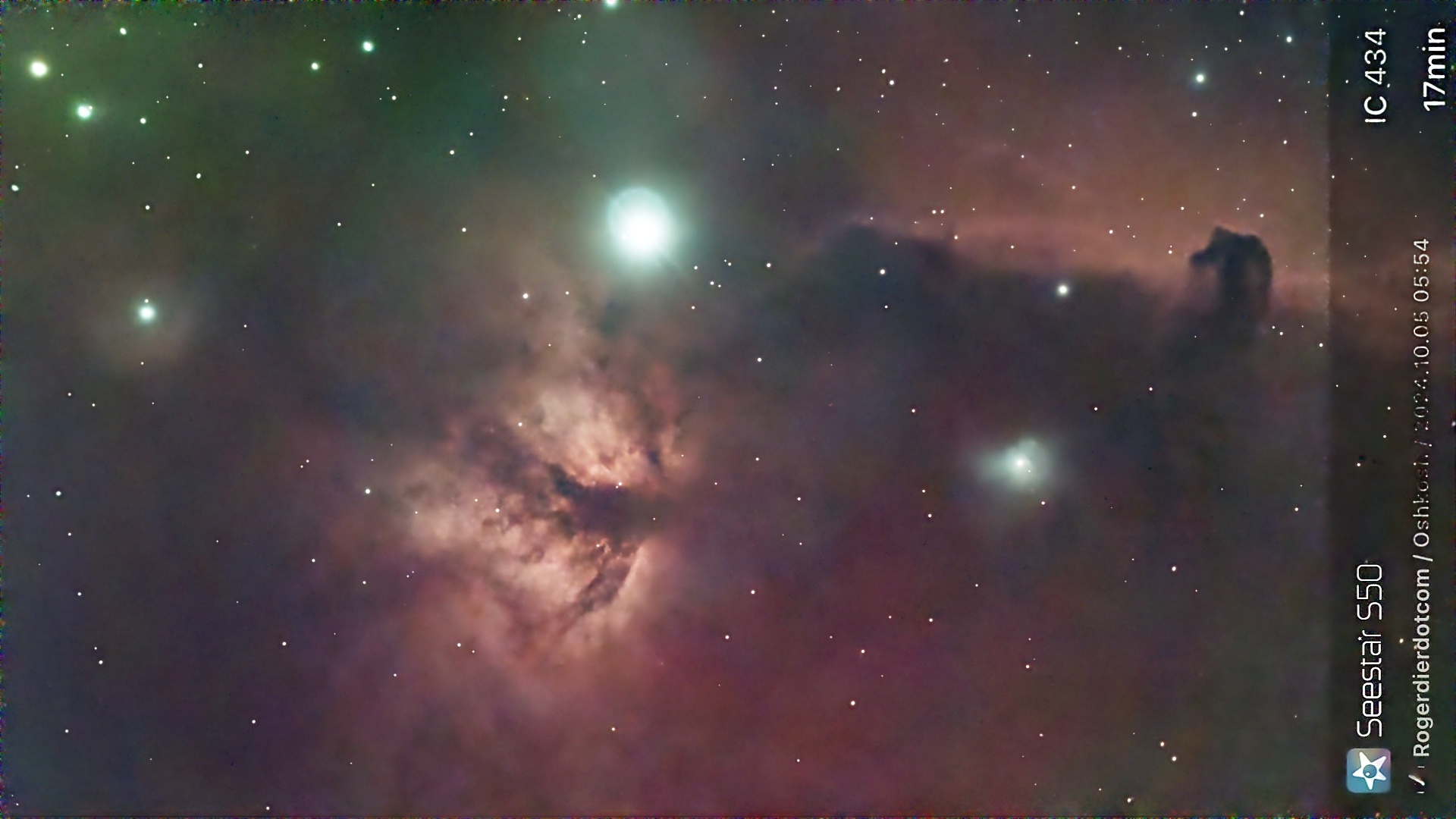
Between the morning hunt for the comet and what I snagged last night, I took this picture of the Horsehead Nebula one morning about 5:30 a.m. The Horsehead Nebula is one of the first objects shown in the kid astronomy books, which I devoured back in the day. The Horsehead Nebula is all dust in silhouette. In this photo, which I flipped horizontal to accentuate the equine feature, we can see the Horsehead Nebula cast a shadow on a dust cloud in the foreground.
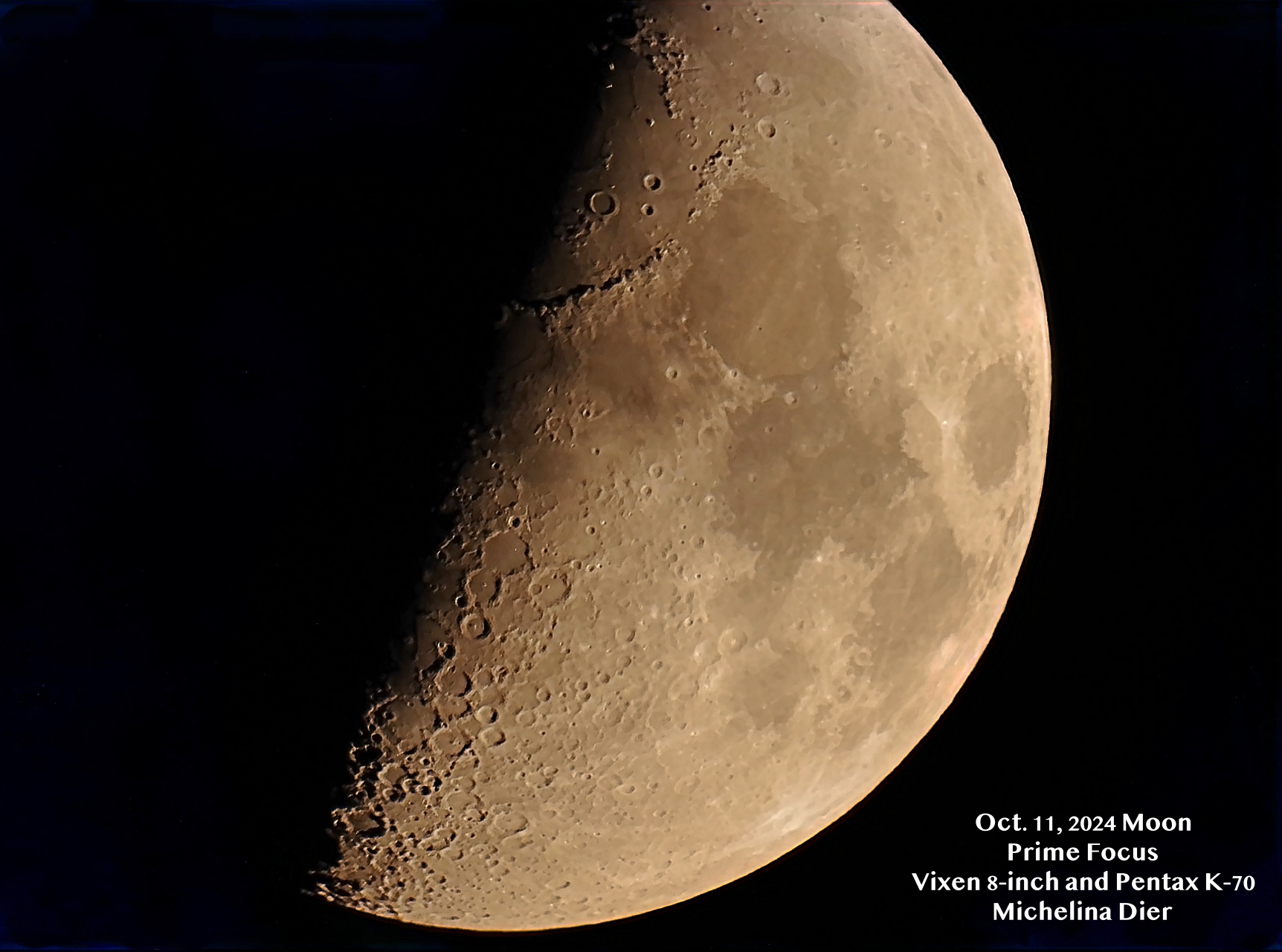
On a different evening when the comet was too close to the sun for observation, Michelina and I took some pictures of the moon with a Pentax K-70 camera and a Vixen 8-inch as the lens. Michelina looks great in front of the lens, and does great behind it.
That’s all for now. Thank you for reading. My wish for you is great days, clear night skies and good health for you and the people you care about.
—Roger Dier
Kevin and Sandy Mikkelsen’s gallery is found at https://kevinmikkelsen.zenfolio.com
 Cosmic