“Comets are like cats: they have tails, and they do precisely what they want.” – David H. Levy
Indeed. Like ancient, sun-weary nomads traveling in the evening across cooling desert sands, comets are also wanderers of the night sky. Experts divide comets into two main groups—short and long period—originating from two main regions—the Kuiper Belt and the Oort Cloud.
SHORT PERIOD COMETS
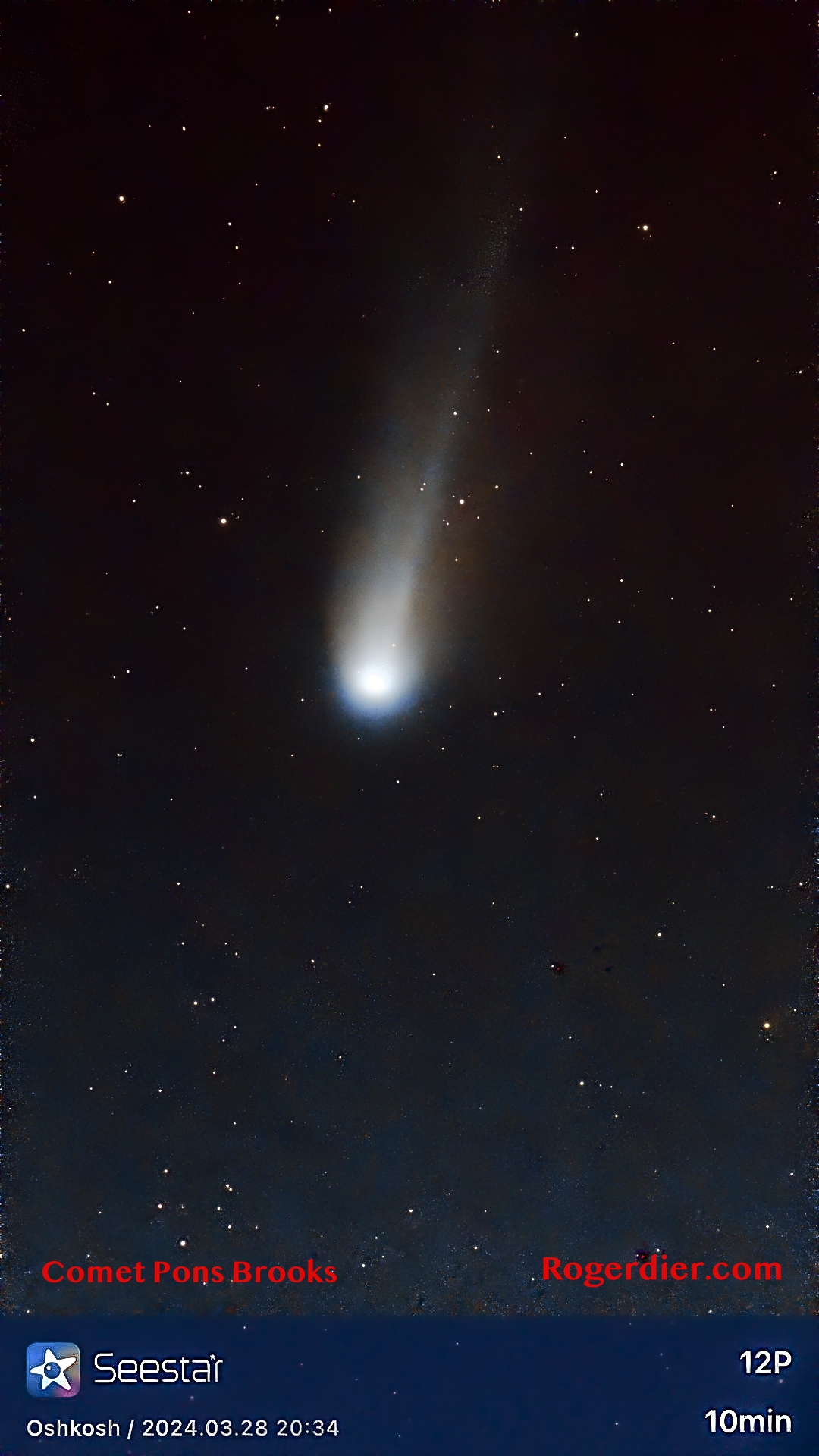
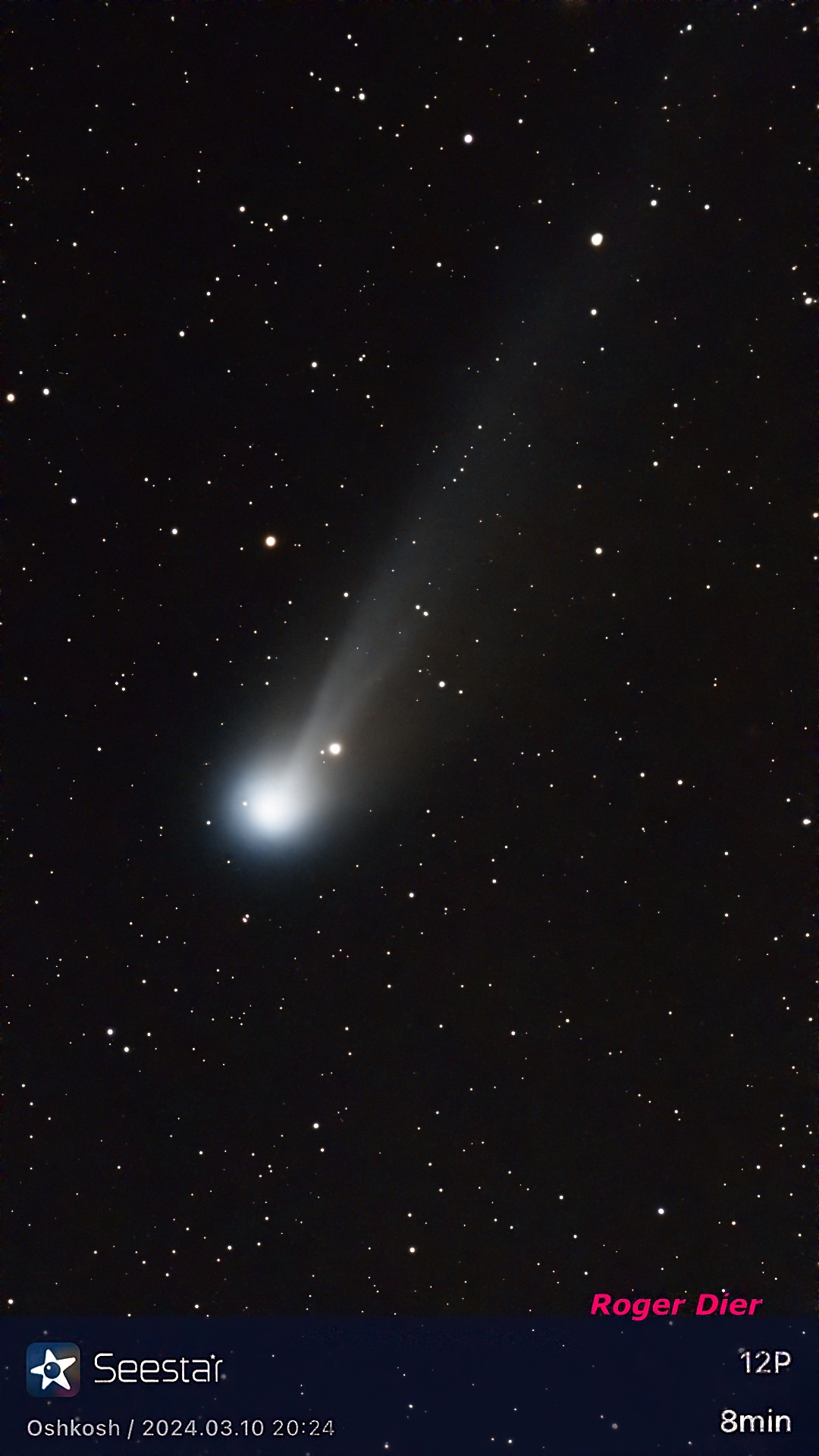
Short-period comets have orbits that reach the sun one or more times within 200 years. Two photos taken 18 nights apart of Comet 12P/Pons-Brooks, shown here, is a short-period comet with an orbit of 71 years. Most of the short-period comets originated from the Kuiper Belt, the void beyond Neptune and Pluto that contains leftover junk of the solar system: The sun’s attic. Halley’s Comet—orbital period between 72 and 80 years—at some point became dislodged by Neptunian gravity from the Kuiper Belt and the sun’s gravity took over. Human history recorded an impressive comet 2,300 years ago. In 1705, English Royal Astronomer Edmund Halley guessed that a comet first recorded in 240 BC and kept showing up every 76 years or so was one and the same. In 1705, Halley theorized that it would return again in 1758. Halley didn’t live to see its return, but return it did. We expect Halley’s Comet to return in 2061. On Dec. 9, 2023, Halley’s Comet reached its aphelion—farthest point from the sun—and began falling back toward the sun, and our prying eyes.
LONG PERIOD COMETS
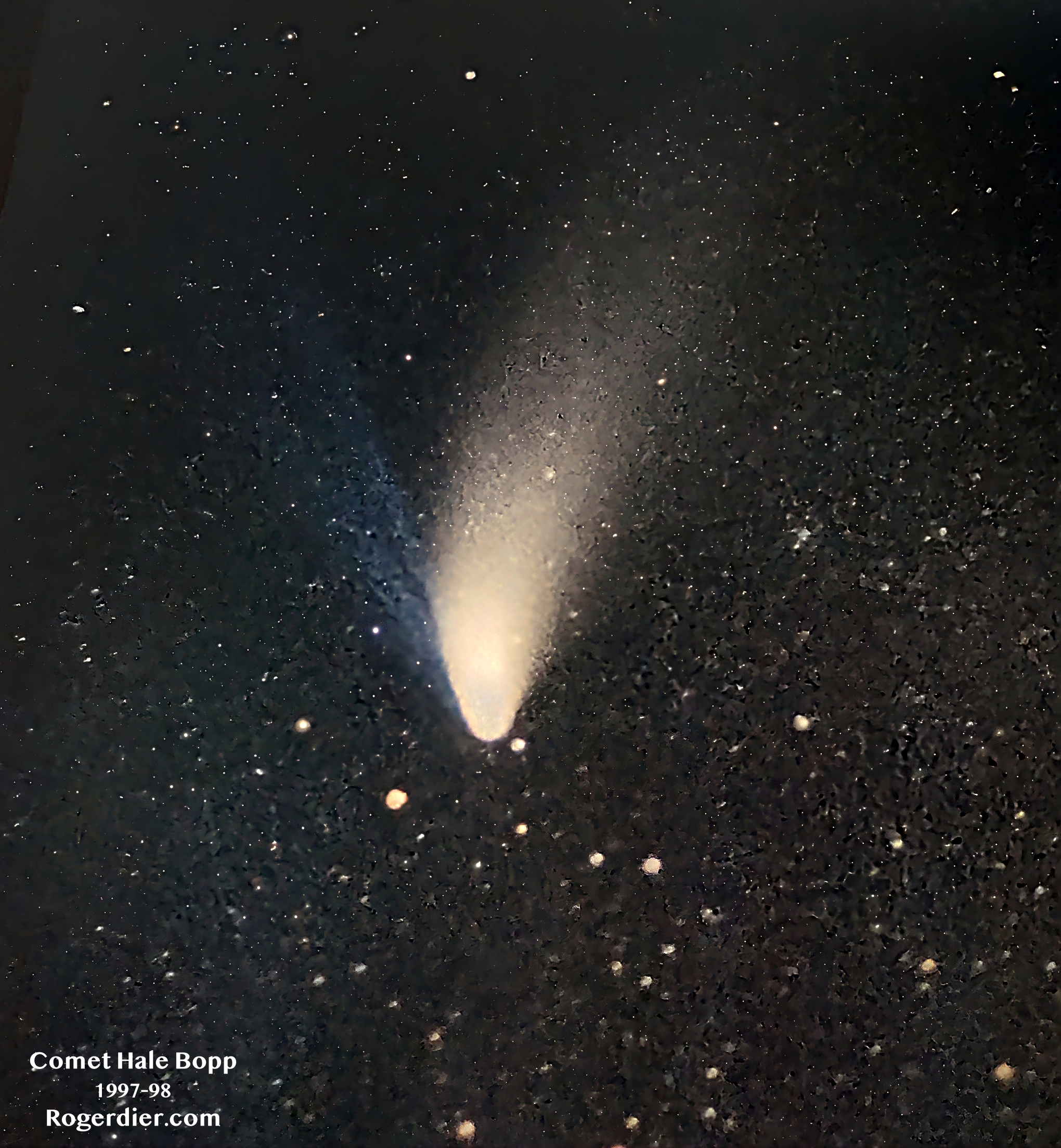
Long-period comets—orbits longer than 200 years—usually come from the Oort Cloud; more rocky ice rubble left over from the formation of the solar system. The Oort Cloud begins about a third of a light year from the sun and extends out for a full light year, give or take. The famous Comet Hale Bopp, which was a naked-eye comet for an astounding 18 months between 1997-98, was an especially thick Oort Cloud chunk, 41.2-miles wide. It hung like a lantern over the horizon for months, showing off both a dust tail and an ion tail. That was the genuine Comet of the 20th Century. The picture here was made on film, then digitized. Astronomers say its most recent trip toward the sun shortened Hale Bopp’s orbital period to 2,399 years. Look for it again in the year 4,385.
Comets really are nomads of the night sky. Some leave and return. Many are here today, then gone for years, decades, centuries, or forever.
SEEPING CYANIDE
Which brings us to Comet Tsuchinshan-ATLAS. With a diameter of 1.99 miles (3.2 km), it’s a runt compared with Hale Bopp. Many comets are. When it reached perihelion almost a month ago on Sept. 27, it was zipping by the sun at 42 miles-per-second (67 km/s). When this is posted, Comet Tsuchinshan-ATLAS will have slowed to about 30 m/s or 48km/s.
Those in the know report that the carbon within the Comet Tsuchinshan-ATLAS is gone, but there are a lot cyanide molecules in the emissions surrounding its coma and in its tail: Call it the Death Comet! Observers claimed it reached -4.9 magnitude on Oct. 9, right after whipping around the sun and into the night sky. Well, maybe. It certainly has been the most impressive comet in October, 2024. I’m not ready to echo cultural town-cryers and label it the comet of the century. The cosmos can do much better, and it will.
A SHORT SHOW
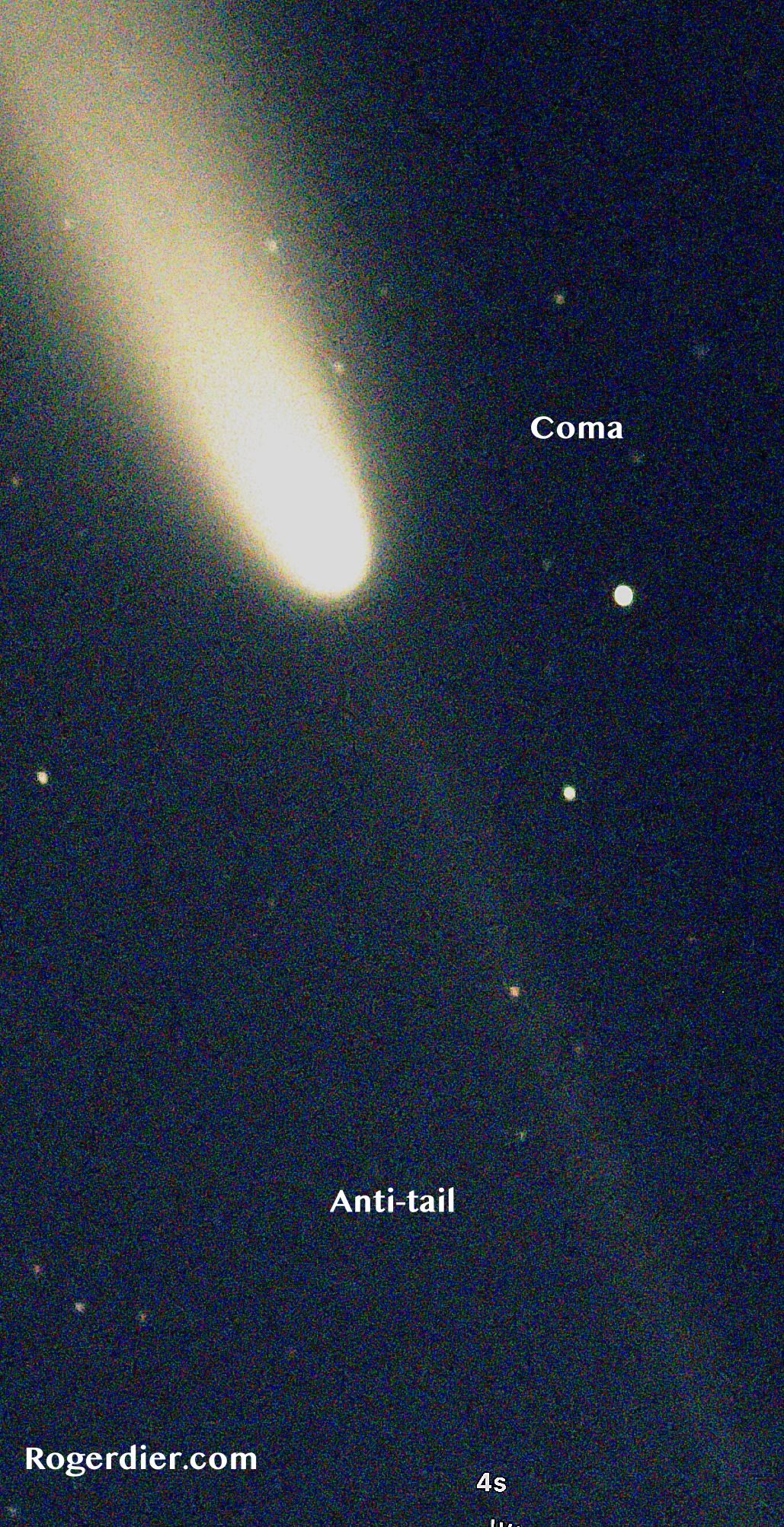
Comet Tsuchinshan-ATLAS is fading fast: It was a 1st magnitude object two weeks ago and now its barely visible. By Halloween, it’ll be an apparition, a naked-eye memory. The tail, however, has been impressive. On a 1 to 10 scale, it’s earned a solid 8. When we crossed its orbital plane little more than a week ago, Comet Tsuchinshan-ATLAS showed us its anti-tail, debris too heavy to be blown off the coma by gouts of electromagnetic solar energy. The anti-tail is stuff that bubbled off the coma and to us, appeared to be in front of it, like a horse with a unicorn. So as far as naked-eye comets go, it’s been slightly above average, a winking old firefly floating by, visible for a month on either side of the sun.
IMAGES BELOW AND ABOVE
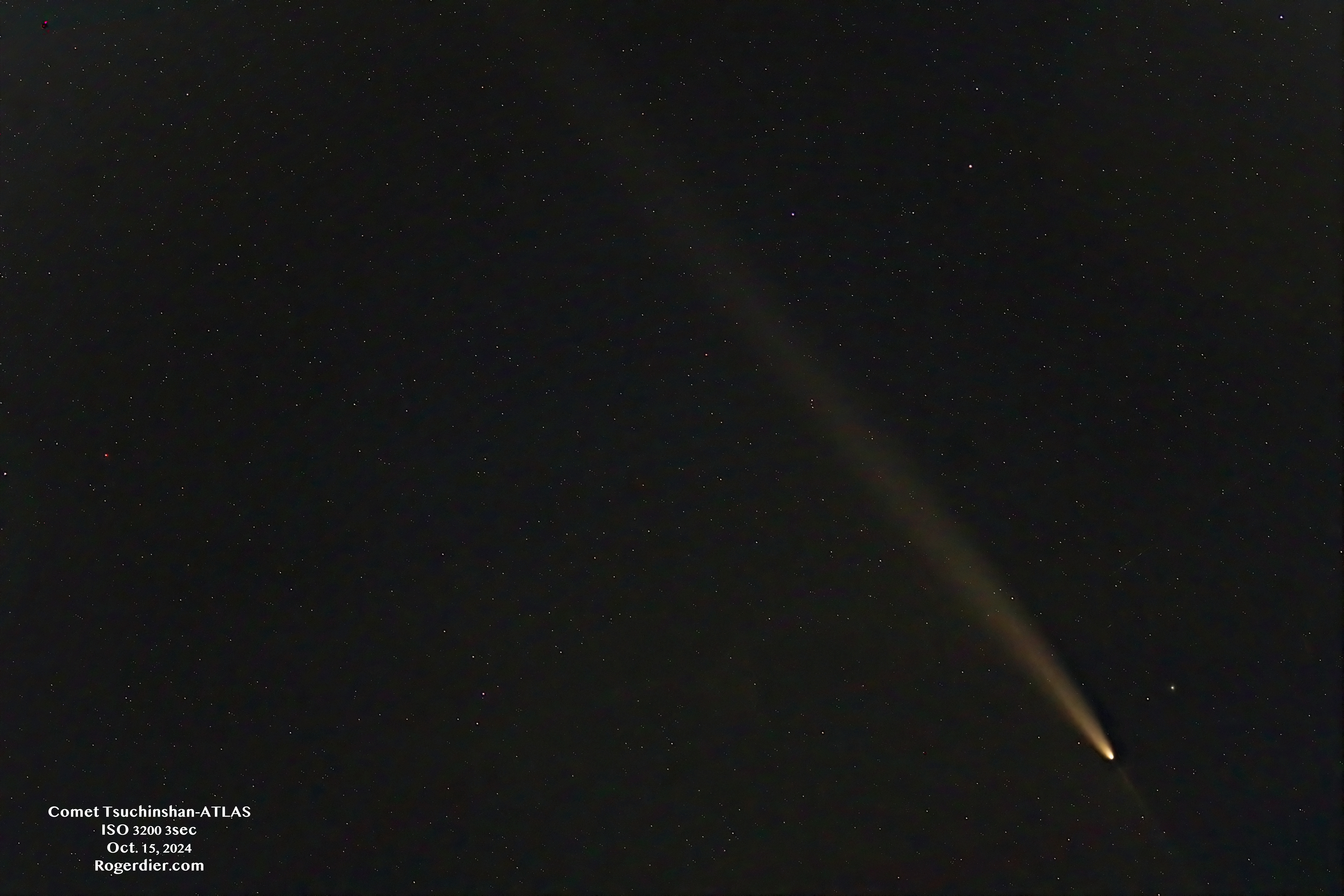
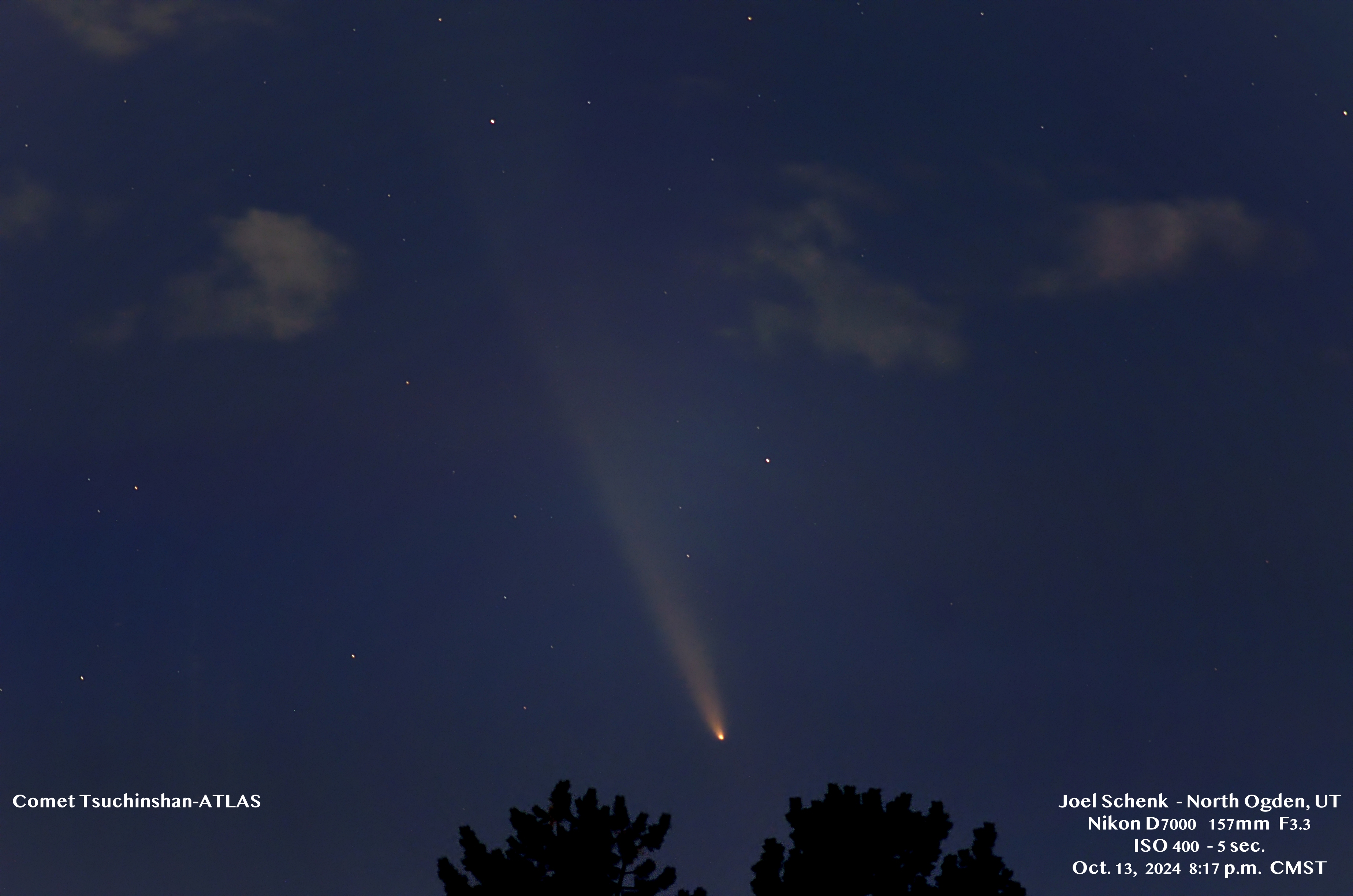
All the pictures here were taken by friends of your intrepid astronomer, or that guy himself. The first image, on the left of your screen with the coma beautifully framed between the top of two Utah trees, came my way on Oct. 13, just a few nights after the alleged -4.9 magnitude burst. Comet Tsuchinshan-ATLAS wasn’t close to being that bright. Joel Schenk, the photographer, first spotted it with binoculars after sunset over North Ogden, Utah. Two nights later, your intrepid astronomer captured it west of Oshkosh, well outside the town’s Bortle 6 light dome; without optics, he could not spot it even though it was purported to be between second and third magnitude.
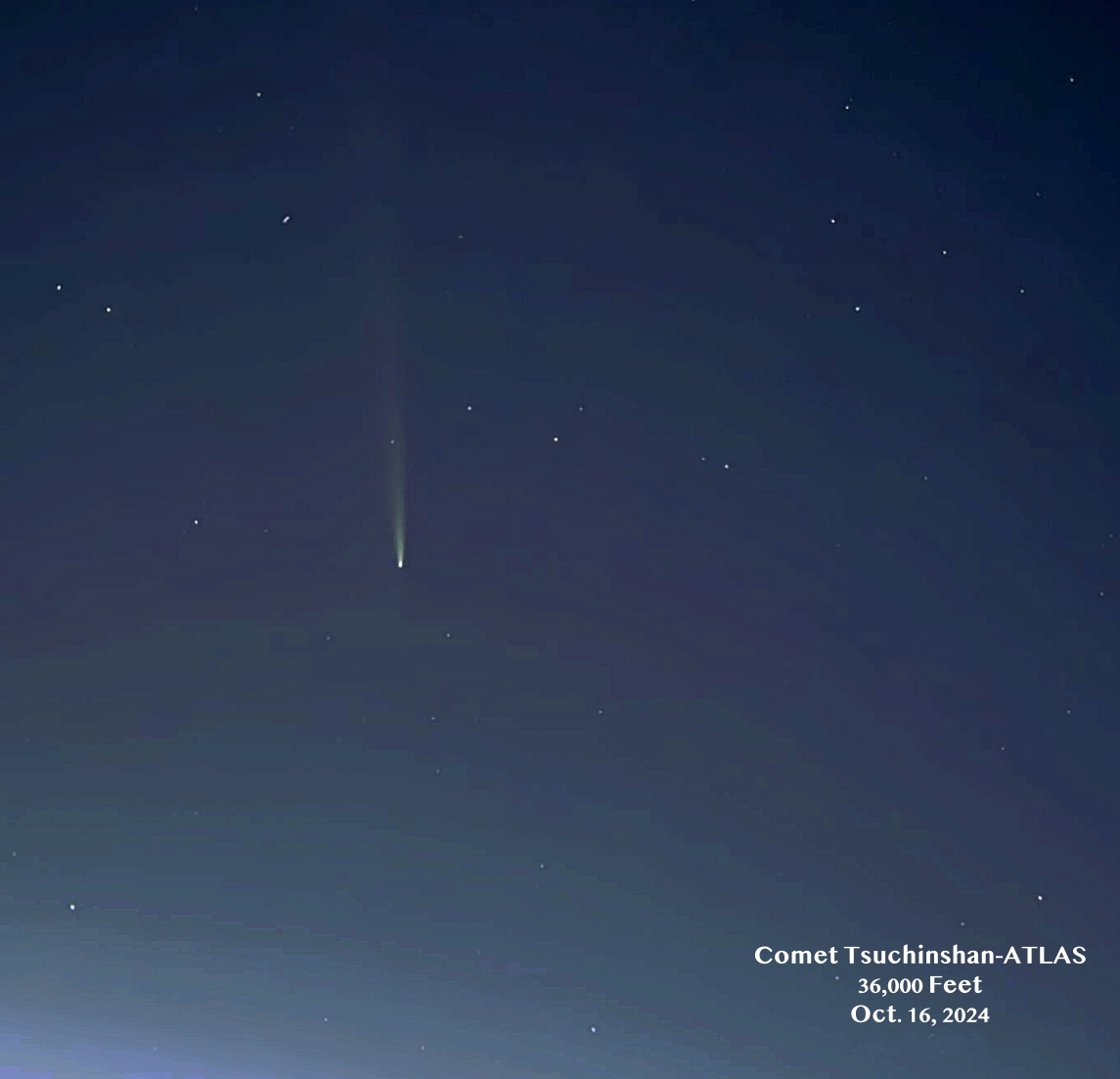
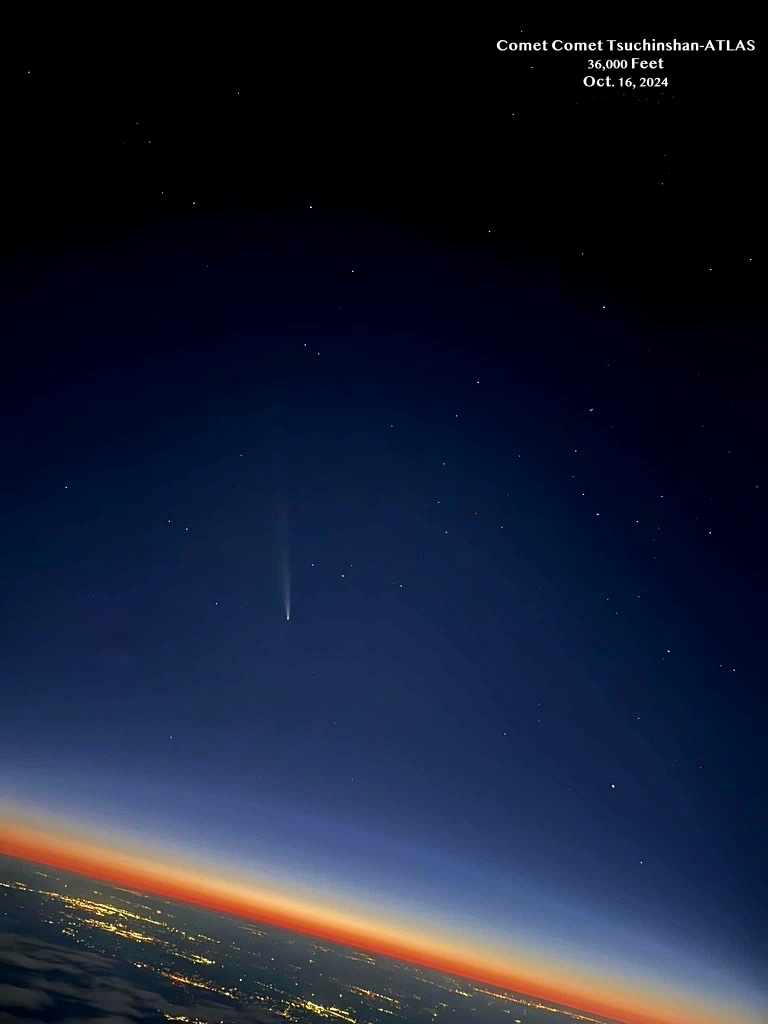
An airline pilot friend could barely see Comet Tsuchinshan-ATLAS out of his cockpit window Tuesday night (Oct. 22) from 36,000 feet—and above 75% of Earth’s light-sucking atmosphere—when the comet was listed at 4.6 magnitude. Still, his splendid photos, three-second iPhone images taken eight sunsets ago on Oct. 16 from the same altitude, show how Comet Tsuchinshan-ATLAS appears above Earth’s atmosphere. The comet’s tail sets sail in all of these photos. Better observers than I report when Comet Tsuchinshan-ATLAS whipped around the sun, it sported a tail 20-degrees long. That I believe.
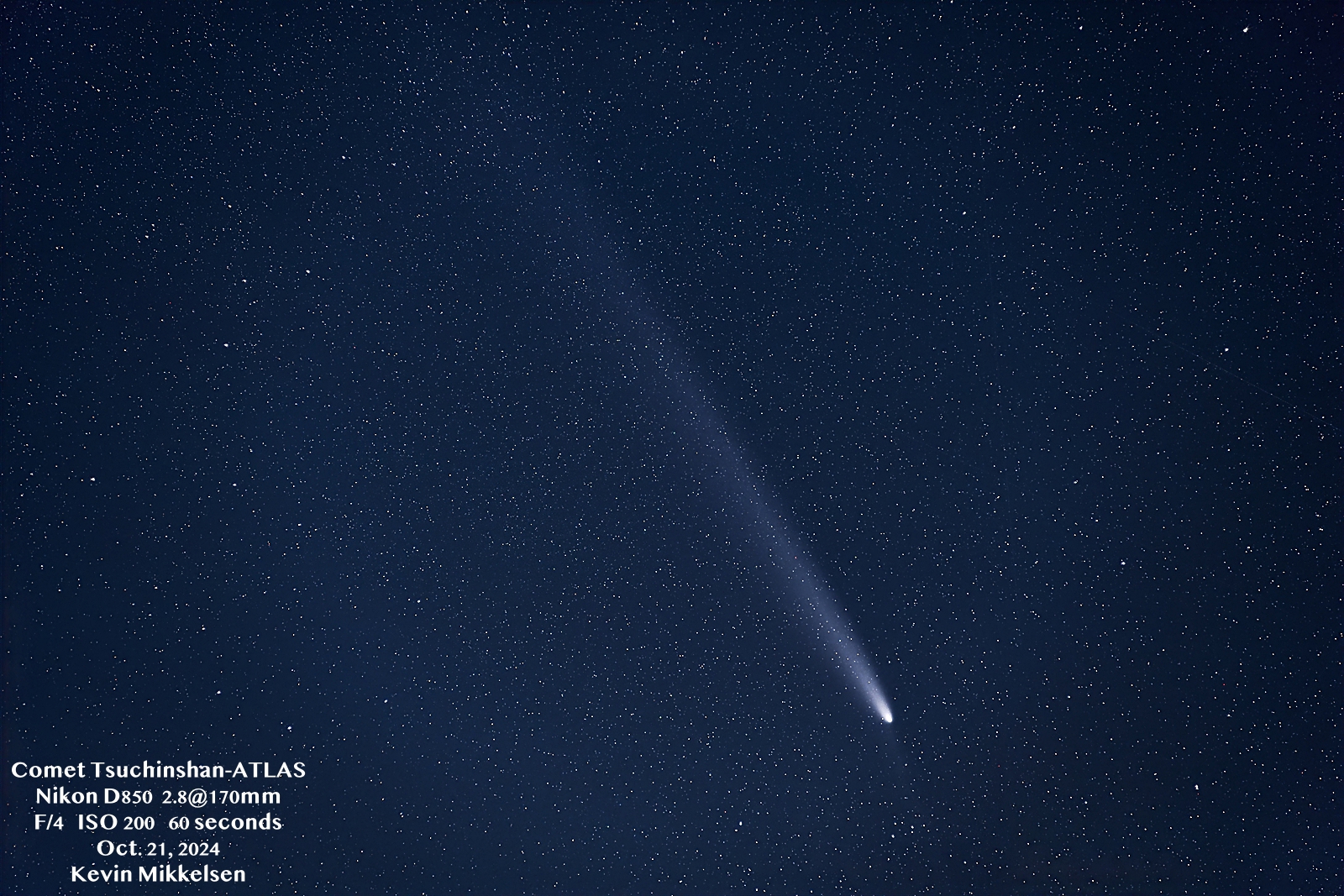
Kevin Mikkelsen is a professional photographer who first began photographing comets in July 2020 when the long-period Comet NEOWISE sparkled in those summer nights. Using a iOptron SkyGuider Pro mount, Kevin shot this beautiful 60-second exposure of Comet Tsuchinshan-ATLAS. Like a proud peacock, the comet continues to unfurl its beautifully shaped tail as it says so long to the sun and members of the inner solar system.
A COMET OF THE MONTH
Comet Tsuchinshan-ATLAS is fading away like the last ember of a campfire. On Wednesday evening, Oct. 23, 2024, I took my Pentax to the usual spot on Evans Road five miles west of Oshkosh. That night, it was magnitude 5.1. The wide-angle photo shows the comet’s position in relation to the sinking summer Milky Way; barely perceptible in the deepening twilight.
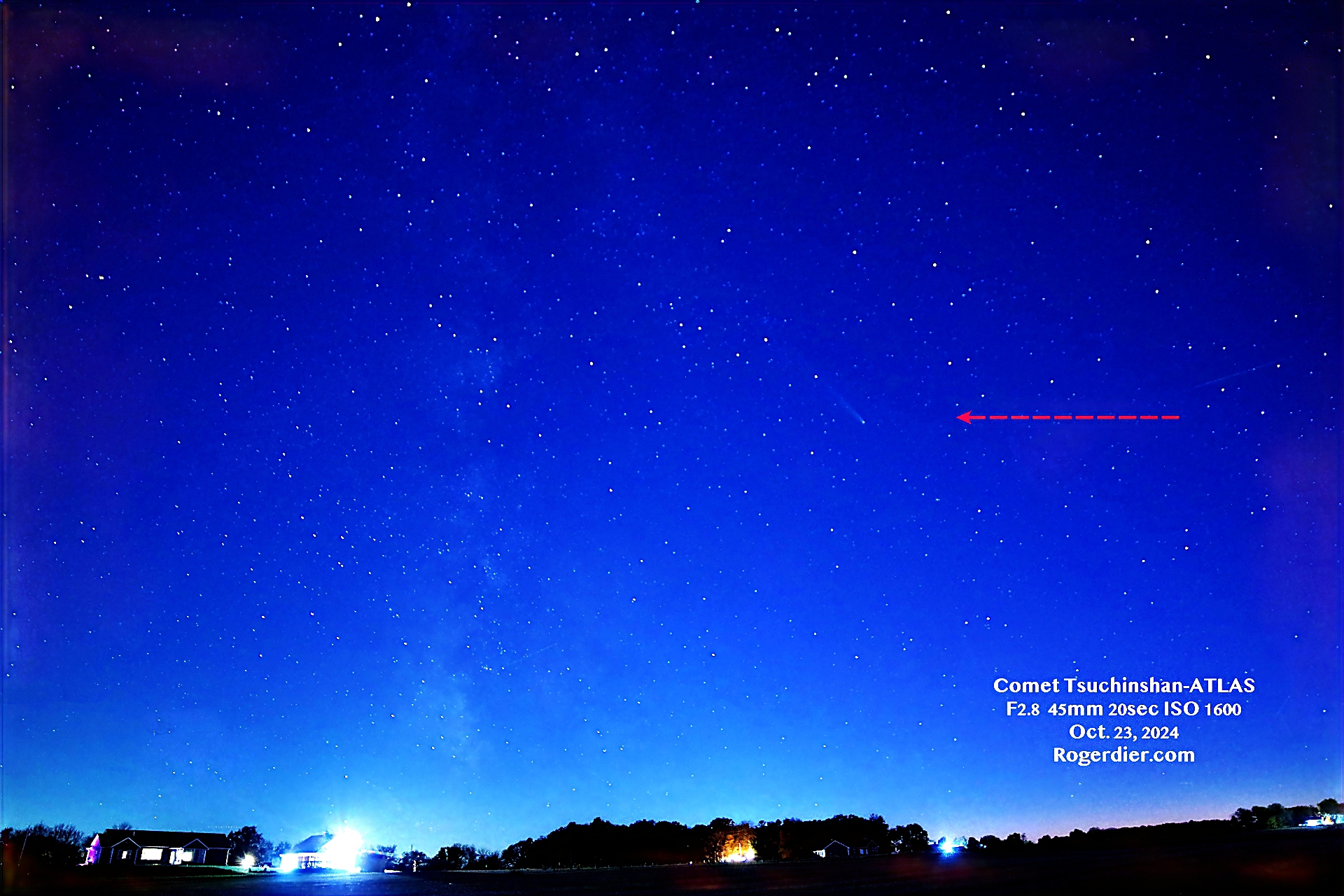
This Nomad of the Night is not the Comet of the Century. It’s the Comet of the Month, arriving before our eyes in late September and emerging in early October to give us a three-week visual thrill. As this modest ice-rock continues its quick fade into the cold, inky darkness, we now know that this trip may have kicked Comet Tsuchinshan-ATLAS out of its gravitational relationship with the sun; It may never pass his way again. At the least, the Comet of the Month prompted people who do not pay attention to the night sky to look up and aim their phones, binoculars, telescopes or cameras at a once-in-our-lifetimes object.
This little Nomad put on a good show.
Speaking of good shows, the website EarthSky.com published an homage to Comet Tsuchinshan-ATLAS recently. It’s very well done. About a 20-second watch: https://youtube.com/shorts/X-tc1-rV3og?si=jHFVt6OtlTBqmemD
Thank you for reading. The staffers at Rogerdier.com wish for you clear skies and good health to you and to those you care about. Free subscriptions can be had by filling out the form below that appears on Pads or Desktop computers.
 Cosmic
3 responses to “Nomads of the Night”
Another one coming October 28th the Sungrazer Comet C/2024 before sunrise in the Northern Hemisphere. It should be bright and able to see with the naked eye also! So check your Astronomy websites and see the next one too!
Best Regards,
Laurel Highland
Astronomer N. California
LikeLike
Thank you, Laurel, for the head’s up. If it’s clear Monday morning, I’ll be out there looking for it.
LikeLike
Great pictures, Roger. Made me think of my dad’s car he had back in the 60s, a Comet Cyclone.
LikeLiked by 1 person