Hi everyone. Glad you’re still here.
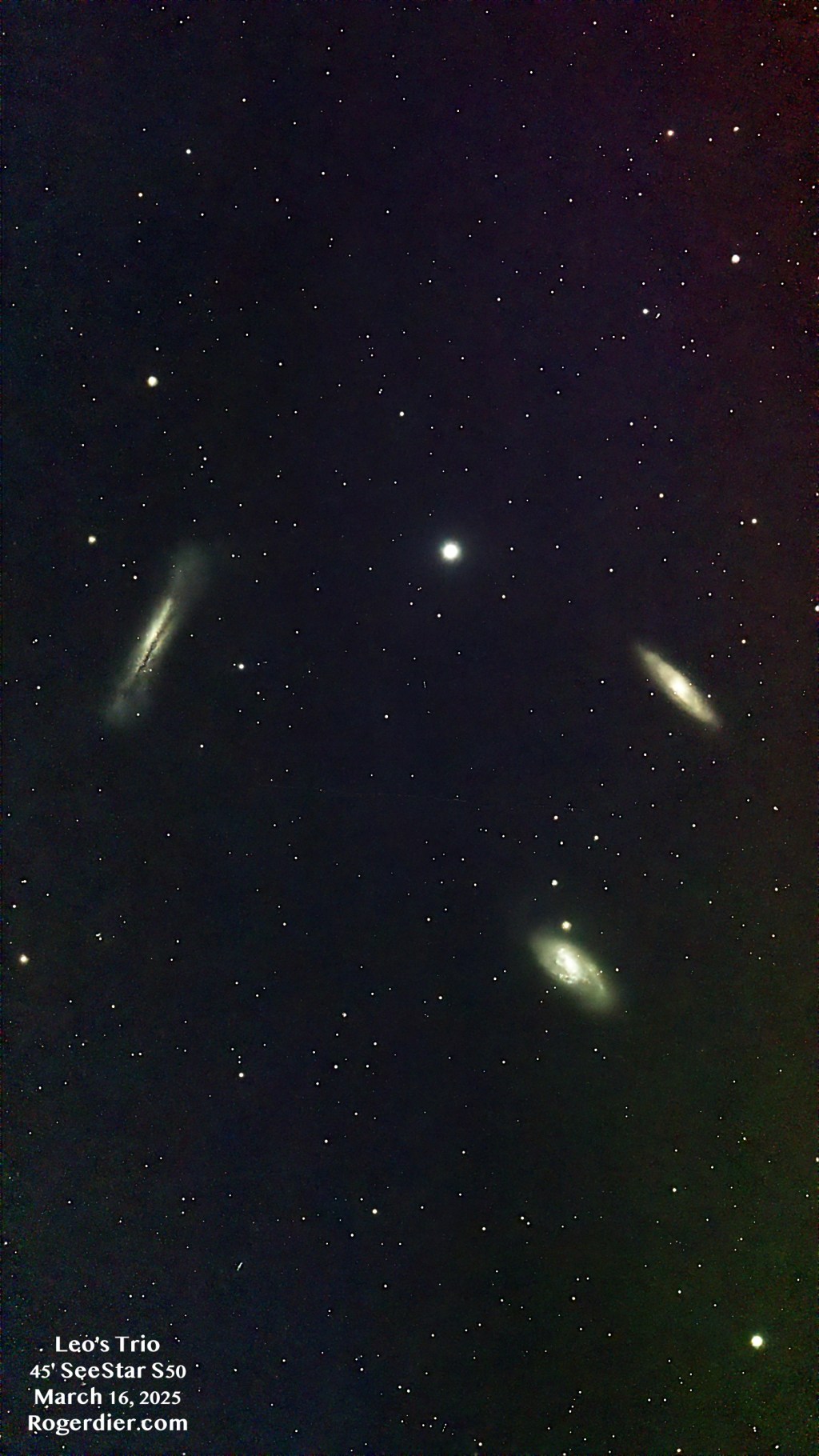
Leo’s Trio is an arresting mix of galaxies which fit comfortably in the field of view of most small telescopes. On the evening of March 16, I had to slightly expand the roughly .75 by 1.25 degree field of view in the SeeStar S50 to comfortably fit the threesome into the cocoon of my field.
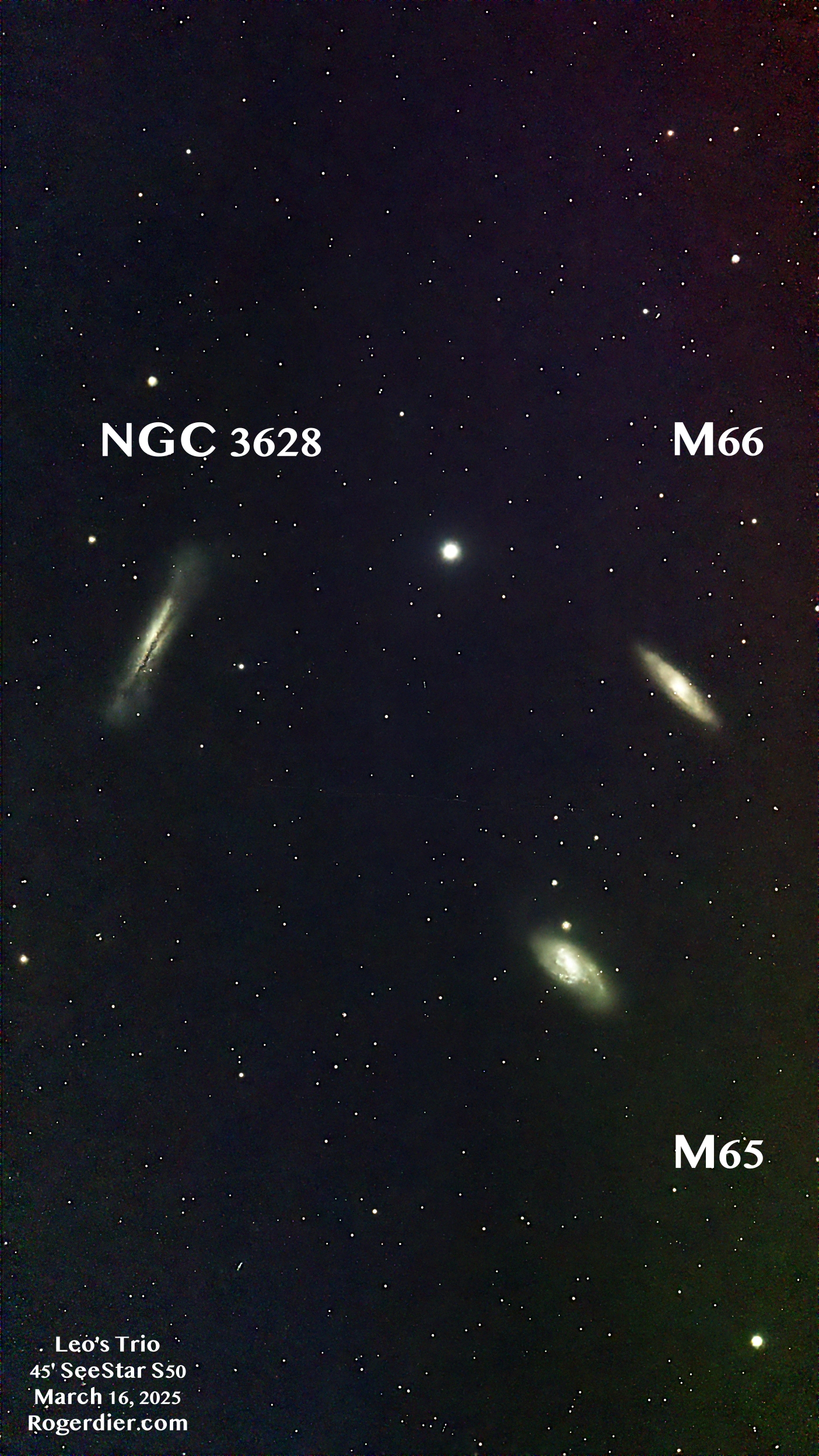
I began stacking images at 8:21 p.m. CDST and finished, as I planned to, when the moon rose at 9:45 p.m. In all, the stacked images were exposed for 45 minutes. During the shoot, Leo’s Trio rose in the sky from about 30 degrees when I started to a little more than 45 degrees high when I stopped to shoot the moon peeking over the southeast horizon.
The reason I drove out into the country to shoot this object was that it was abnormally transparent on the evening of March 16. The seeing—what astronomers call the behavior of currents of air between the observer and the object being observed—was poor, according to the ICSC App. Great transparency and poor seeing. You can’t always get what you want.
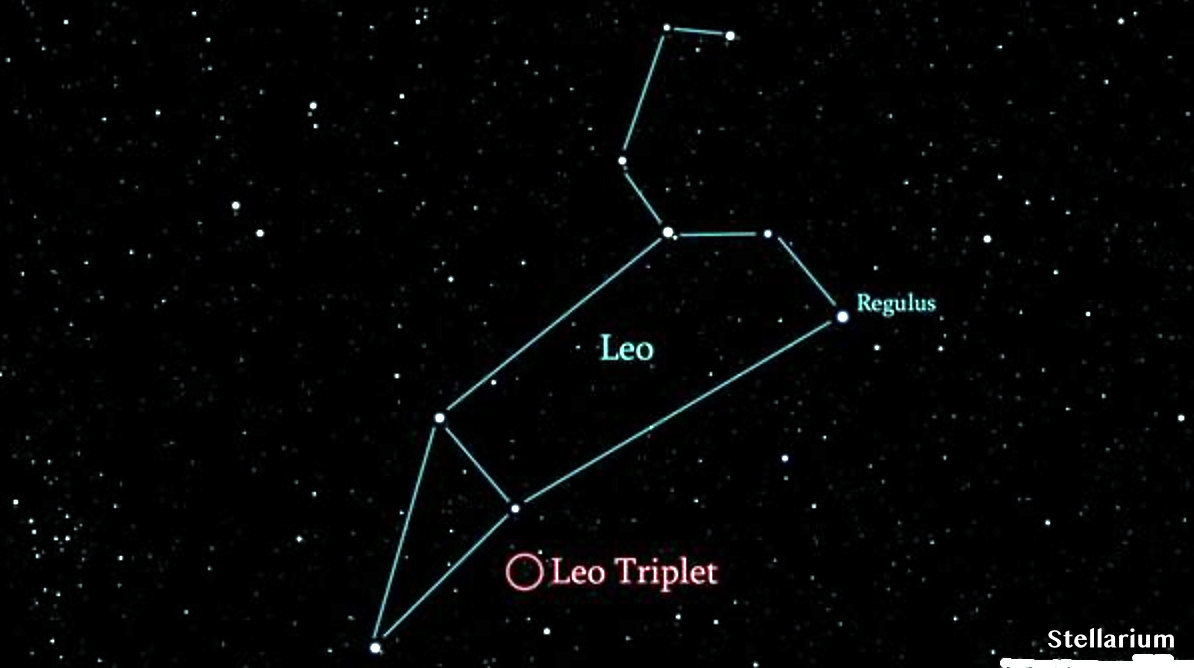
However, unlike observing with the naked eye in south Oshkosh, I was able to make out all three stars in the tale of the lion: Denebola (magnitude 2.14), Zosmos (2.56) and Chertan 3.33). The latter is a rare naked-eye sight under my Bortle 6 light dome.
All three galaxies of Leo’s Trio are all relatively near one another; a few million lights apart. As a consequence, the massive pulls of millions of stars in each of the galaxies has and is deforming the shapes of other galaxies in this small group. M66 is the brightest galaxy, shining at magnitude 9.04 followed by M65 at 9.34 and NGC 3628, which weighs in at 9.51. Some amateurs call NGC 3628 The Hamburger Galaxy but you’ll never catch me referring to it by that moniker. Wait … I just did.
I posted a map of Leo the Lion to give you an idea of where Leo’s Trio hangs out.
THE SEVEN SISTERS
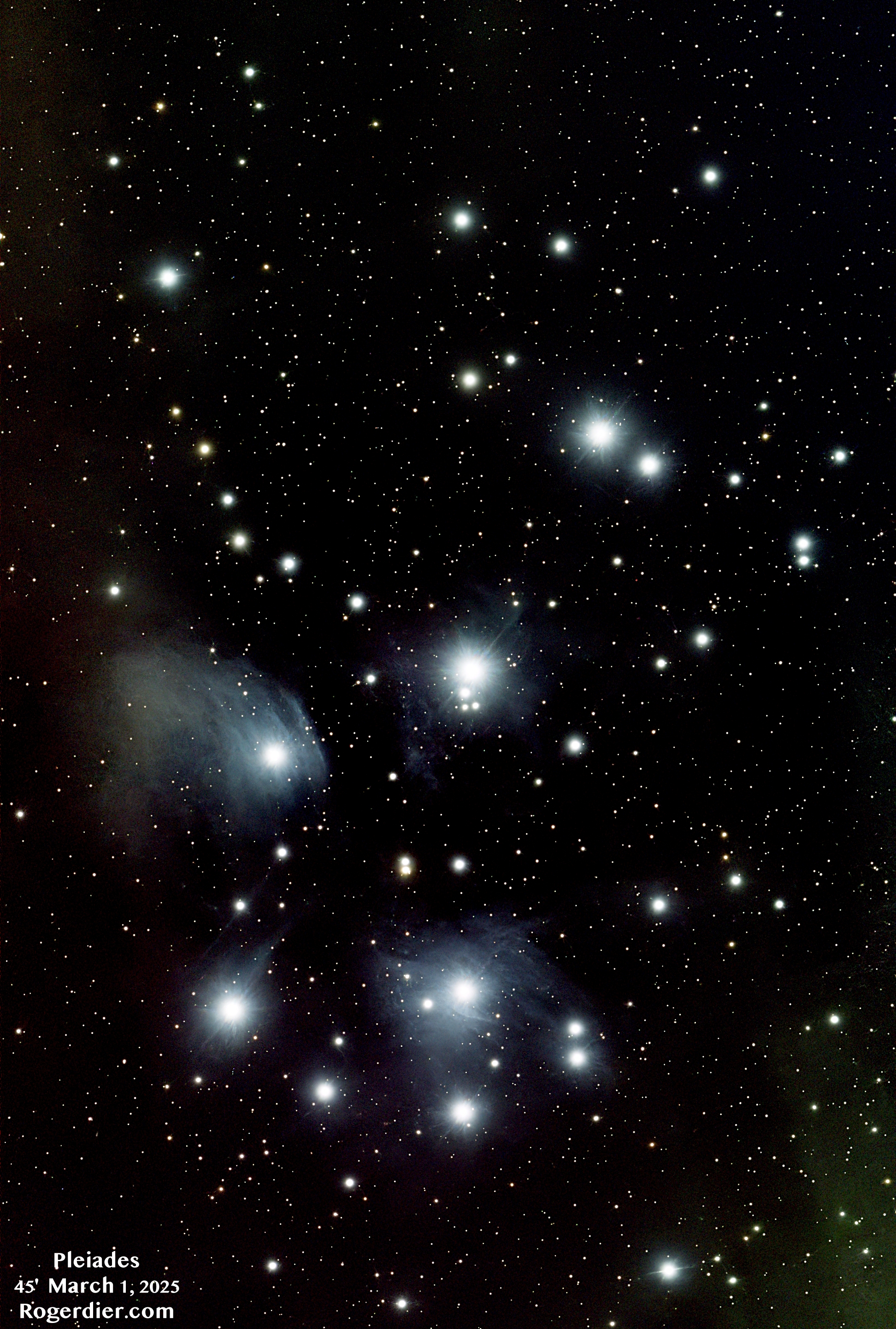
On the first night of the current month, I drove to the same location west of Oshkosh—the locals call it Nekimi Road—to park and shoot about a quarter mile north of a large cell phone tower. The Pleiades of Taurus the Bull were the target. The major blue-white new stars of that open cluster illuminated the gas and dust that is passing between the stars of the Sisters and the eyes of your intrepid astronomer on Earth. This photo, too, was a 45-minute exposure on an expanded field of view.
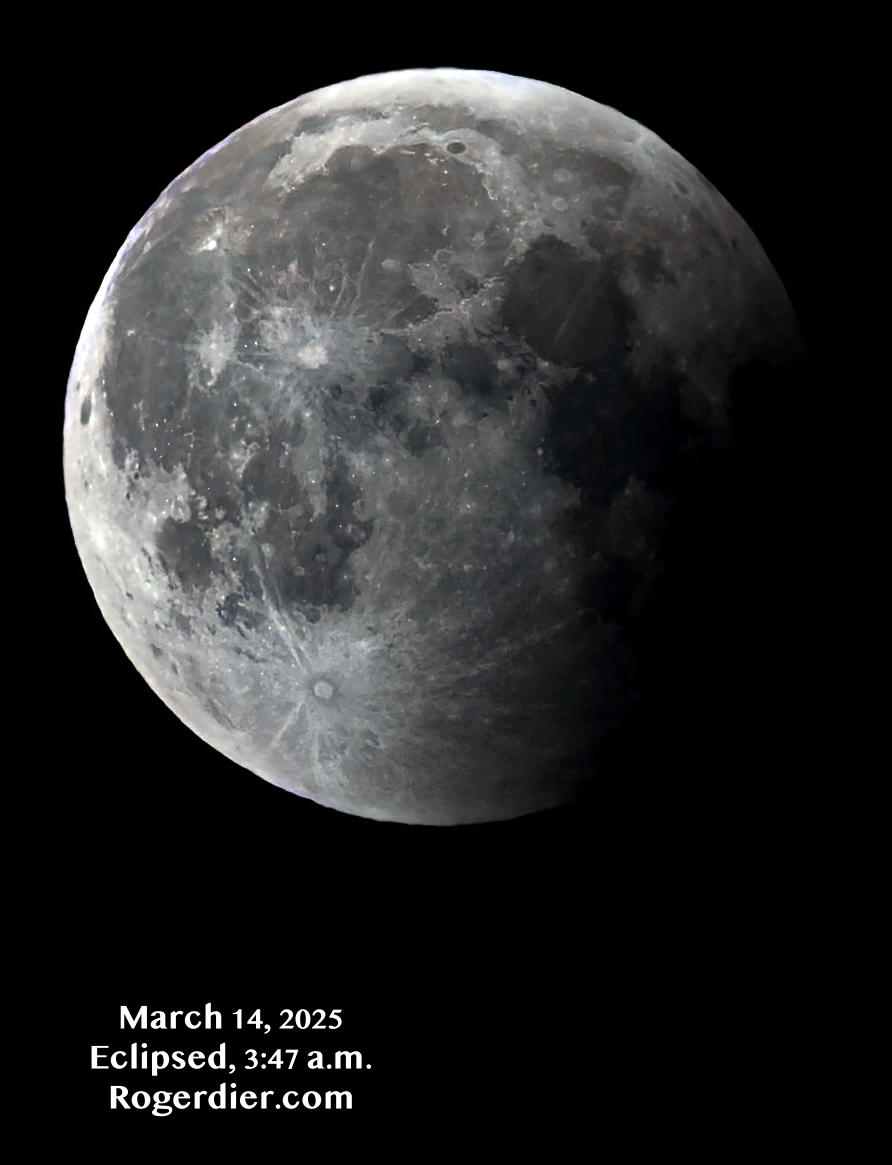
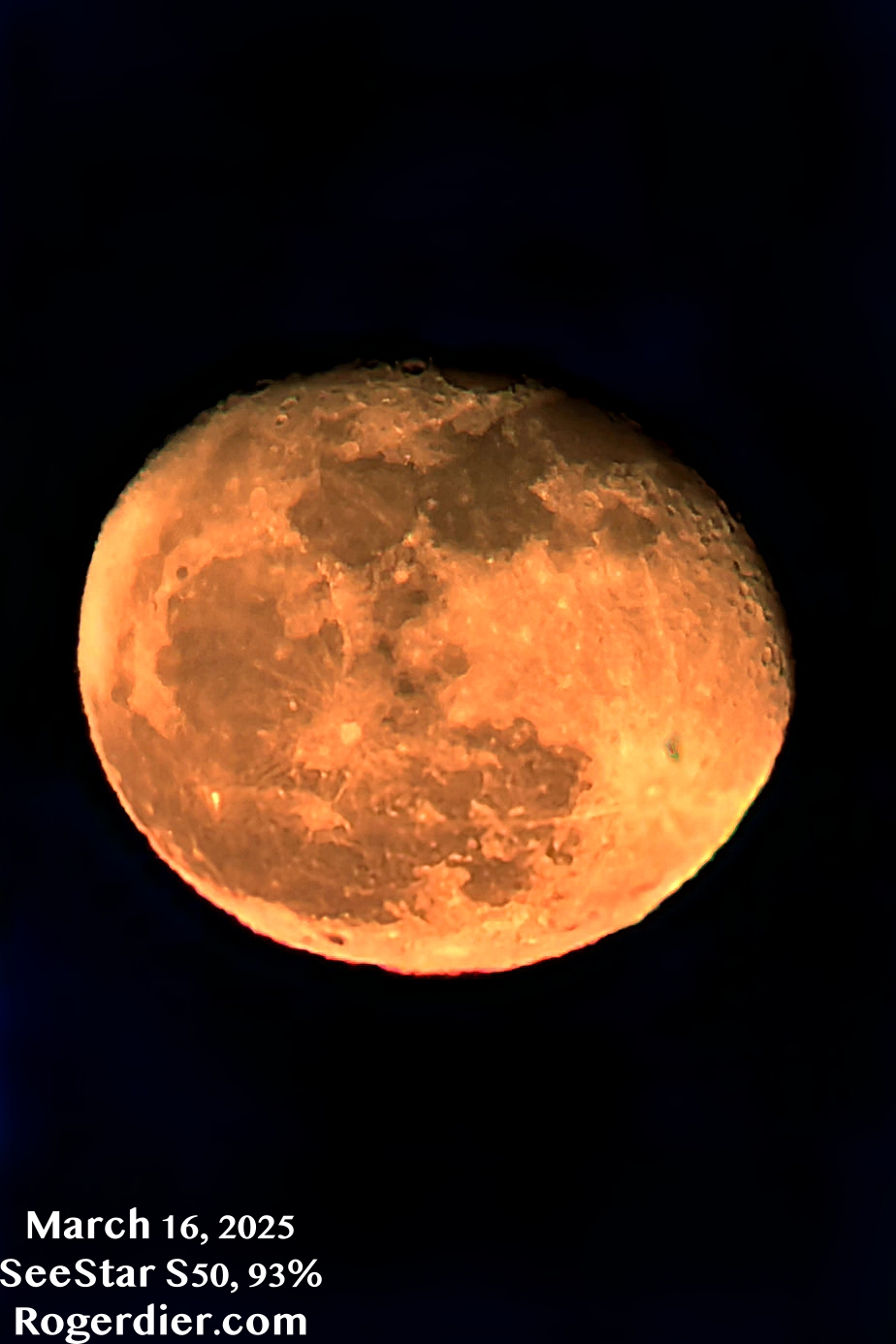
In other shoots this month, I shot a quick pick of the eclipsed moon at 3:47 a.m. CDST on March 14—Lunar eclipses don’t do much for me. And again, almost three days later, I snapped the rosy lunar orb, which was 93% full on the evening it rose at the end of the Leo’s Trio shoot.
These timing of my postings are going to be sporadic for a while. I’m writing a biography of John Mayasich, the best hockey player America produced in the 20th century. I have a deadline when the completed manuscript will get to the publisher. I try not to think of that looming deadline—there’s enough stress ballooning in America as it is.
Thank you for reading Cosmic on Rogerdier.com.
 Cosmic