The Veil of the Seven Sisters
Many a night I saw the Pleiads, rising thro’ the mellow shade,
Glitter like a swarm of fire-flies tangled in a silver braid.”
-Alfred, Lord Tennyson, Locksley Hall, 1842
When a member of a young pack of wolves running in the night in western Green Bay, Wisconsin, one of the first things I noticed in autumn night skies was a kind of a little dipper. Seeing it on late October and November nights always made me feel good. I came to look for it and the Pleiades, also known widely as The Seven Sisters, became an annual sign post in my youth. I loved all of the mysterious sisters and was boyishly happy each autumn when I first saw them in the northeast night sky. They seemed to be shrouded in a faint cloudy mist, like breath on a mirror.
Imaging the Sisters
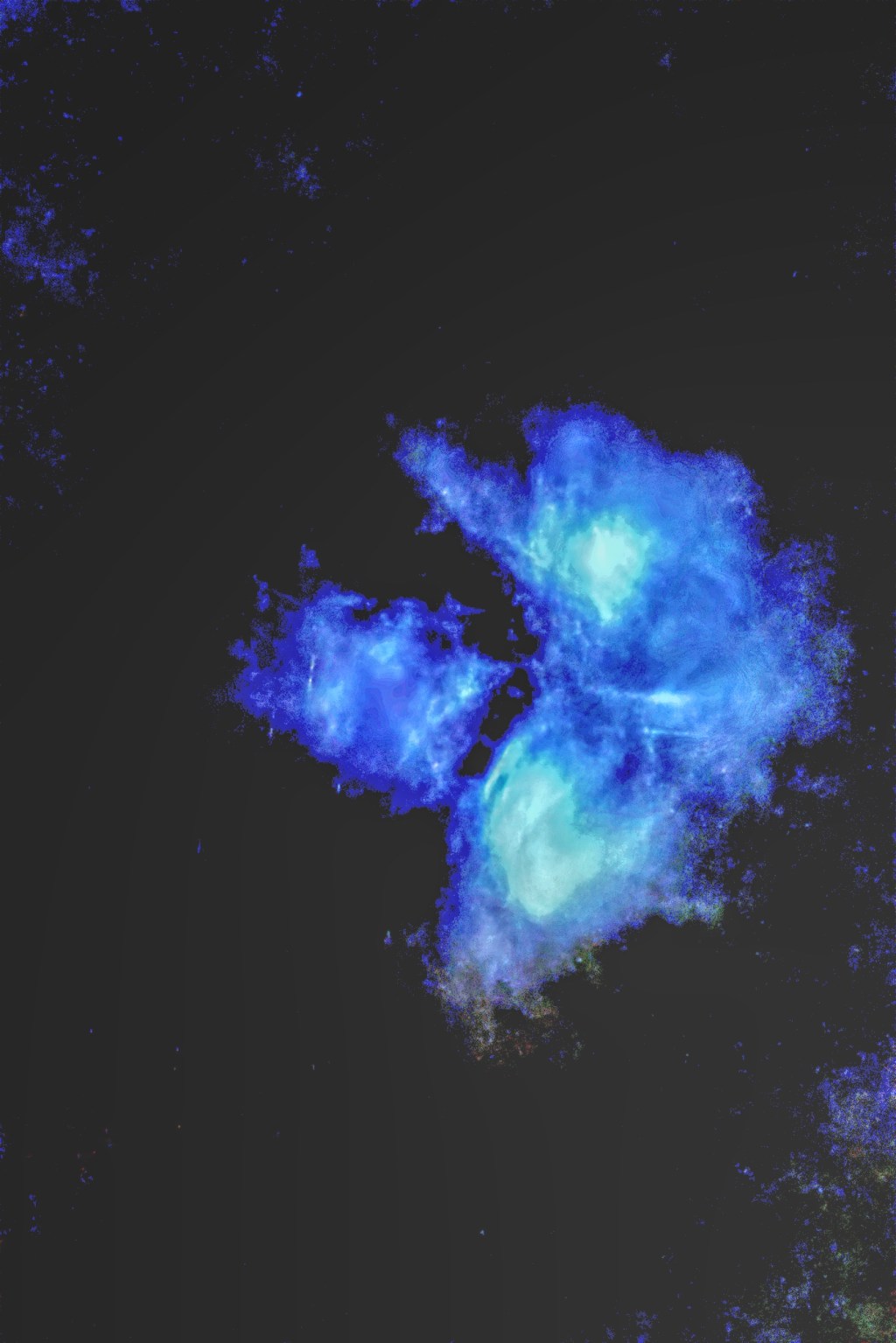
I took a picture of the Pleiades on October 18, 2026. The photo was placed in my PixInsight suite and using software made by RC-Astro, I eliminated all the stars in the image. Left were countless interstellar carbon dust particles—cosmic soot—and hydrogen gas. After that process, PhotoScape X software amplified all the gas and dust picked up in 71, 30-second images gathered and stacked by a SeeStar S50 Pro camera.
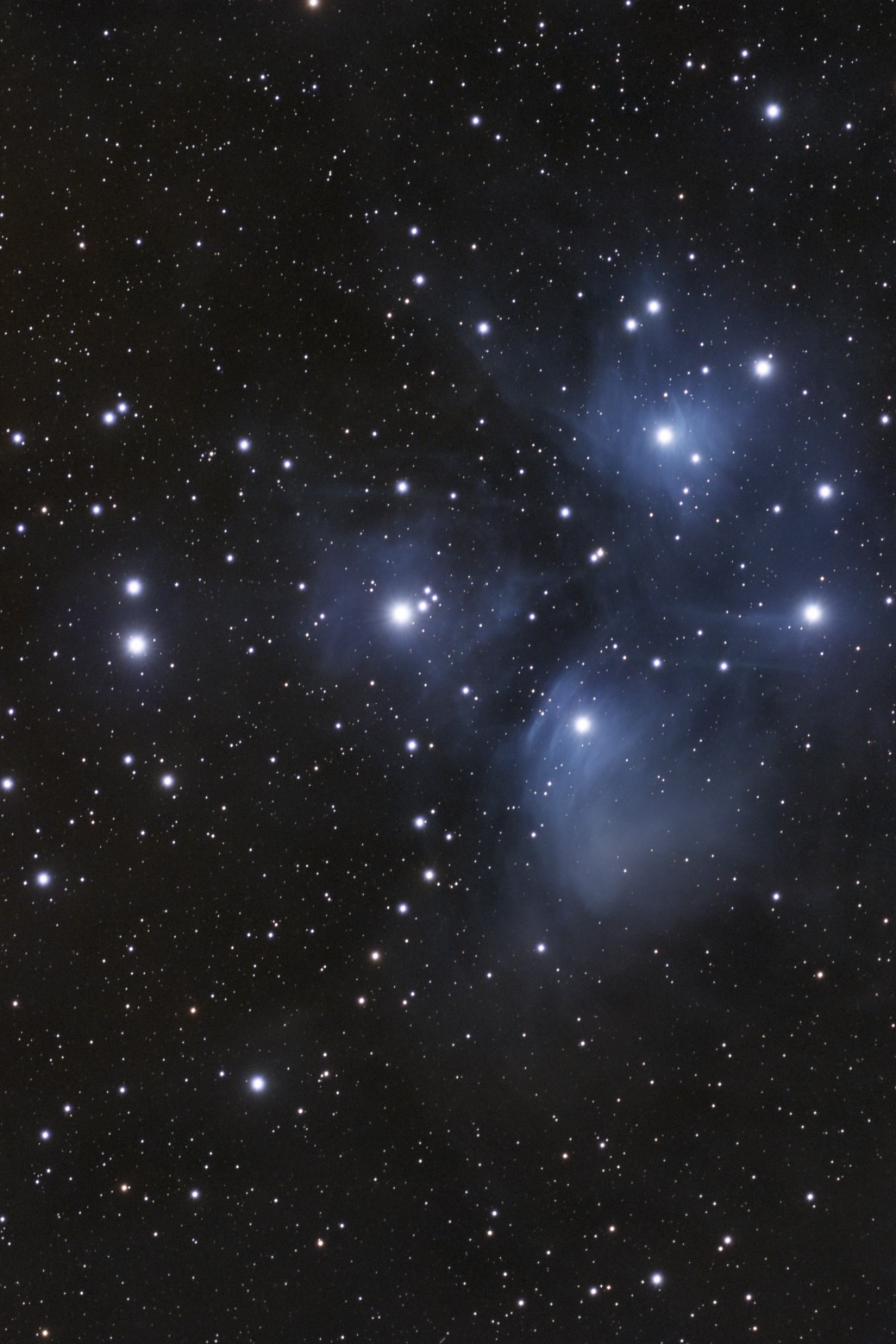
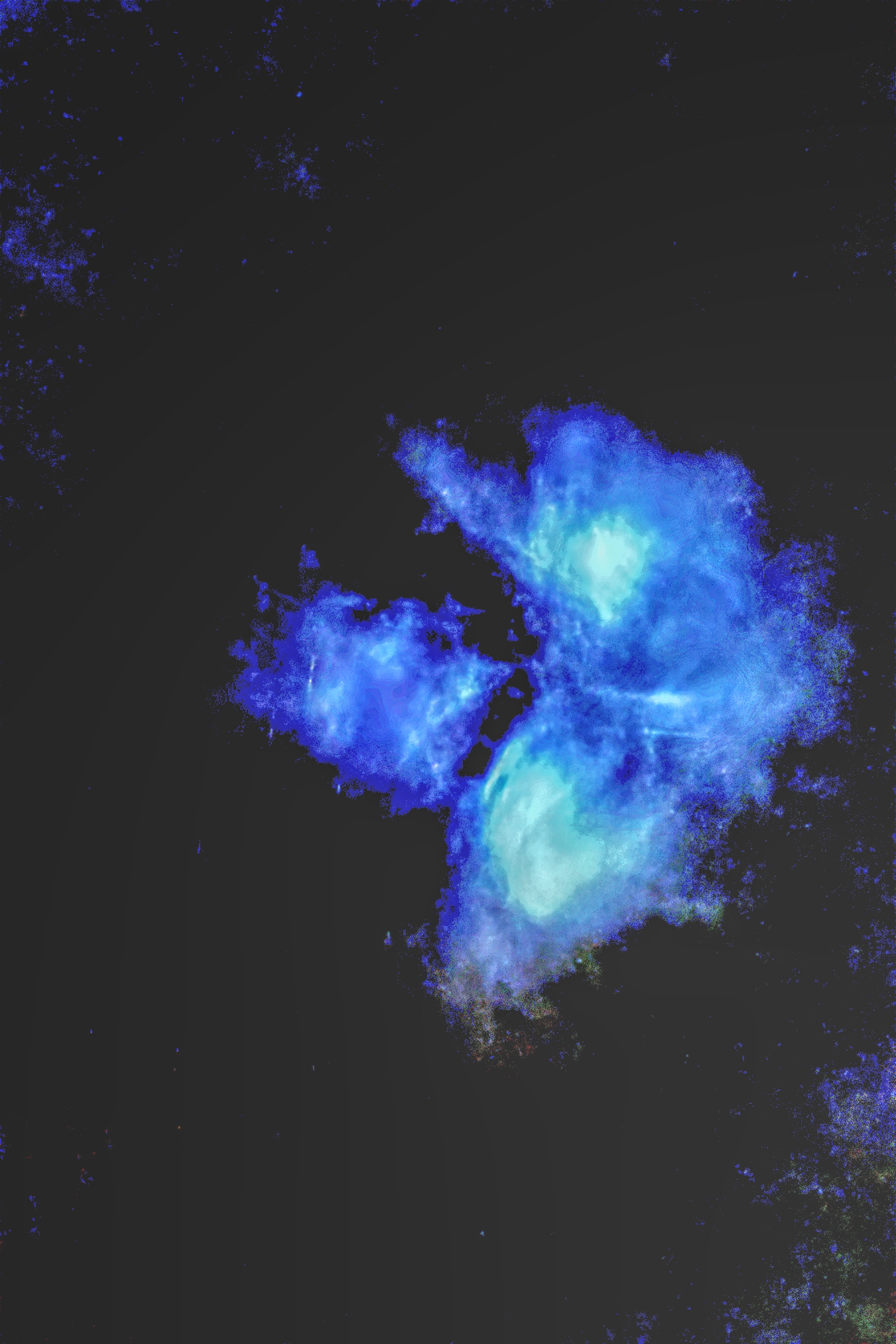
The fine, microscopic solid dust grains are rich in carbon and silicates, which, because the cloud is among and in front of the Pleiades—a grouping packed with hot blue baby stars within seven light years of each other wandering away from their cosmic birthplace—the gassy dust goes into mirror mode. Particles in the nebula scatter and reflect the intense photons from the bright baby stars, which are only about 100 million years old. Newborn pups on the scale of eternity.
The nebula in the image before you appears blue because the dust particles scatter blue light much more efficiently than longer red wavelengths, just like our atmosphere more easily disperses blue photons of sunlight to create our blue dome.
Where did it come from? The nebula is not leftover material from the formation of the Pleiades. Astronomical researchers are bullish on the cloud being a detached part of the Taurus Molecular Cloud, which floats throughout that constellation and spills over to neighboring constellations. The Pleiades is not part of this breakaway cloud, it is merely passing behind and through it. The solar wind from Pleiades members is doing different things to different parts of the cloud.
Nebula Nooks
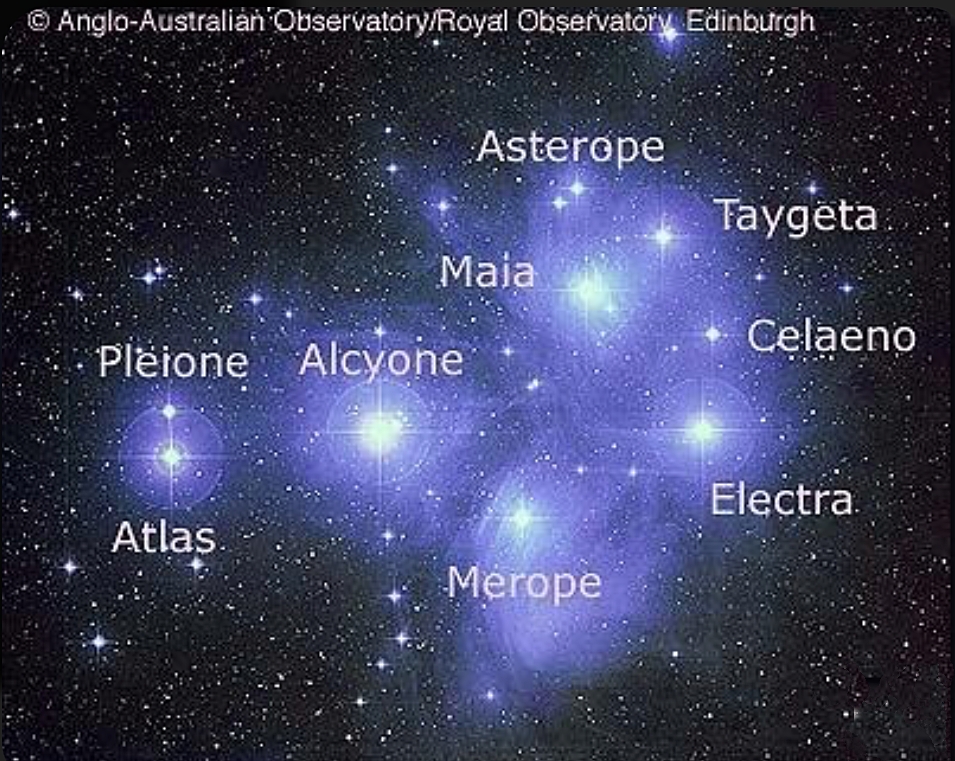
There are different parts of the nebula, and because the energy from different members of the Pleiades are doing different things to the reflection nebula passing around them, it offers proof that the meeting of the Seven Sisters and Tennyson’s mellow shade is happenstance.
The Merope Nebula
The largest, fan-shaped glob is primarily illuminated by the star named Merope (23 tauri), though other stars in the Seven Sisters (Alcyone and Electra) add their illuminating energy to the primary cloud. ID’ed in the community as Eta Tauri (25 tauri), Alcyone is the brightest member of the cluster at 2.8 magnitude. Imagine the brightness of our sun. Multiply the size of our sun by 10 and the burn-your-eyeballs energy by 1,000 and it gives you an idea what Alcyone is like.
A smaller part of the Merope Nebula is called Barnard’s Merope Nebula. It is the exceptionally bright knot a mere half a light year from Merope, and that star’s solar wind is tearing that part of the Merope Nebula apart. It’s gobble or be gobbled up there.
Then we have the Maia Nebula, a dense beehive of dust that displays a different directional velocity than other parts of the nebula near the cluster of blue-white stars. That’s evidence that the young Pleiades cluster and the cloud that surrounds it met by chance; strangers in the night.
8 Light Years Wide, 444 LY Away
While the Pleiades may seem small in the night sky, the celestial territory occupied by the young open cluster and the veil it travels behind is quite a bit larger than our full moon, as this graphic below created by Andres Nieto Porras beautifully illustrates.
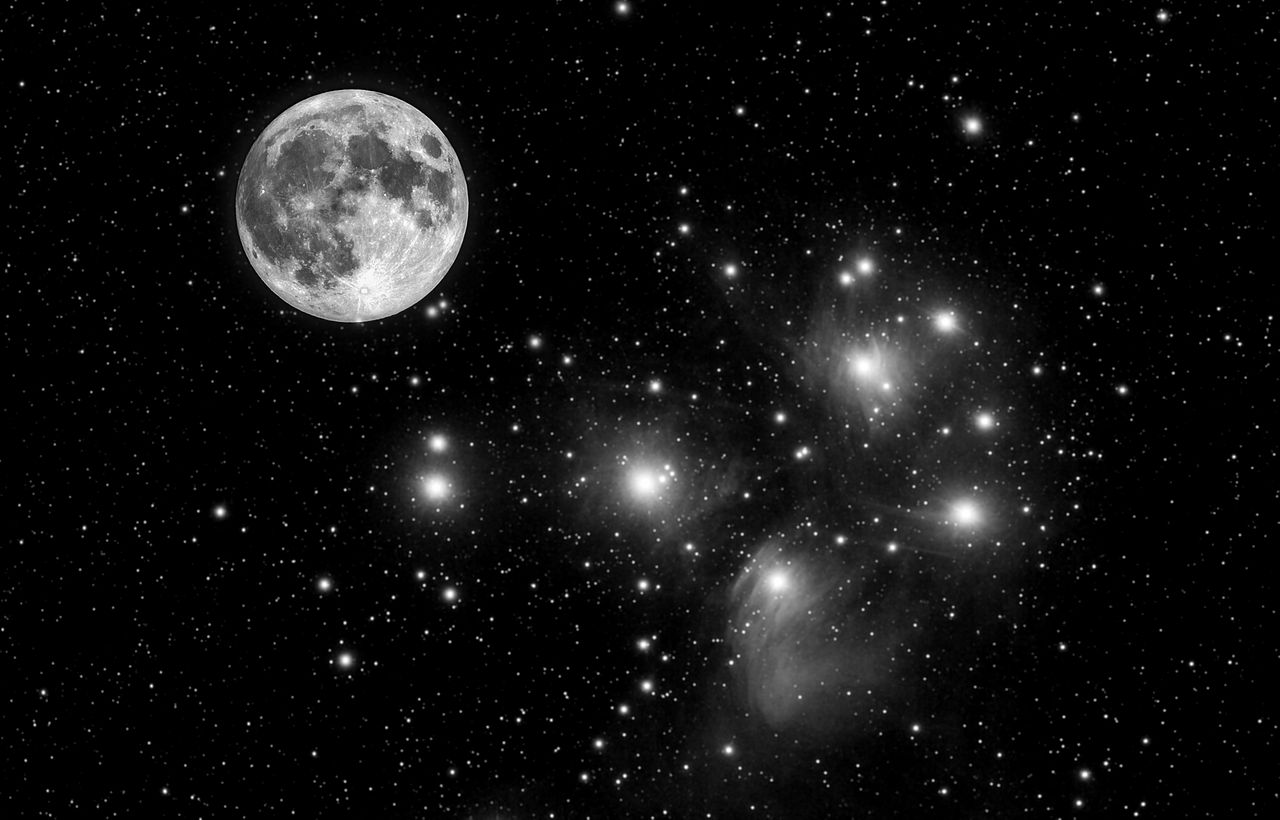
We’ve been having an extraordinary streak of clear night skies here in Med City, Minnesota. More images and prose about them comes your way in the following days and weeks.
Thank you for reading and may good health and clear skies come your way.

