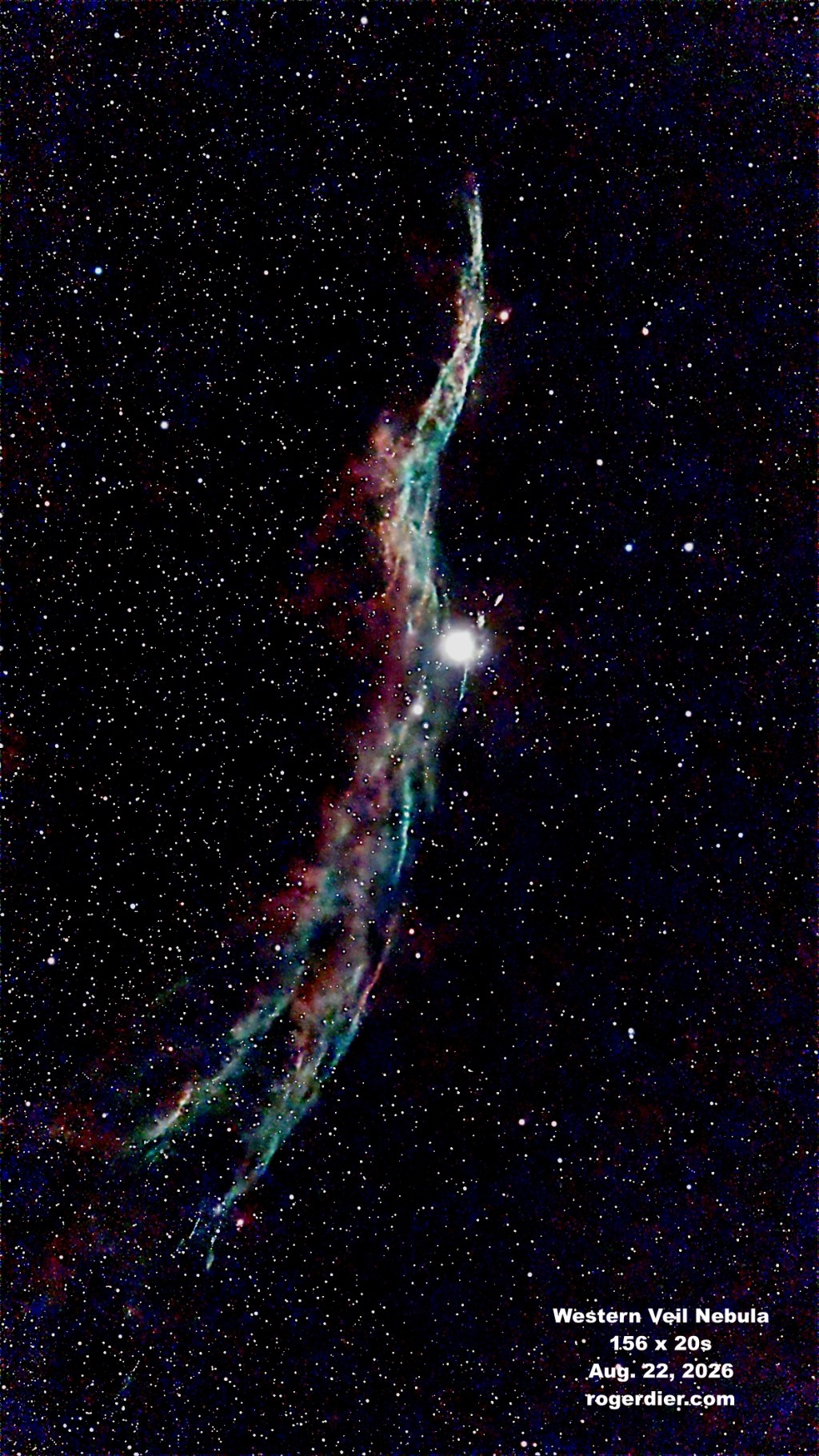
Around ten thousand years ago, when the Ice Age was in the early stages of surrendering its frozen grip on Earth, a star about 20 times more massive than our sun exploded in what became the constellation Cygnus the Swan. The star was close to Earth, only 1,600 light years away, almost next door in the cosmic neighborhood. The explosion was so pronounced that it was visible in Earth’s daytime sky. Left are the superheated shock waves of that supernova, leaving the site of the explosion at 932,000 miles-per-hour, give or take.
This is the western part of that supernova event. The whole smash of the so-called Cygnus Loop (west, east, north and a smidge in the south) is about three degrees wide, or about the diameter of six full moons side-by-side. The western edge of the Veil Nebula is my favorite, owing to its ghostly filaments, a kind of wispy curtain in the night sky.
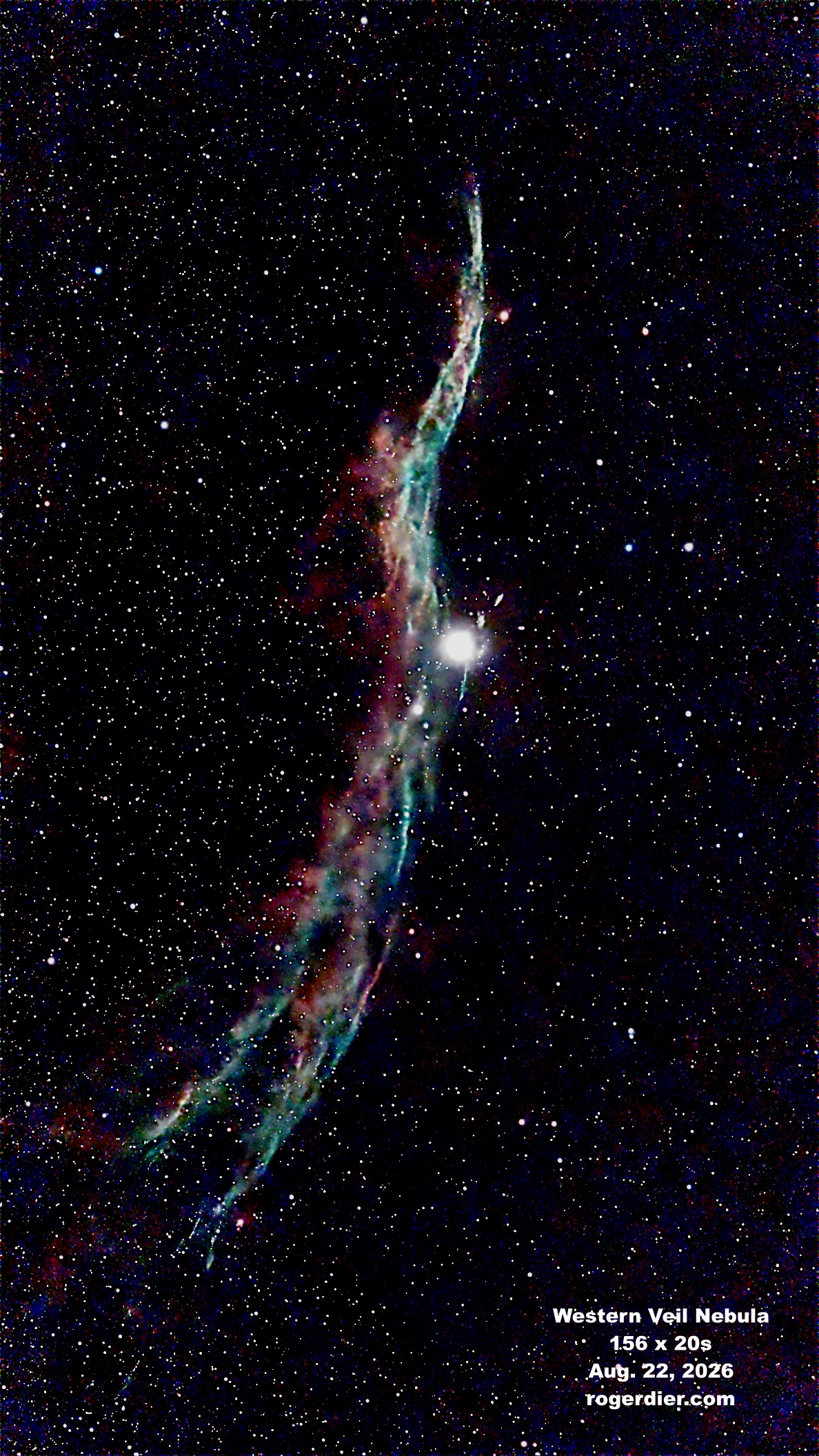
What’s up with the colors? The ionized gases of the former star reveal some of what was in the blown-to-bits star. The blue and teal-green elements indicate oxygen that has been ionized and re-ionized during the cataclysmic end of the star. The reddish, magenta elements indicate that the star contained the most basic star-making element in the cosmos, hydrogen. If you expand the image and look closely, above that bright 4th magnitude star 52 Cygni, you can see some sulfur remnants, which appears in hues of yellow and orange. If you can’t see the hints of sulfur, I guess there’s no hue for you.
M13
Earlier on the night of the 22nd, my SeeStar S50 fixated on M13, arguably the best globular cluster we can see from our position in the galaxy. This cluster has always reminded me of a spider nest, those thick-spun webs hidden in corners or behind shingles that give humans the creeps because no one wants to see the eight-legged monster that makes it. Edmund Halley was the first observer to note what became M13, publishing his comments about it in 1714. Messier added it to his fake comets list 50 years later.
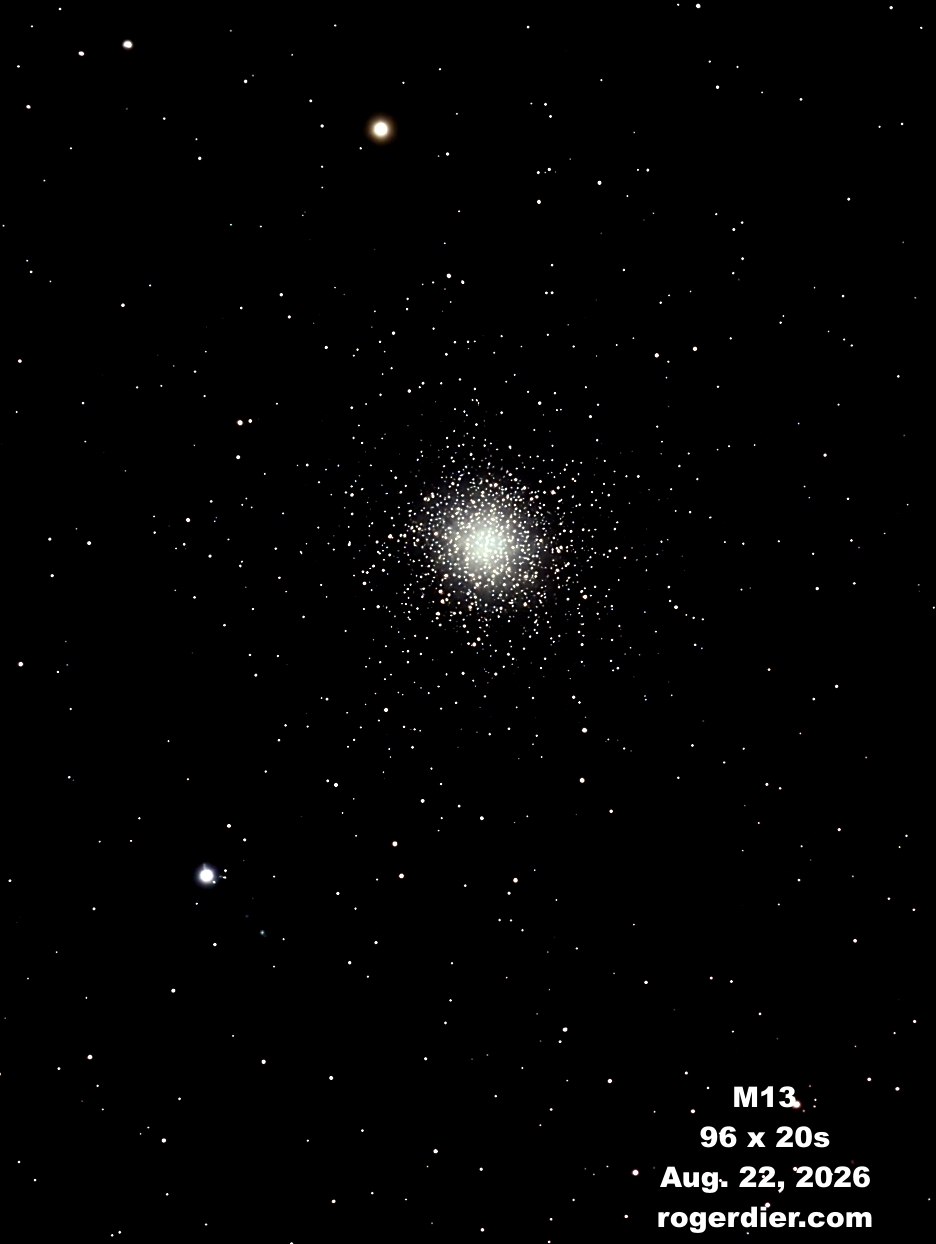
Given a dark sky and using averted vision, its been said that M13 can be seen without optics. At magnitude 5.8, its just at the edge of human eye talent. One wonders what raptors, sharp-eyed creatures with excellent eyesight, can see when they glance up at a starry night. M13 is 22,000 light years from your screen, one of more than 100 globular clusters that orbit the center of our great pinwheeling galaxy. The cluster is so densely packed that collisions within it have produced newer stars, which are known as blue stragglers, the same name given to weeping school-age rural kids who run down the road chasing the school bus.
The North American Nebula
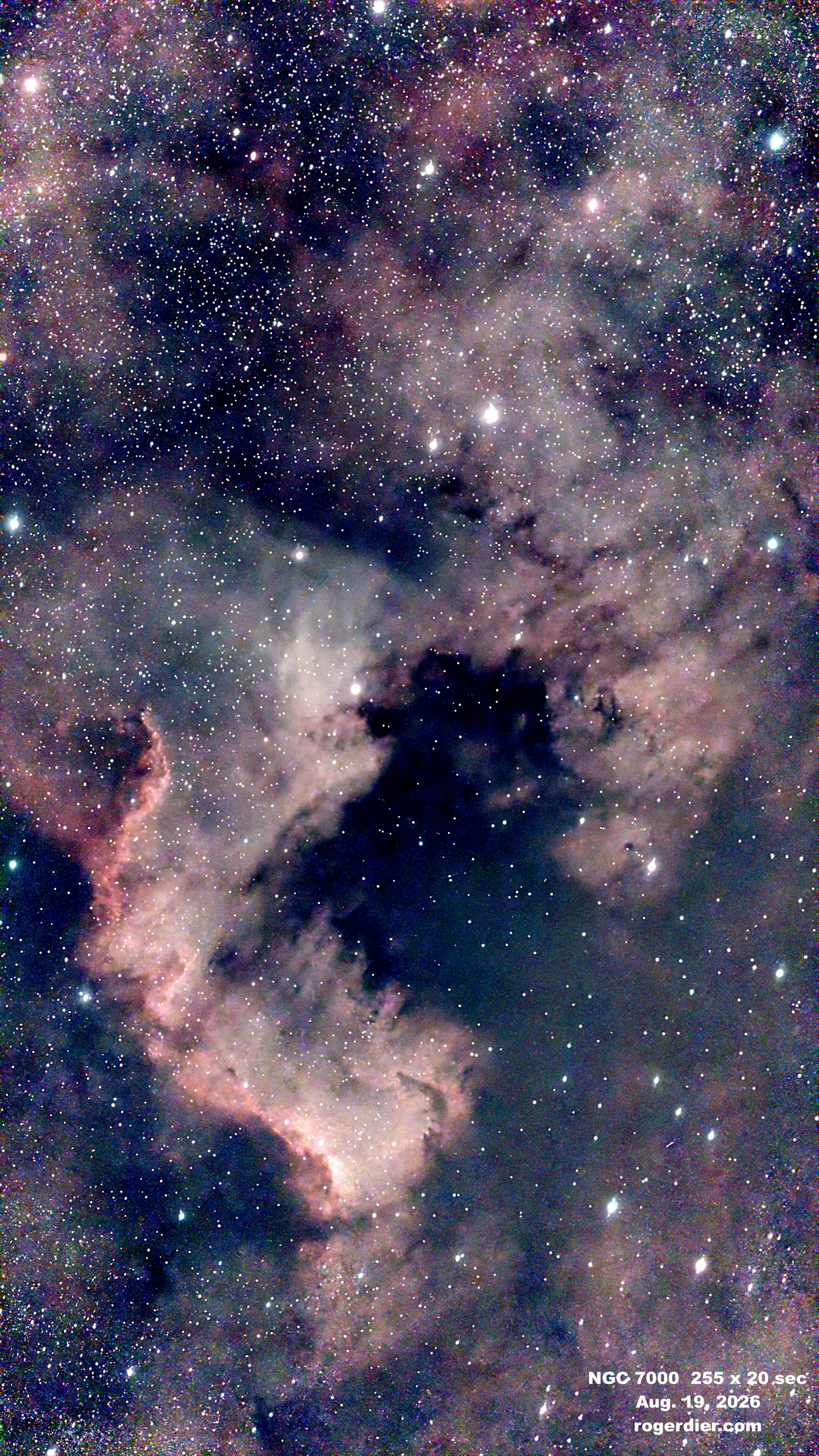
A few nights before I tagged the Western Veil and M13, I photographed the so-called North America Nebula, which someone in the U.S. Federal Government wants to rename The Trump Nebula. The big push for that will come after the U.S. annexes Greenland, Canada and puts toll booths on the United States’ soon-to-be newest territory The Strait of Hormuz. That area is sure to be renamed The Donald J Trump Strait of Hormuz. So many countries to make miserable. So little time.
The North America Nebula is a huge cloud of gas and dust; the lower left area of the image shows the thick Cygnus wall, a sticky section that is busy making new stars. The whole glob of gas and dust is now thought to be 2,590 light years distant, very close to our proximity in one of the Milky Way’s spiral arms.
That’s all for now. Thank you for reading. Wishing you smoke-free daytime air and clear night skies.

