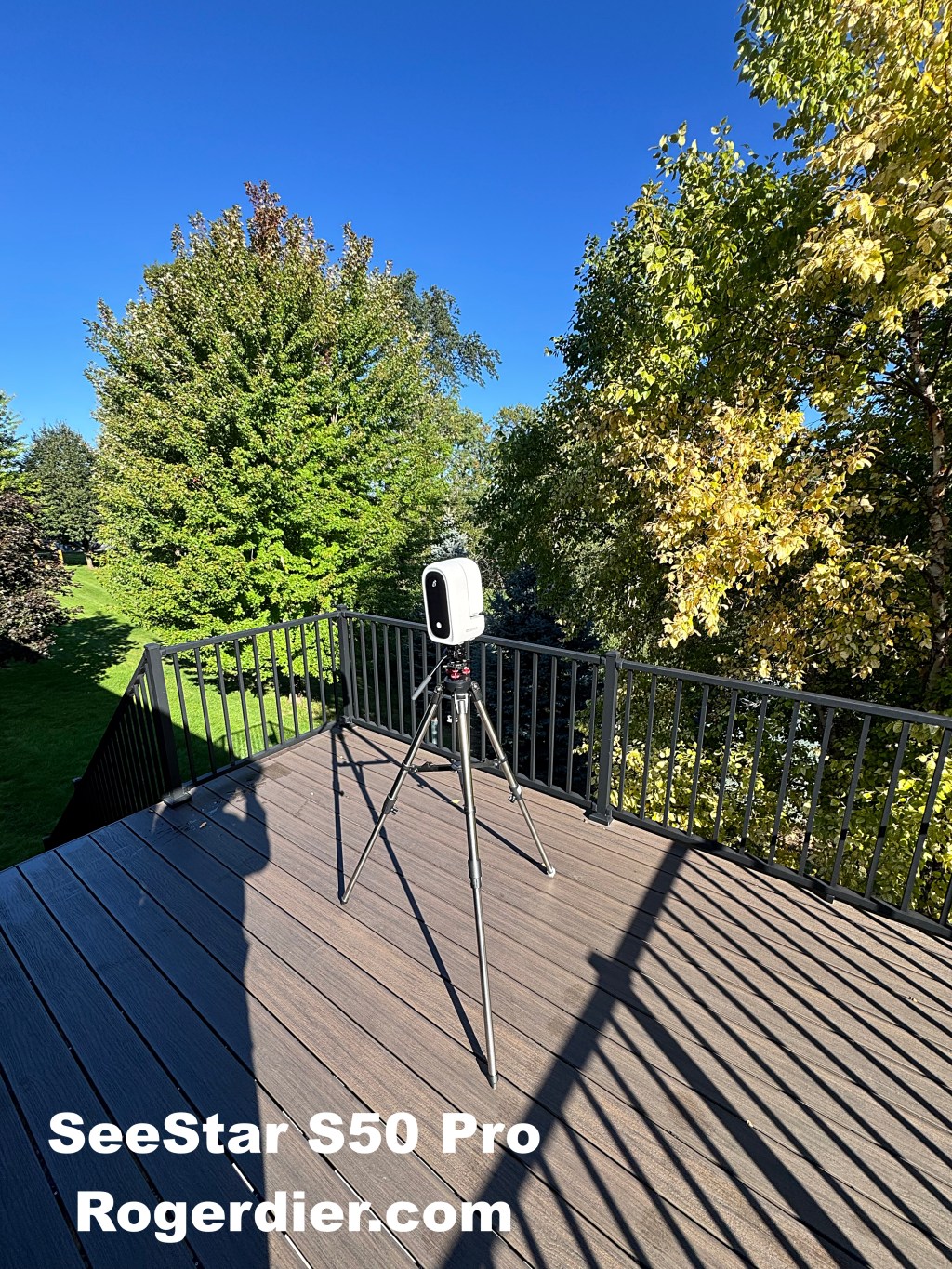
Happy Autumn for our North American readers,
Last month I sold my SeeStar S50 to an astronomical soul who lives in North Carolina. I replaced my beloved black-cased SeeStar S50 with a newer model that offers a wider field of view, a marginally expanded focal length and has an arresting white body.
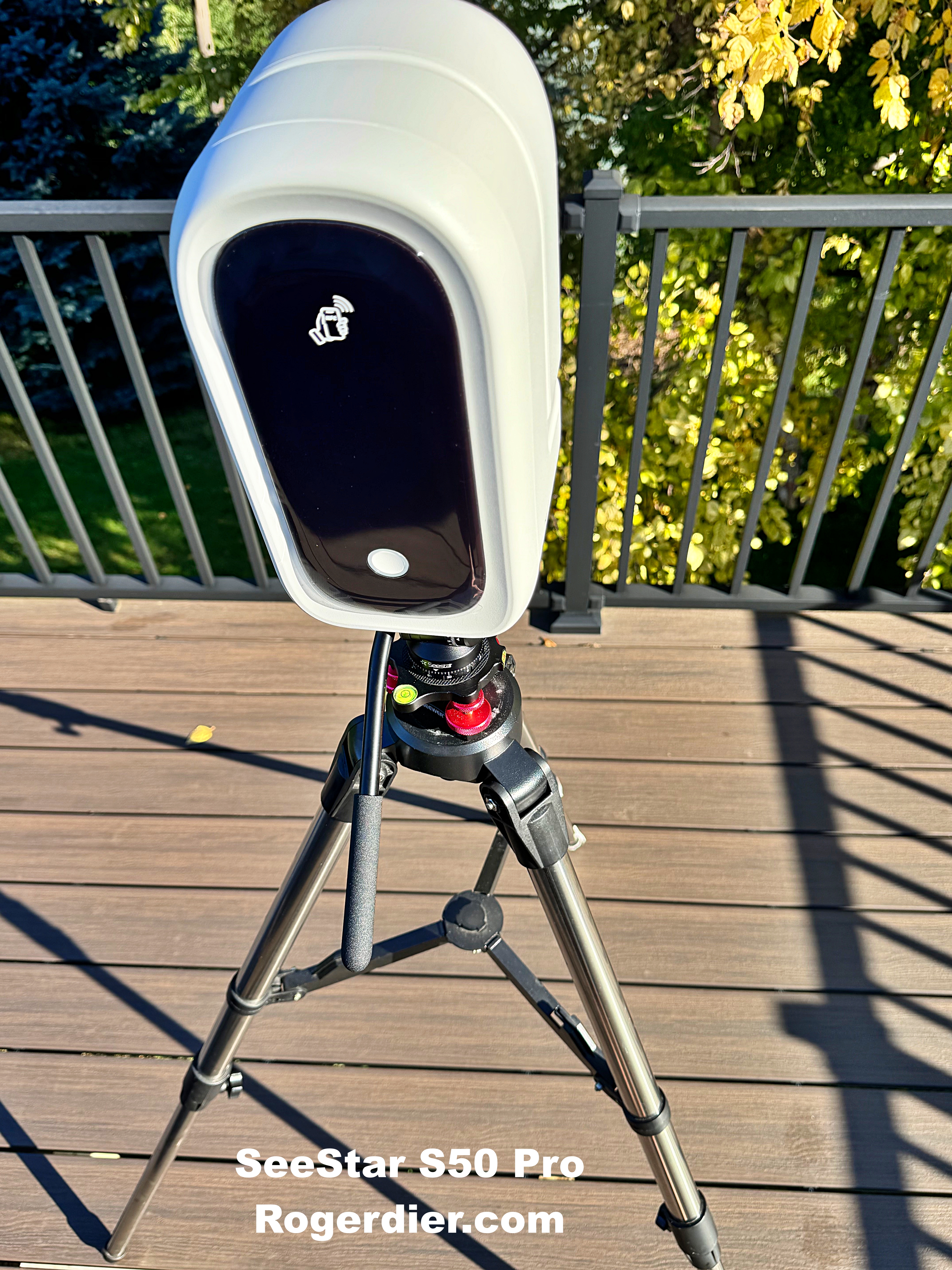
It arrived and of course, clouds rolled in and stayed for more than a week. On September 22 and overnight into early morning September 23, I rolled out the SeeStar S50 “Pro” as ZWO has tagged it, and put it through its paces.
I did not tinker with the new tricks allegedly found in this SeeStar Pro. All I did on the evening of Sept. 22 was choose the equatorial mode, align the scope with the north axis, and pick out three objects to shoot for three minutes. I didn’t even adjust the exposure time to my preferred 20 seconds; I settled for the default 10-second exposures.
Sept. 22 Shots
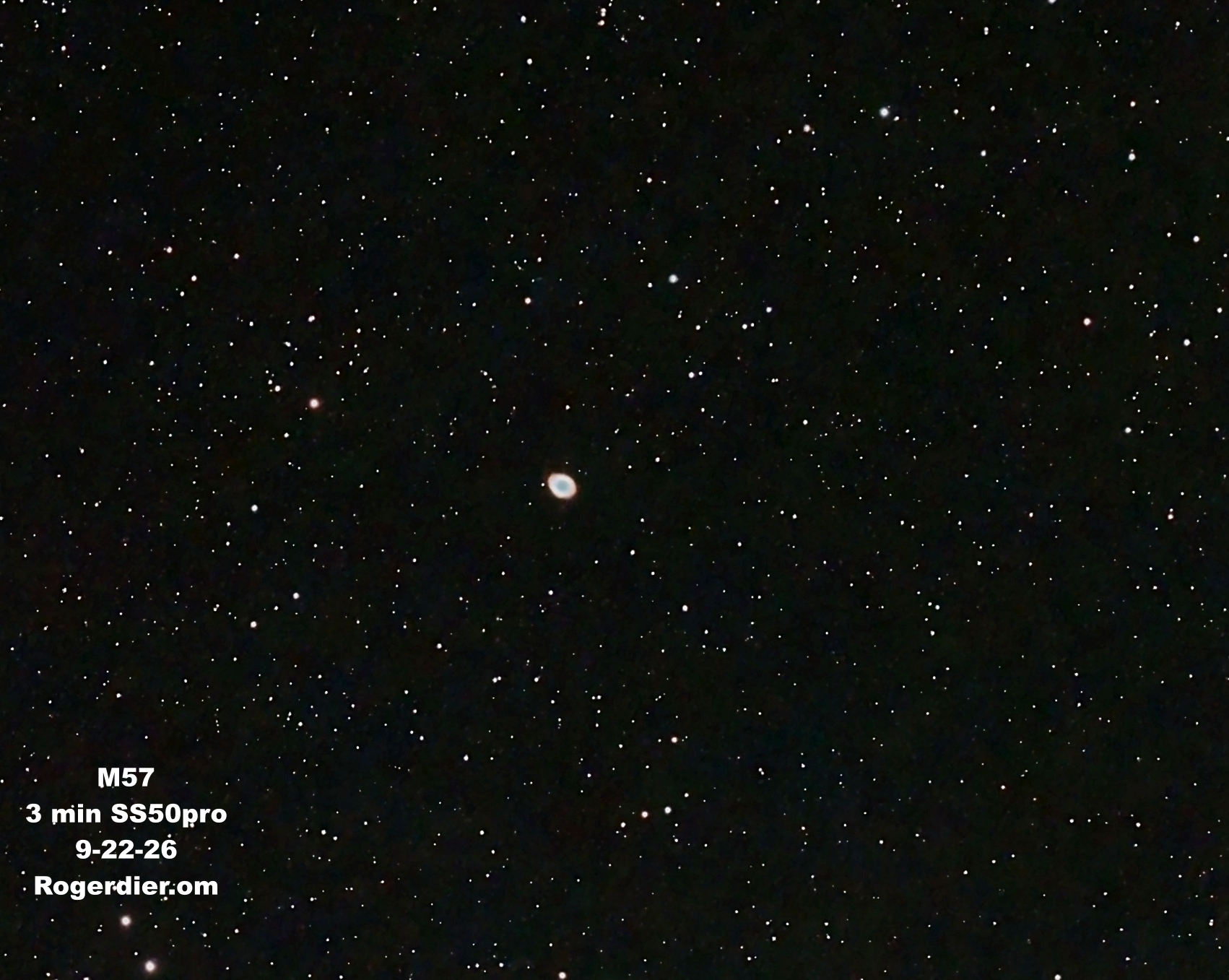
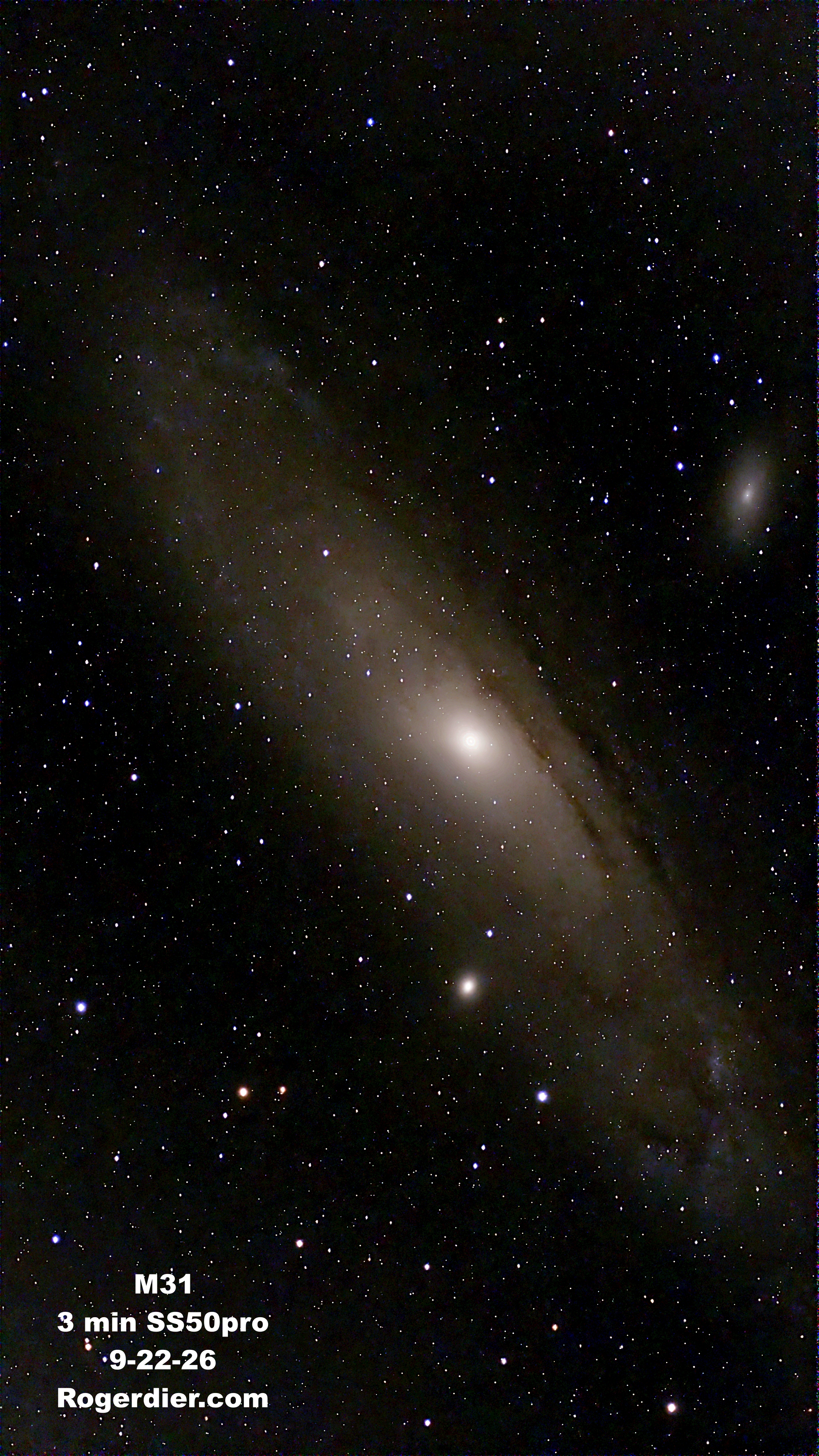
The sky was not ideal, low clouds galloped overhead like racehorses and there was a gibbous moon high up in the southeast sky. Still, there was enough sky to try to shoot and away I sent.
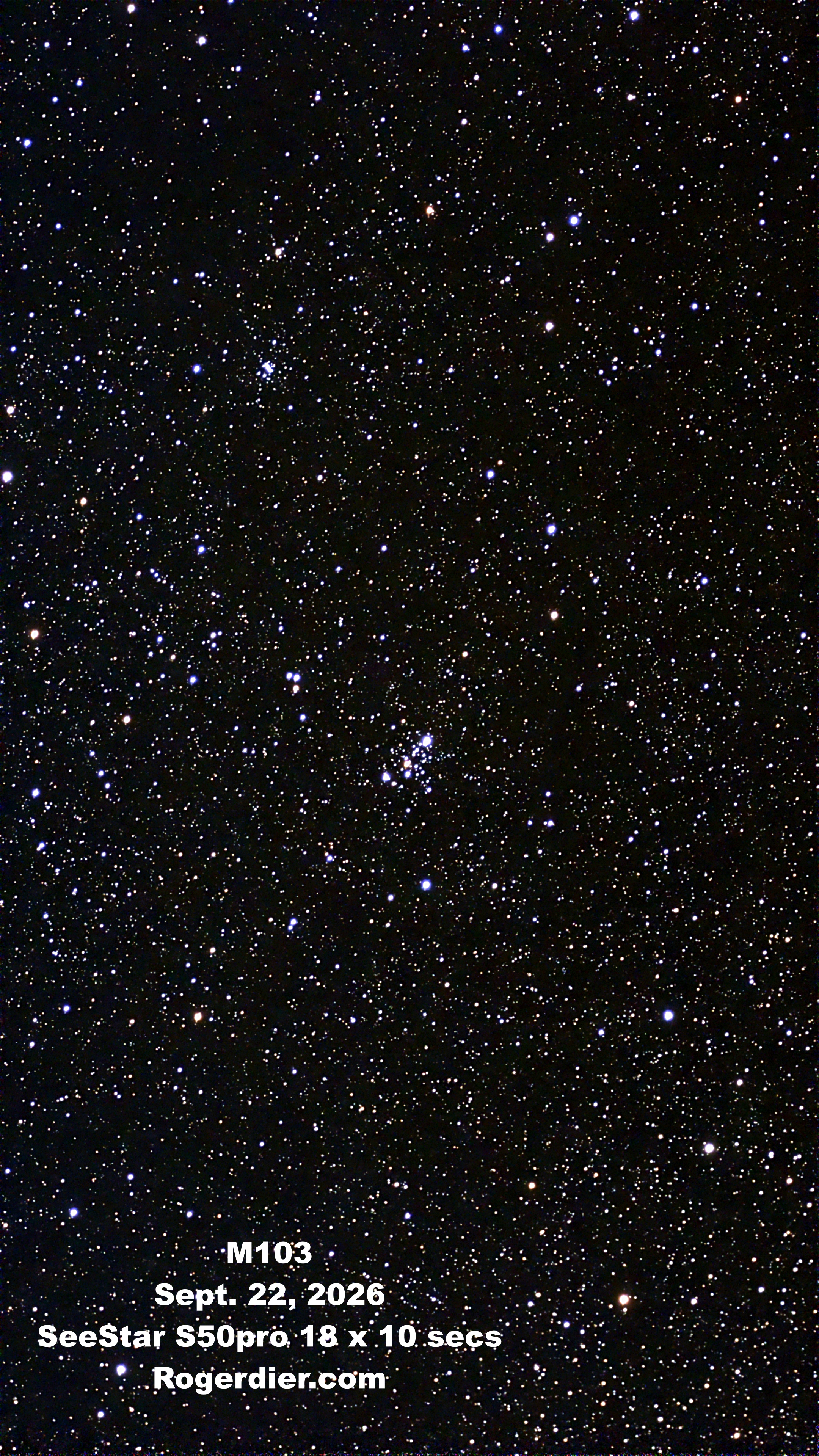
M57, also known as the Ring Nebula, was the first object. After that, I shot the Great Andromeda galaxy that Charles Messier placed in the 31st spot in his catalog. It was 27 degrees above the northeast horizon when I began this three-minute exposure. As you can see, the default field of view is much larger than the standard S50. I finished up with M103, an open cluster in Cassiopeia. The three bright central stars of that cluster resembles the belt of Orion.
Sept 23 Shots
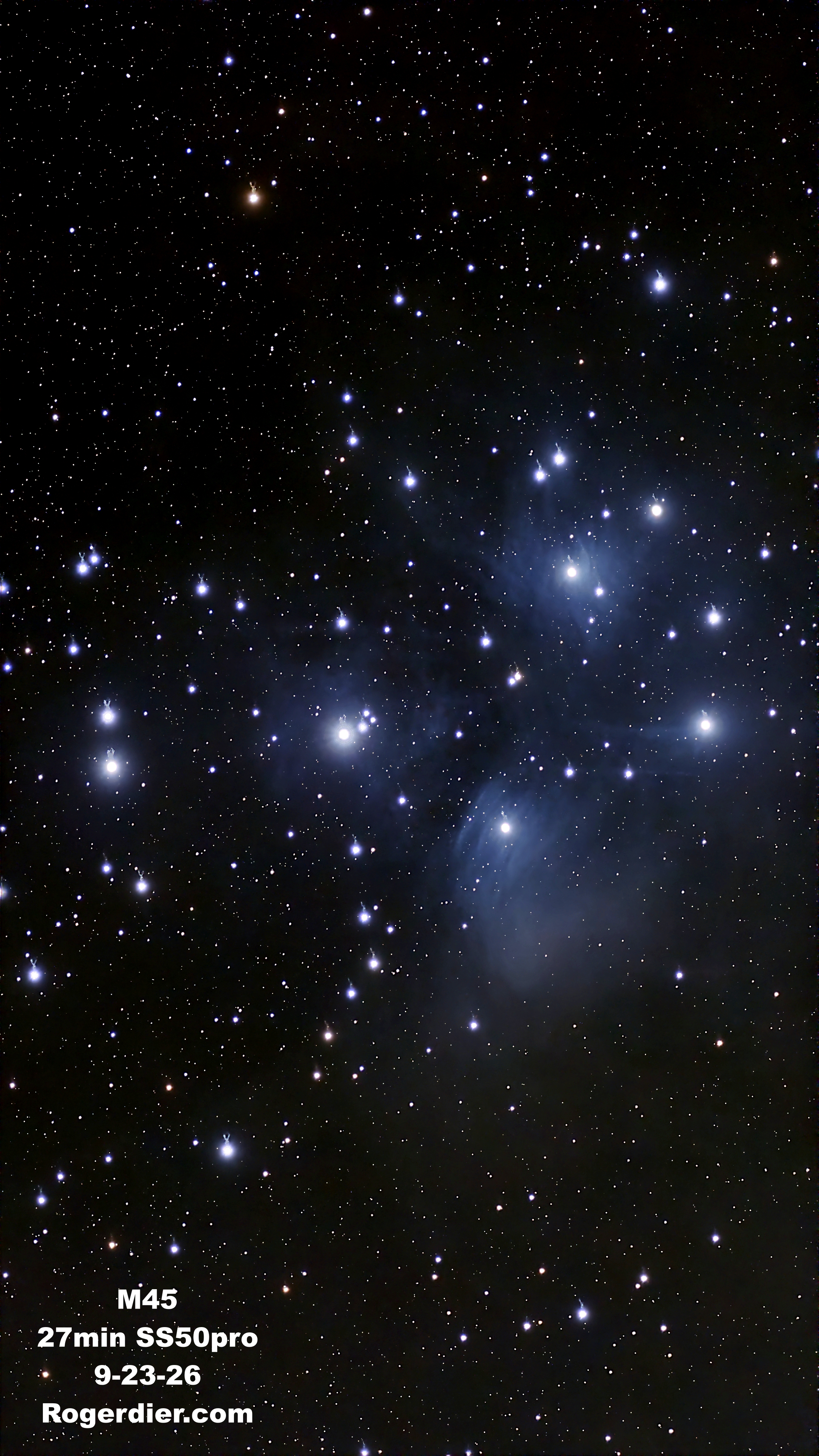
Waking early the following morning, the sky seemed to be more clear than the evening before midnight. The length of our nights at 44 degrees north latitude are increasing at the rate of 20 minutes per week—isn’t that great?—and I still had a couple of hours of dark sky before sunrise.
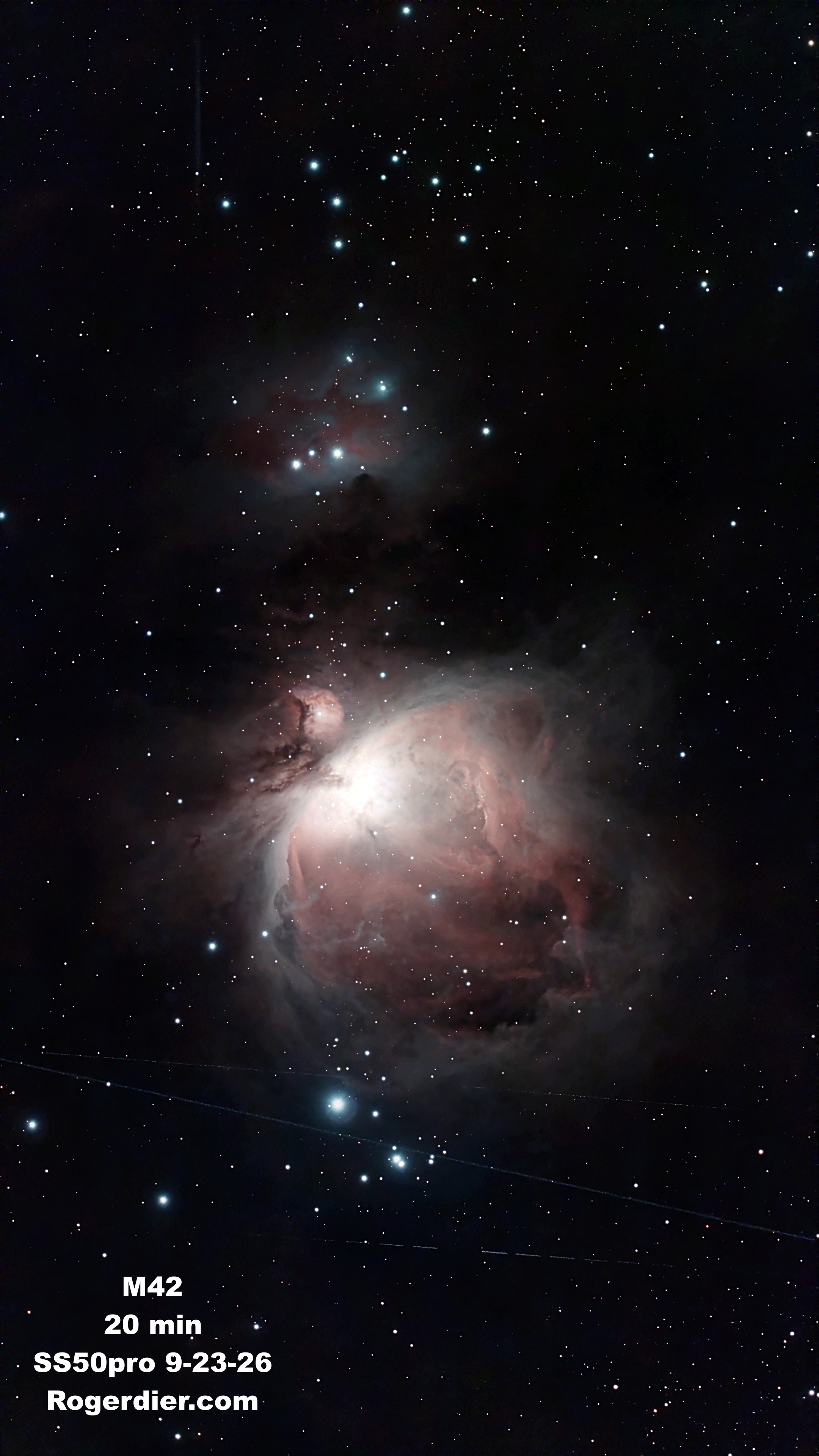
The Pleaides were high overhead and I let the SeeStar Pro go for 27 minutes of 10-second exposures. After that, I turned the scope-camera to the south, where Orion and its showpiece nebula, M42, were ascendent.
That’s all for now. Thank you for reading and the staff at rogerdier.com wish you good health and clear skies.

