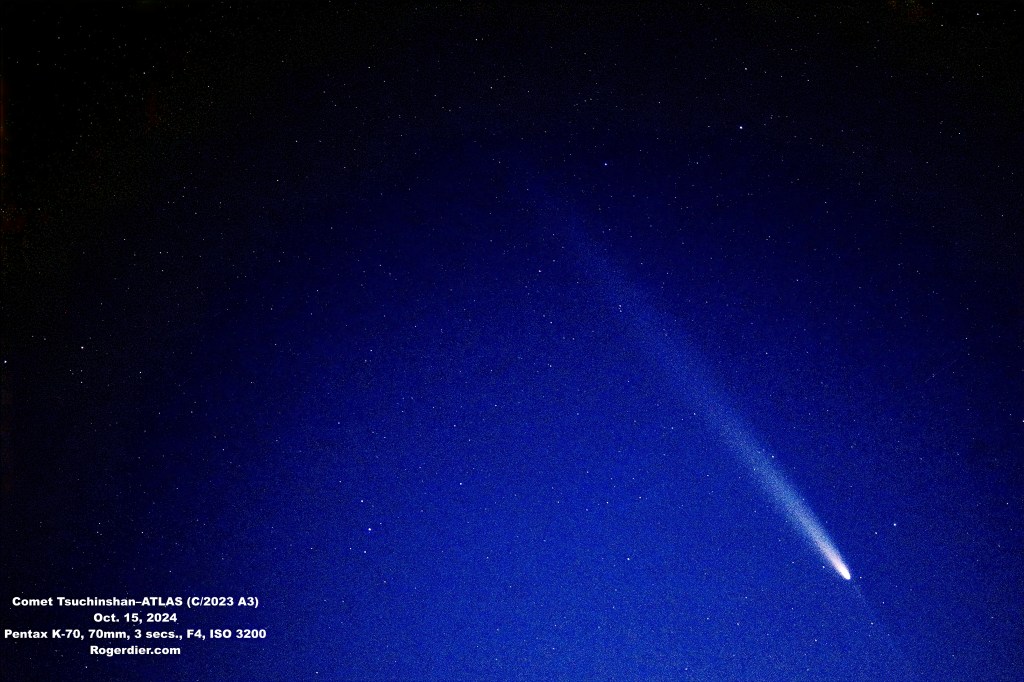
We are two Octobers removed from the best comet to pass Earth in the first 25 years of this century.
Comet Tsuchinshan-ATLAS, formerly identified as Comet C/2023 A3, was first identified by Chinese astronomers at that country’s Purple Mountain Observatory on Jan. 9, 2023 and independently verified by ATLAS South Africa on Feb. 22, 2023.
In this story, we’ll call it CTA.
CTA is a non-periodic comet, falling out of the Oort Cloud anywhere from thousands to millions of years ago. The Oort Cloud is a kind of a floating attic, populated with leftover debris that never got used during construction of what became our solar system. The Oort Cloud surrounds the solar system anywhere from 2,000 to 100,000 AU’s from the sun, an AU being the average distance between the sun and earth, roughly 93 million miles.
In other words, no one really knows when the Oort Cloud begins and ends, but it is there the same way Mount Everest was there for George Mallory.
The Comet Arrives
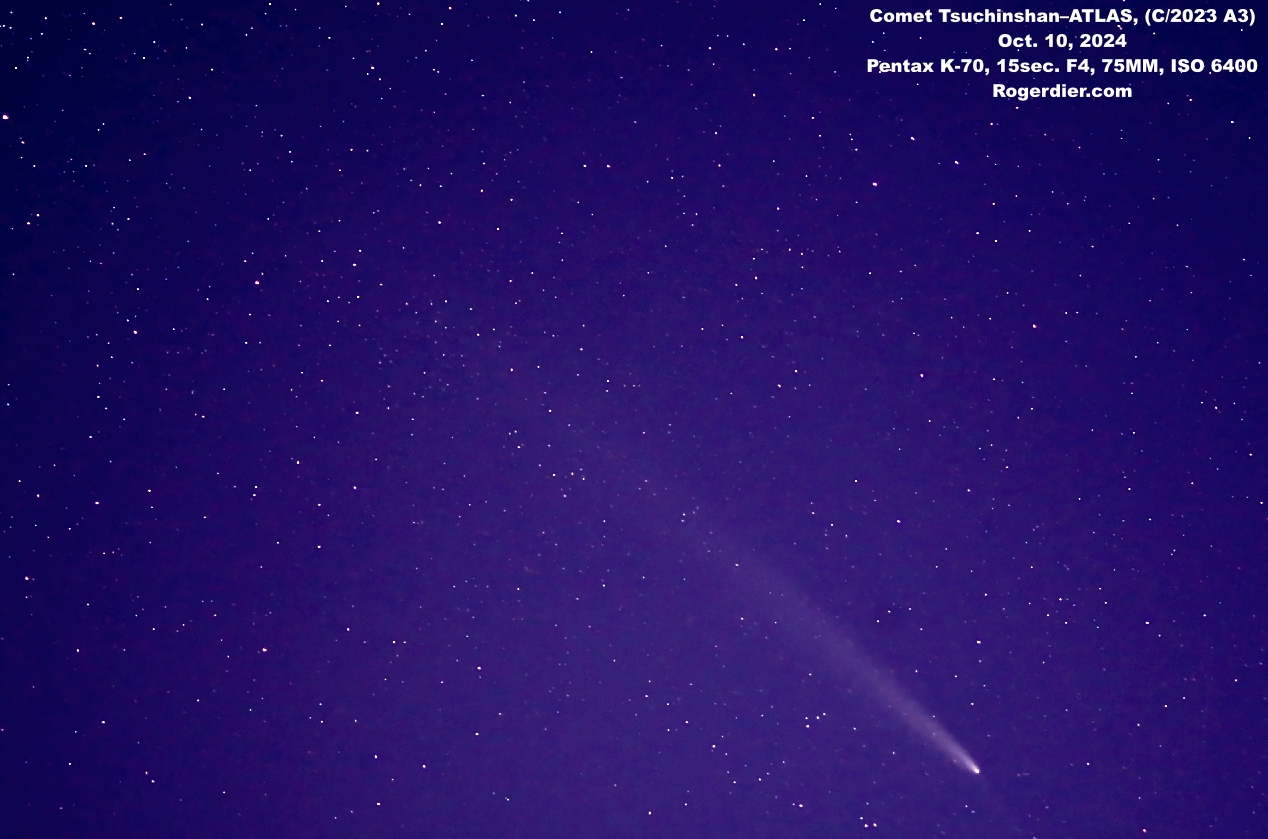
On its way in, CTA was eagerly anticipated. After swinging around the sun on Sept. 24, 2024 at an incredibly close distance of 0.39 AU, (58 million KM, or 36 million miles), CTA blasted into the western sky of observers in the northern hemisphere who pointed cameras and telescopes and telescope-camera combinations—or merely our eyes—to record this incredibly bright comet, which reach -4.9 magnitude on Oct. 9, 2024.
When this story was posted on Oct. 2, 2026, CTA had dimmed to magnitude 18.74 and it has sailed far from it’s close approach (36 million miles, 58 million KM) in late September of 2024. The Great Comet of 2024 is now 1.3 billion kilometers from the sun, or 811 million miles.
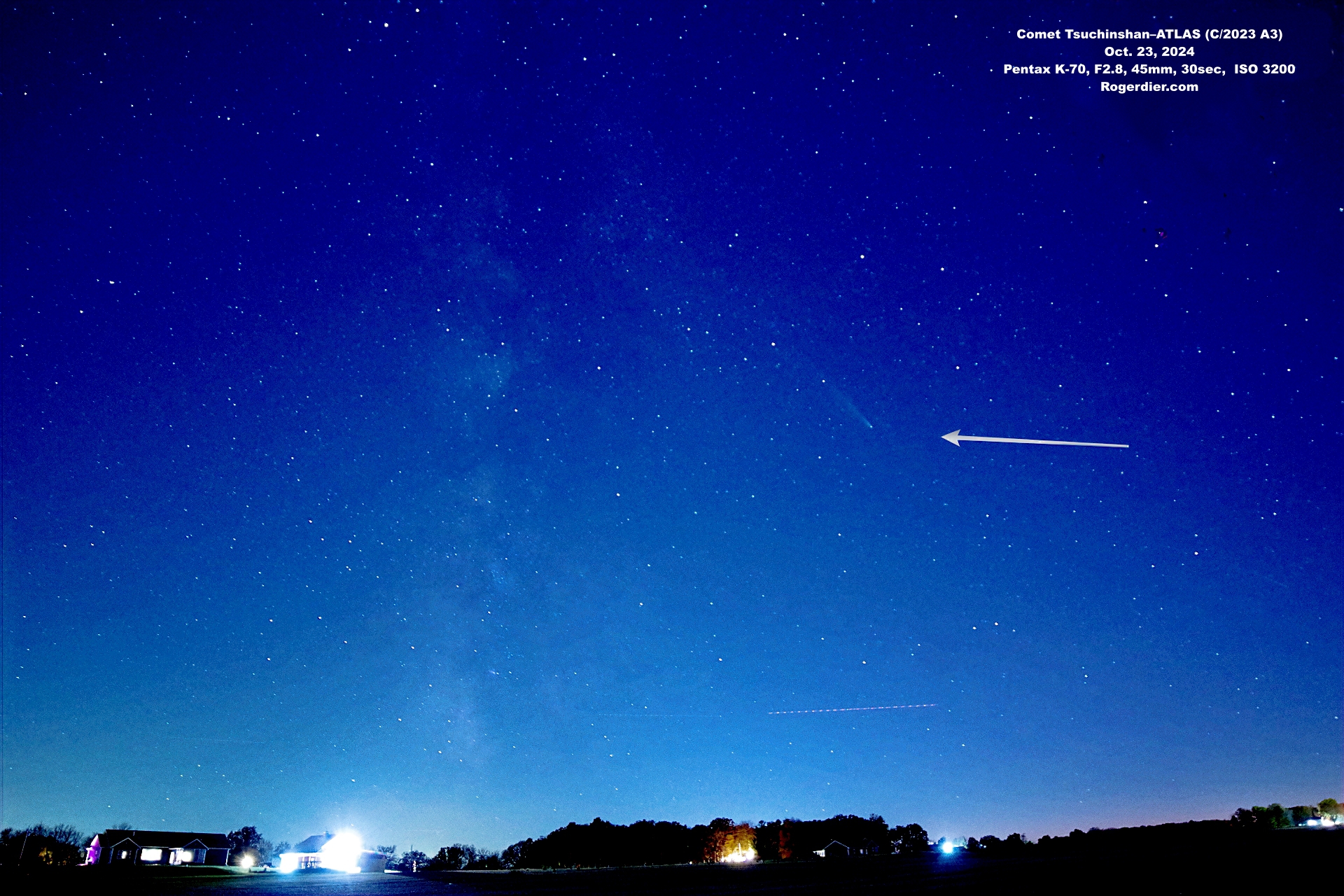
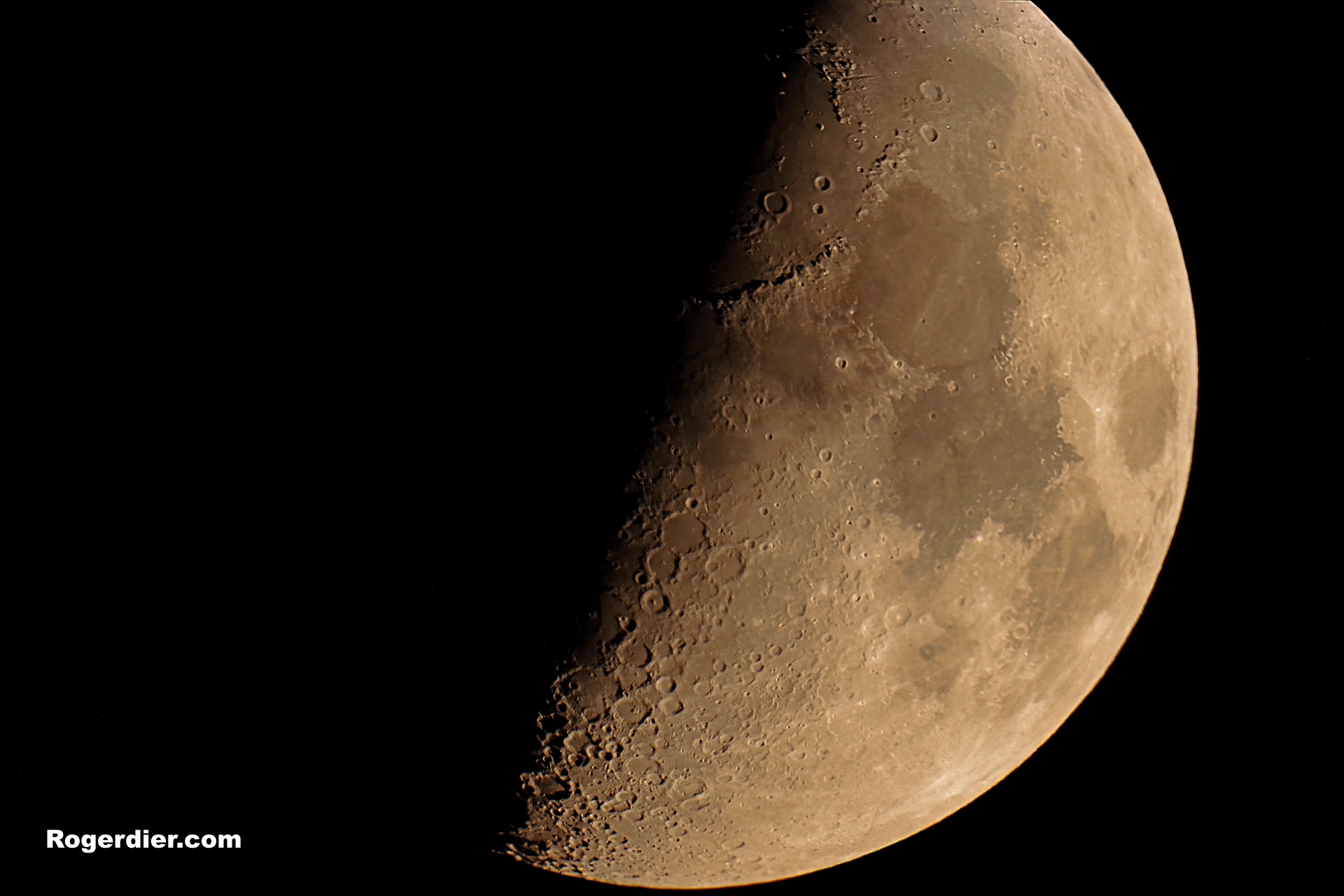
Clearing out the memory of my old Pentax K-70 camera this week, I discovered that I had photographic images of CTA from October 2024. Three images of CTA are shared here, along with the image of a gibbous moon as seen through the primary lens of my Vixon telescope.
Also included is an old photograph of where I did a lot of my winter astronomy in Wisconsin on the ice sheet of Lake Winnebago. The dwellings you see were towed onto the ice where people sat during the days of Sturgeon season to spear-stab the prehistoric fish, which can live for 150 to 215 years. It’s a thrill I’ve never understood.
Alas, thank you for reading. The staff of rogerdier.com wishes you sunny days and clear night skies.