There’s an old saying that goes, “You can plan the plan, but you can’t plan the results”
You’re going to like these results.
I have a bunch of beautiful pictures to share with you, but the biggest personal news is that I can see the night sky again. I’m two days away from the last post-cataract-surgery eye drop and it is so gratifying to see all the stars in the constellations again, or nearly all of them, as I live under a Bortle 5 light dome.
It’s wonderful to see stars again that I knew where there but could not see for decades.
As the years have gone on and I’ve seen fewer stars of constellations, I attributed that light pollution, Civilization’s Cursed Creeping Charlie that is slowly washing out our night sky. The weed of light pollution has not stopped growing, but a big reason why the constellations were slowly disappearing for me was because of advancing cloudiness in my eyes. Not any more, thankfully. If you have the need and the wherewithal, I recommend the Ophthalmology Department of Mayo Clinic in Rochester, Minnesota.
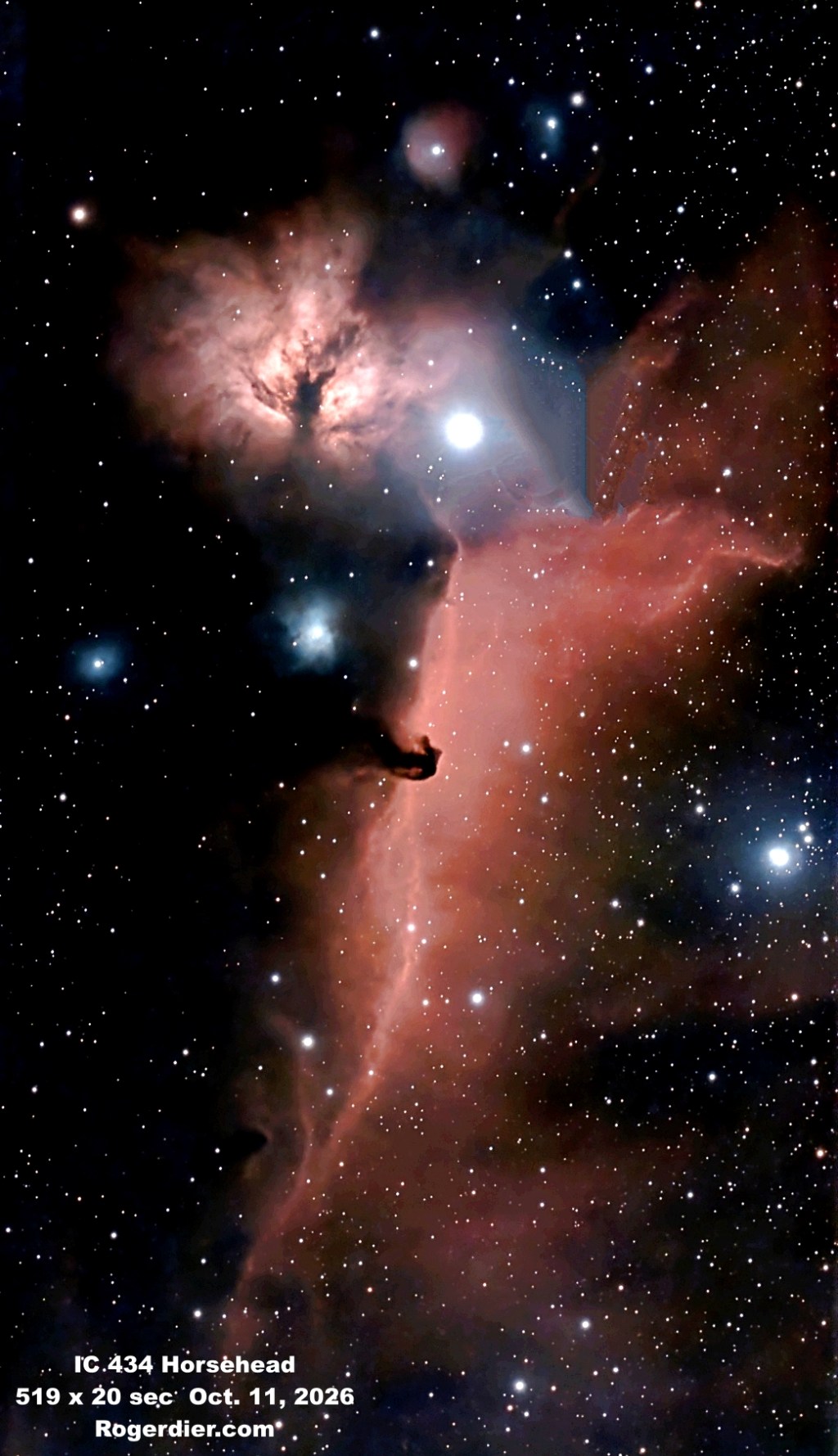
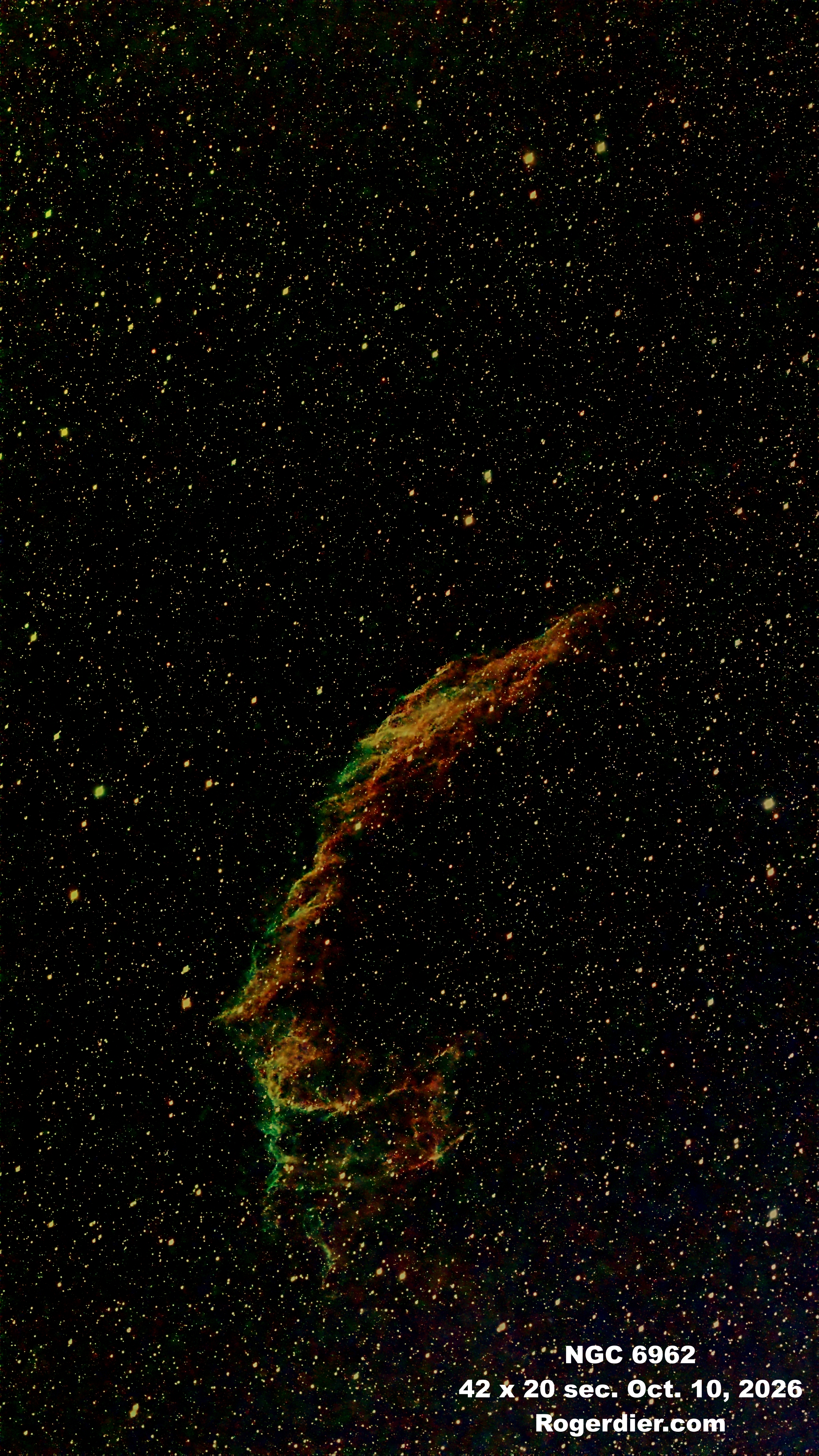
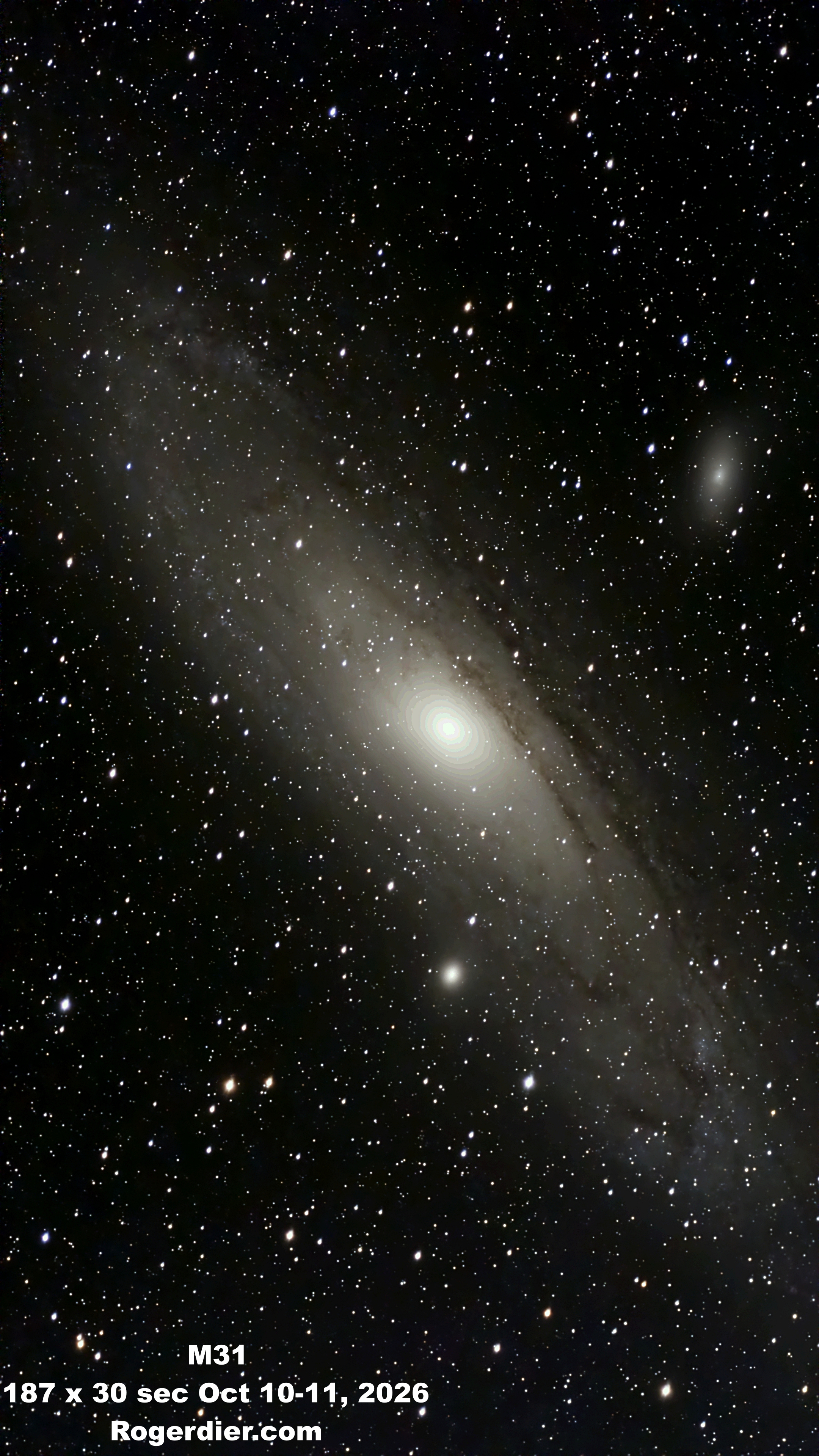
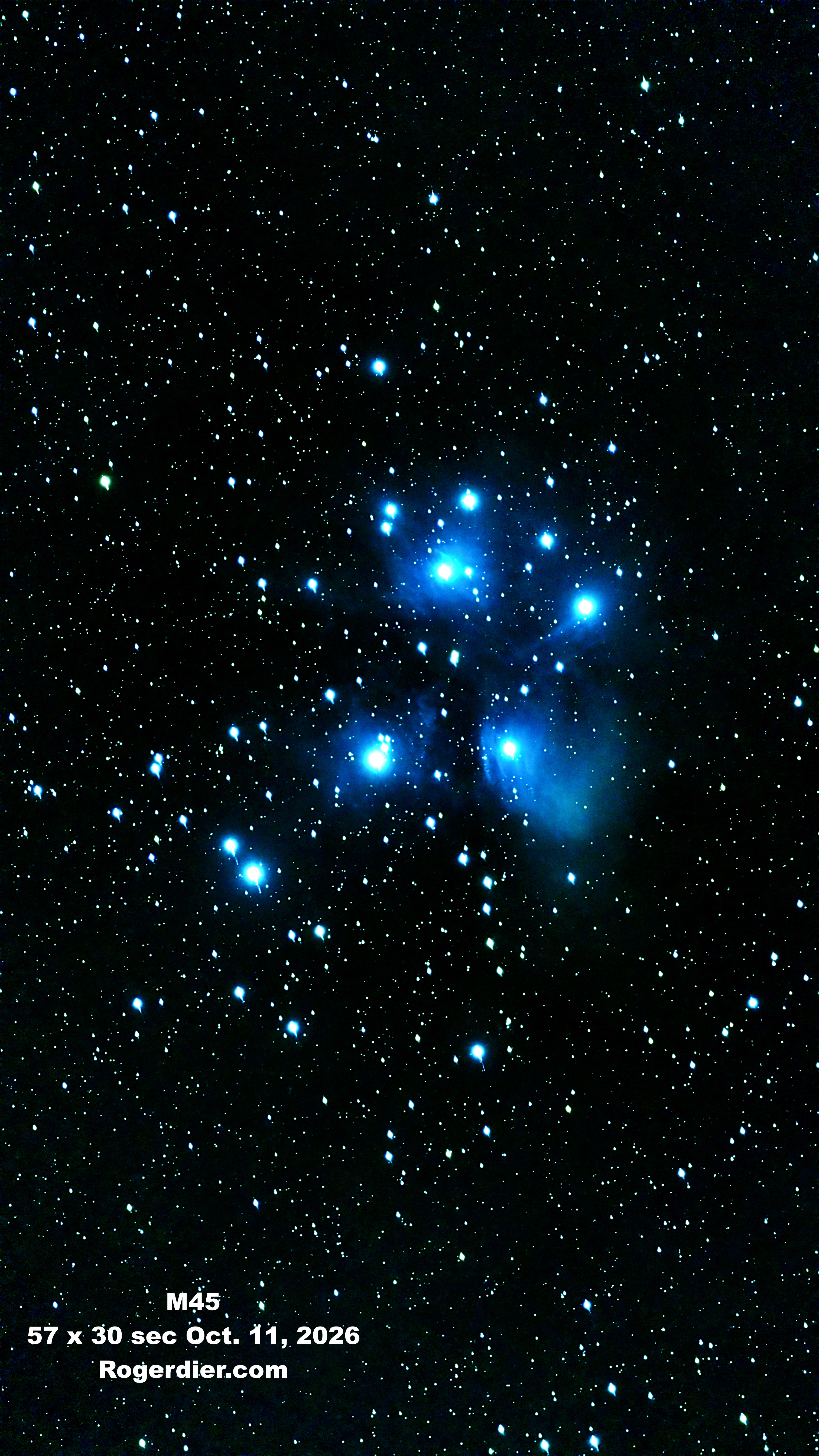
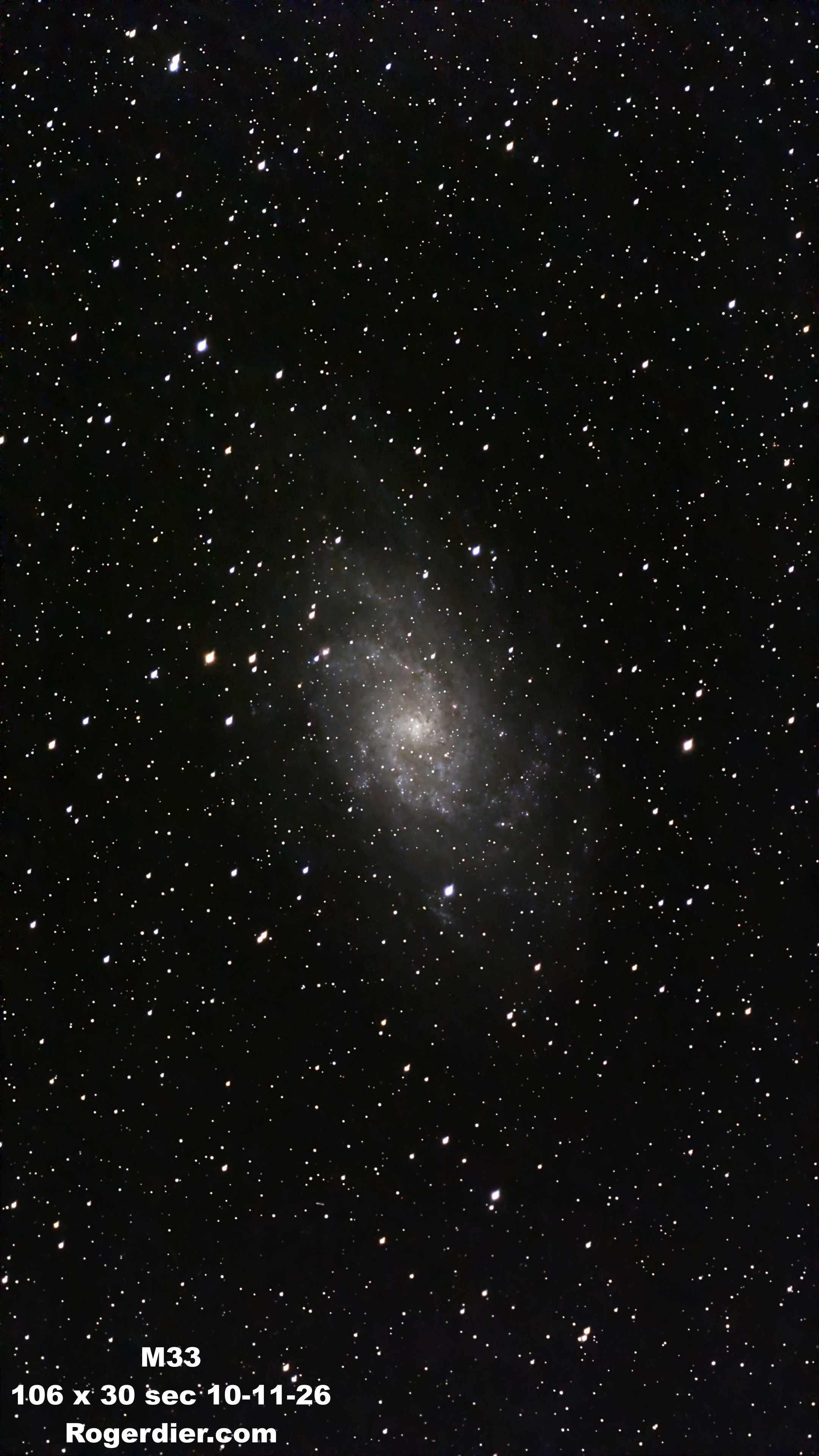
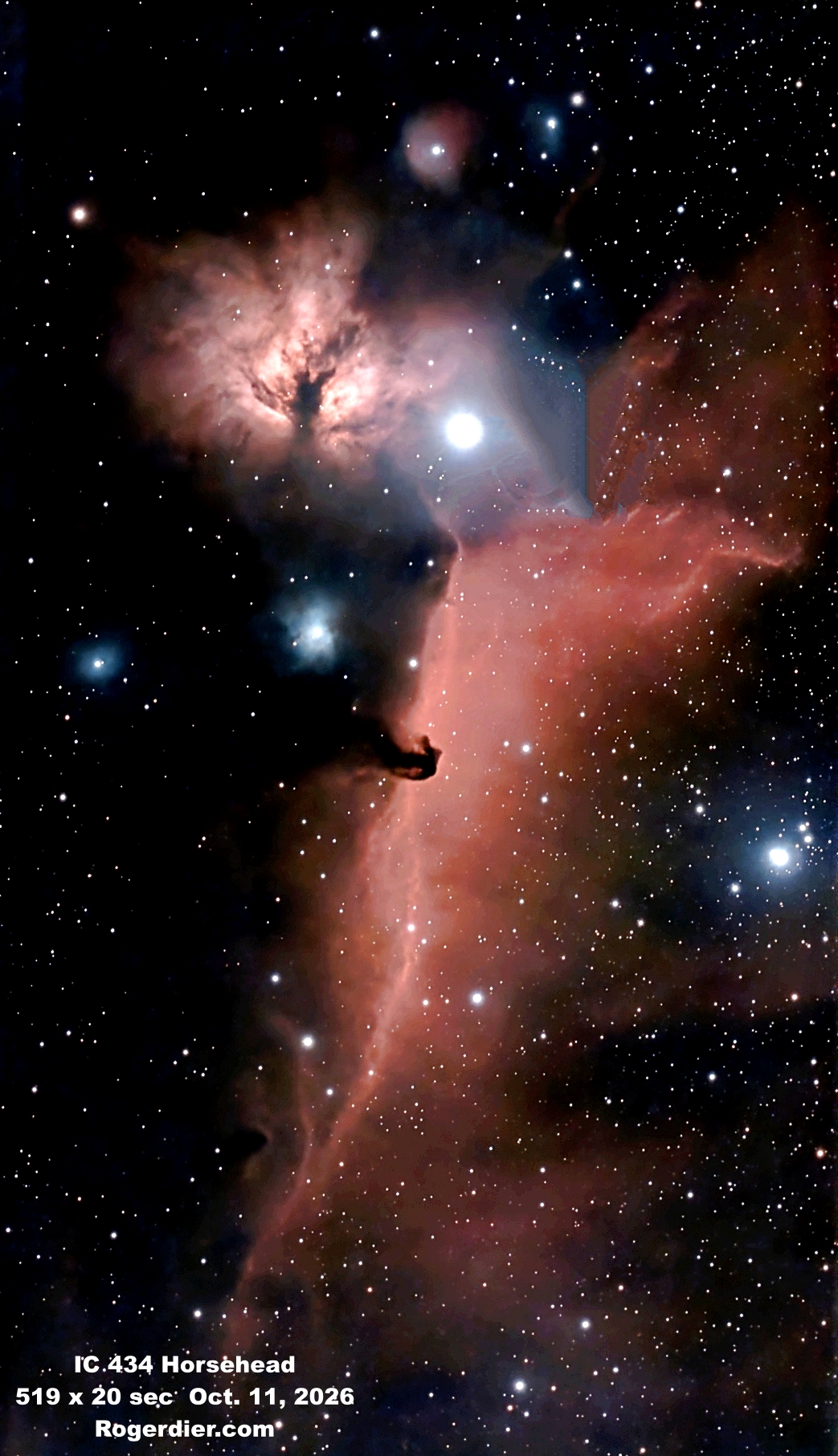
ZWO, the Chinese company that created the most amazing instrument of discovery in the third decade of the 21st Century, recently introduced the SeeStar S50 Pro. One of the features first introduced by ZWO a year or two ago was the planning function. I gave it a shot on Saturday night. Though winds were variable throughout the night, at about 8 p.m. Saturday, tapping on the screen of my iPhone, I programmed in what the SeeStar S50 Pro was to shoot and when. Earth hasn’t stopped turning, and the target order was selected to allow for objects to rise into the night sky at a reasonable elevation above the horizon to be photographed. After aligning the scope and attaching power to it—it has a nine-hour battery life but I wasn’t going to take chances—I asked the S50 Pro to shoot NGC 6992 (Eastern edge of the Veil Nebula), M31, M33, M45 (the Pleiades or Seven Sisters) and for nearly three hours before the beginning of astronomical twilight, Barnard 33, aka the Horsehead Nebula.
On the morning of October 11, I woke at 5 a.m. and took a glance at my iPhone to see if the S50 pro was executing the shooting plan. It was. I did a cartwheel and beat my chest vigorously. Not really. Making coffee, I went out to the deck and watched the astro-camera at work. At precisely 5:38 a.m. CDST, the beginning of astronomical twilight, the S50 pro automatically tucked the telescopic lens into the ivory-colored shell of its body, repositioned itself the way it started on the tripod, cut it’s own power and started a long nap.
Below are the five photos as they were shot.
Thank you for reading.


5 responses to “SeeStar Plan Delivers Results”
¡Es emocionante ver que la tecnología puede cambiar la vida de las personas! #SeeStarPlan #TechImpact
LikeLike
Glad you’re seeing stars again. I had cataract surgery a few years ago and what a difference. Enjoy!
LikeLike
Absolutely amazing pictures. Glad to hear you are seeing clear again. Good to know that kind of surgery has success
LikeLike
That horsehead! When my grandma had cataracts they took her lenses out and gave her fried egg lens glasses – glad that doesn’t happen anymore.
LikeLike
Geezus, your poor grandma!
LikeLike